Introduction
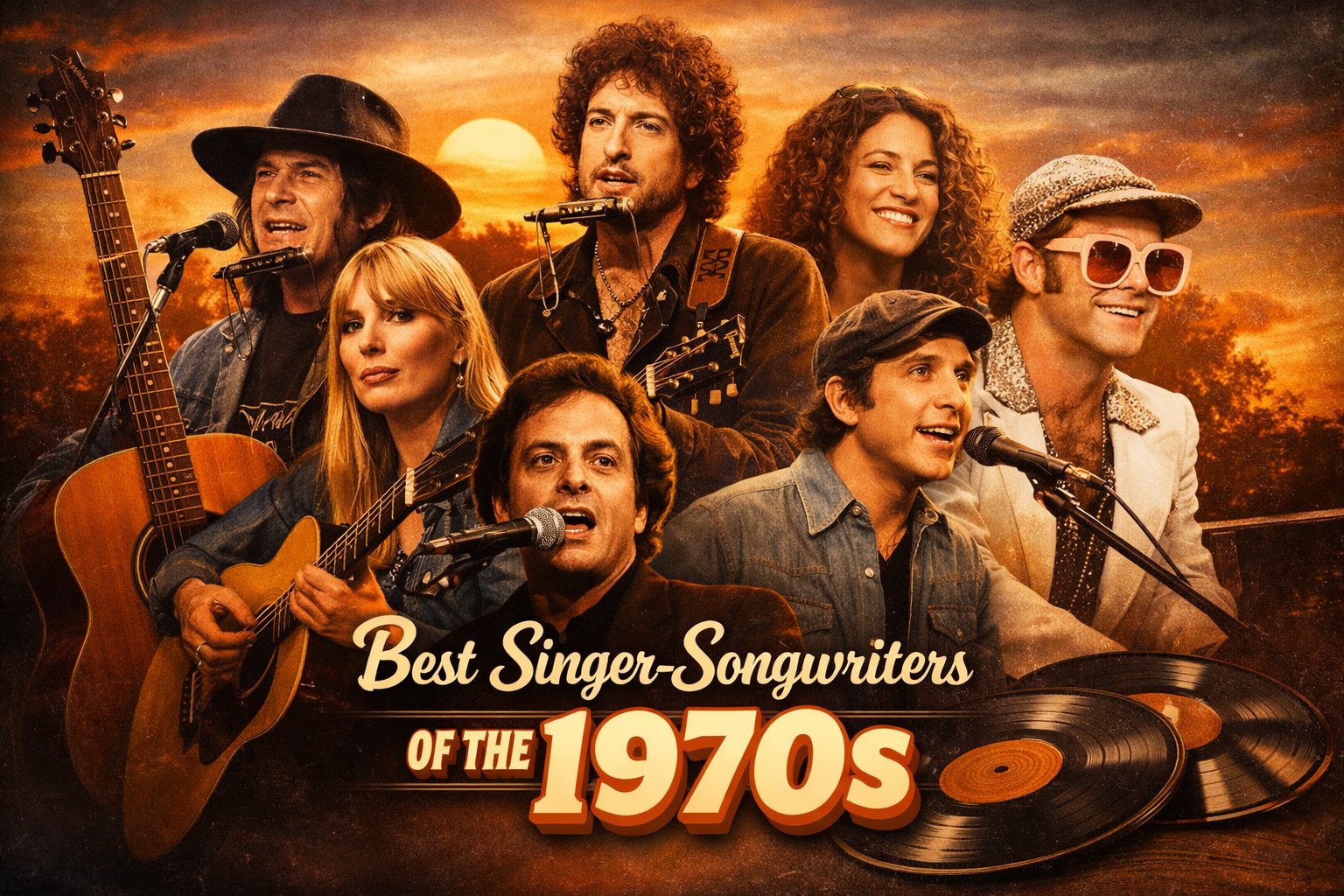
The 1970s produced one of the most influential and genre-defining eras in music history. Rock, soul, disco, folk, country, pop, and funk didn’t just coexist — they collided, evolved, and reshaped popular music in lasting ways. The artists who emerged during this decade didn’t simply score hits; they built catalogs that continue to define radio, playlists, and musical influence decades later.
This list ranks the 70 greatest musical artists of the 1970s, based on a combination of chart performance, album impact, longevity, and cultural influence. Priority is given to artists whose most important work and defining success occurred during the decade itself, regardless of when their careers began or continued. Rather than focusing on individual songs, this ranking emphasizes artists who shaped the sound, direction, and identity of 1970s music as a whole.
Whether you grew up with vinyl spinning in the living room or you’re discovering this era for the first time, this guide offers a clear, historically grounded look at the musicians who made the 1970s one of the greatest decades in modern music.
Howard Dee’s Take
When I look back at the music that shaped my life, the 1970s stand apart. These weren’t just songs playing in the background — they were the soundtrack to growing up, figuring things out, and learning what great songwriting actually sounded like. And what’s striking is how well this music still holds up. Younger generations keep rediscovering these artists because the songs have depth, grit, and craftsmanship — qualities that never go out of style.
This list isn’t nostalgia for nostalgia’s sake. It’s a reminder of what happens when artists care deeply about melody, lyrics, and performance. These seventy musicians didn’t just define a decade — they set a standard that modern music is still measured against.
THE LEGENDS: MY TOP 10 ARTISTS WHO DEFINED THE 1970s
1. Led Zeppelin
Led Zeppelin were the undisputed heavyweight champions of ’70s rock, releasing four albums during the decade that all landed in the Billboard Top 10.
Led Zeppelin IV alone sold over 37 million copies worldwide, and their tours routinely shattered attendance records, including the 1973 Tampa show that surpassed The Beatles.
Despite avoiding the singles-driven model, songs like “Black Dog,” “Rock and Roll,” and “Stairway to Heaven” became permanent pillars of FM rock radio.
What I’ve always valued about Zeppelin is how their music managed to be enormous without losing authenticity.
Every riff, every drum hit, every dynamic shift felt intentional, and they never seemed afraid to push into new territory.
When people talk about the sound of the 1970s, Zeppelin isn’t just part of the conversation — they are the conversation.
Why Led Zeppelin Are in My Top 10
Led Zeppelin set the standard for ambition, musicianship, and sonic power.
They pushed rock forward, built albums that still feel fresh, and influenced more bands than almost anyone else on this list.
To me, they represent the purest form of what ’70s rock was trying to achieve: scale, depth, and innovation.
🔍 Explore Led Zeppelin
- Led Zeppelin Artist Profile
- Top 15 Led Zeppelin Songs
- Led Zeppelin Trivia
- Stairway to Heaven Lyric Deep Dive
2. The Rolling Stones
The Rolling Stones entered the ’70s with their creative peak already underway, releasing Sticky Fingers (1971), Exile on Main St. (1972), and Some Girls (1978) — three albums that regularly appear on “greatest ever” lists.
They delivered nine Top 10 singles in the decade and became the most dominant touring act in the world, turning concerts into international events.
Their versatility allowed them to shift from blues to country to disco without ever losing their trademark swagger.
What I respect most about the Stones is their consistency.
While many big bands stumbled or faded as the ’70s evolved, the Stones seemed to catch a second wind and adapt without feeling like they were chasing relevance.
Their influence in the decade isn’t just big — it’s foundational.
Why The Rolling Stones Are in My Top 10
Their run in the 1970s is unmatched for quality, attitude, and endurance.
The Stones were confident enough to evolve, skilled enough to deliver, and fearless enough to try anything — and that combination made them one of the decade’s defining forces.
🔍 Explore The Rolling Stones
3. Pink Floyd
Pink Floyd reshaped what rock could sound like with a run of albums that blended atmosphere, storytelling, and experimentation.
The Dark Side of the Moon spent 741 consecutive weeks on the Billboard charts, a record so absurd it will never be repeated.
Wish You Were Here (1975) and The Wall (1979) added to their dominance, turning the band into global icons while barely releasing singles.
What I’ve always appreciated is how their music creates a world for the listener.
Floyd didn’t write songs — they built experiences, and every album felt like you were stepping into a different emotional universe.
Few bands have ever had that kind of consistency across such ambitious material.
Why Pink Floyd Are in My Top 10
Pink Floyd made albums that defined the emotional landscape of the 1970s.
They proved that rock could be cinematic without losing its edge, and their influence stretches far beyond the decade itself.
🔍 Explore Pink Floyd
4. Elton John
Elton John dominated the charts like almost no one else.
Between 1970 and 1976, he scored 15 Top 10 singles and seven straight #1 albums, including Goodbye Yellow Brick Road, which sold over 30 million copies worldwide.
His partnership with Bernie Taupin gave the decade some of its most memorable melodies, lyrics, and performances.
What I’ve always admired about Elton is his range — he could deliver a tender ballad, a rock anthem, or something completely theatrical without losing the heart of the song.
His catalog from this decade reads like a greatest-hits collection, and his presence felt huge even when he wasn’t trying.
Why Elton John Is in My Top 10
Elton’s consistency, versatility, and songwriting mastery made him a dominant force of the ’70s.
He could move between genres effortlessly and still deliver songs that stuck with you long after the first listen.
🔍 Explore Elton John
- Elton John Artist Profile
- Top 15 Elton John Songs
- Elton John Trivia
- Elton John & Lady Gaga: Two Theatrical Truth Tellers
5. Fleetwood Mac
Fleetwood Mac’s mid-decade transformation — with the arrival of Stevie Nicks and Lindsey Buckingham — led to one of the greatest album runs in rock history.
Fleetwood Mac (1975) went 7× Platinum, and Rumours (1977) became one of the best-selling albums ever made, passing 40 million copies worldwide.
Songs like “Dreams,” “Go Your Own Way,” and “The Chain” became staples of the decade.
What has always impressed me is how personal the music feels.
Most bands would have collapsed under the weight of the internal tension Fleetwood Mac experienced in the ’70s, but they turned it into art that resonated on a massive scale.
Why Fleetwood Mac Are in My Top 10
No band blended melody, emotion, and storytelling better in the ’70s.
Their music became the emotional backdrop for millions of listeners, and Rumours remains one of the decade’s defining achievements.
🔍 Explore Fleetwood Mac
- Fleetwood Mac Artist Profile
- Fleetwood Mac Trivia
- Dreams Lyric Deep Dive
- Stevie Nicks Artist Profile
6. Bruce Springsteen
Bruce Springsteen entered the decade with enormous expectations and exceeded all of them.
Born to Run (1975) turned him into a national figure, and Darkness on the Edge of Town (1978) showed a more mature, introspective songwriter.
His concerts became legendary — marathon shows that delivered more energy than most bands could manage in an entire tour.
What I’ve always liked about Springsteen is his honesty.
He wrote about working-class life with clarity, empathy, and detail, but he never lost his sense of hope.
His voice — both literal and musical — became one of the most recognizable of the decade.
Why Bruce Springsteen Is in My Top 10
Springsteen brought heart, grit, and sincerity to the decade.
He proved you could make big, bold rock music that still felt personal and grounded.
🔍 Explore Bruce Springsteen
7. Billy Joel
Billy Joel delivered one of the strongest album runs of the decade, culminating in The Stranger (1977), Columbia Records’ best-selling album of all time.
He earned eight Top 10 hits in the ’70s, including “Piano Man,” “Just the Way You Are,” and “My Life.”
His ability to shift between styles — pop, jazz, ballads, rock — helped define his appeal.
What I’ve always appreciated is how relatable his storytelling is.
Joel wrote about everyday life in a way that felt honest without being overly sentimental, and he delivered it with melodies that stuck immediately.
Why Billy Joel Is in My Top 10
Billy Joel was the soundtrack of my youth. His Songs told stories and I related to them.
🔍 Explore Billy Joel
- Billy Joel Artist Profile
- Top 11 Billy Joel Songs
- Billy Joel Trivia
- Billy Joel Interesting Facts
- Vienna Lyric Deep Dive
8. The Eagles
The Eagles became one of the most successful American bands of all time, delivering five #1 singles and one of the best-selling albums ever — Their Greatest Hits 1971–1975, which has surpassed 38 million copies in the U.S. alone.
Hotel California reached 26 million copies worldwide and delivered iconic tracks still heard everywhere today.
What stands out to me is their musicianship.
They wrote clean, tight, harmonically rich songs that balanced country, rock, and pop better than anyone else in the decade.
Why The Eagles Are in My Top 10
The Eagles perfected a sound that blended accessibility with musicianship.
Their songs became a permanent part of American culture, and few bands left a deeper imprint on the ’70s.
🔍 Explore The Eagles
9. David Bowie
David Bowie reinvented himself multiple times during the decade, releasing Hunky Dory, Ziggy Stardust, Diamond Dogs, Young Americans, and the Berlin trilogy — Low, “Heroes”, Lodger.
He earned six Top 10 hits in the U.S. and even more in the U.K., influencing rock, fashion, identity, and performance art.
What I always admired about Bowie was his willingness to evolve.
Every album felt like a new chapter, but none of it felt like reinvention for the sake of attention — it felt like an artist exploring what was possible.
Why David Bowie Is in My Top 10
Bowie pushed boundaries in every direction.
He turned individuality into an art form and made the ’70s more interesting just by existing.
🔍 Explore David Bowie
10. Queen
Queen combined theatrical performances with some of the tightest songwriting of the decade.
They scored eight Top 10 hits, and A Night at the Opera (1975) became one of rock’s most ambitious studio works.
Freddie Mercury’s voice, Brian May’s guitar tone, and the band’s layered arrangements made them instantly recognizable.
What I’ve always appreciated is their commitment to going big.
From harmonies to concepts to stage presence, Queen didn’t do anything halfway — and that confidence turned them into icons.
Why Queen Are in My Top 10
Queen captured the drama, creativity, and ambition of the decade.
Their songs still feel fresh, and their influence spans multiple generations.
🔍 Explore Queen
THE GIANTS: ARTISTS 11–20 WHO SHAPED THE ’70s
11. The Who
The Who entered the 1970s with the momentum of Tommy (1969) and immediately doubled down with Who’s Next (1971), one of the most influential albums in rock history.
Driven by songs like “Baba O’Riley,” “Behind Blue Eyes,” and “Won’t Get Fooled Again,” the album reached the Top 5 and remained a decade-defining work.
Throughout the ’70s, they continued to push boundaries with Quadrophenia (1973) and massive tours that showcased their power as a live band.
What I’ve always appreciated about The Who is the combination of raw energy and deep emotional storytelling.
Pete Townshend could write huge, ambitious pieces without losing sight of real human struggles, and Roger Daltrey delivered those lyrics with force and conviction.
There’s a sincerity in their best work that never fades.
Why The Who Are in My Top 20
The Who blended power and depth better than almost any rock band of the decade.
Their influence on arena rock, concept albums, and live performance is massive, and their best songs still feel as sharp as the day they were released.
🔍 Explore The Who
12. The Beatles
Even though The Beatles officially ended in 1970, their final material — especially Let It Be — shaped the start of the decade.
More importantly, their members released some of the strongest solo material of the ’70s: George Harrison’s All Things Must Pass, Paul McCartney’s Band on the Run, and John Lennon’s Imagine all became cultural landmarks.
Collectively, the group’s solo work earned multiple #1 albums and singles, proving their influence didn’t end with the breakup.
What stands out to me is how each member carved out a distinct identity while still carrying the songwriting instincts that made The Beatles great.
Lennon delivered honesty, Harrison brought spirituality and melody, McCartney crafted perfect pop-rock, and Ringo held his own with unexpectedly solid hits.
No other band dissolved and still dominated the decade like this.
Why The Beatles Are in My Top 20
Their fingerprints are all over the decade, even without functioning as a band.
Their solo catalogs helped define the early to mid-’70s, and their ability to stay relevant individually is something no group before or since has matched.
🔍 Explore The Beatles
13. Aerosmith
Aerosmith made their mark with a gritty, blues-driven sound that helped shape American hard rock.
By the mid-’70s, they had delivered Toys in the Attic (1975) and Rocks (1976), two albums widely considered among the greatest in U.S. rock history.
Hits like “Dream On,” “Sweet Emotion,” and “Walk This Way” pushed them to platinum sales and solidified their place on FM radio.
What I’ve always liked about Aerosmith is their swagger.
They were confident without being cartoonish, loud without losing musicality, and emotional without overplaying it.
Steven Tyler and Joe Perry created a sound that felt dangerous and exciting — two things rock needed in the ’70s.
Why Aerosmith Are in My Top 20
Few American bands delivered a better run of albums in the decade.
Aerosmith made rock that felt alive, unpolished, and rooted in the blues — and that authenticity set them apart from everyone else on the radio.
🔍 Explore Aerosmith
14. Creedence Clearwater Revival
CCR technically disbanded in 1972, but their impact on the early part of the decade was enormous.
They scored an astonishing nine Top 10 singles between 1969–1971 and released some of the tightest, most memorable rock singles ever recorded.
Even without a #1 hit, songs like “Have You Ever Seen the Rain,” “Fortunate Son,” and “Who’ll Stop the Rain” became defining tracks of the era.
What I’ve always found impressive is how simple their music seemed on the surface — but how much staying power it had.
John Fogerty’s writing was direct, emotional, and built for the long haul, and CCR remains one of the most played rock bands across generations.
Why Creedence Clearwater Revival Are in My Top 20
CCR delivered hit after hit with no filler.
Their songs still feel relevant today, and their influence is woven into modern Americana, rock, and roots music.
15. Neil Young
Neil Young’s 1970s catalog is one of the deepest of any artist: After the Gold Rush, Harvest, Tonight’s the Night, Zuma, and Rust Never Sleeps all arrived in the decade.
He earned multiple Top 10 hits, including “Heart of Gold,” and became a leading figure in both the folk-rock and hard-rock worlds.
His ability to pivot stylistically while maintaining emotional weight made him one of the decade’s most respected musicians.
What I’ve always liked about Neil Young is how unfiltered he is.
He doesn’t chase polish, trends, or commercial expectations — he writes honestly and follows the music where it wants to go.
That authenticity is a big part of why his songs still matter.
Why Neil Young Is in My Top 20
Neil Young delivered one of the most impressive decade-long runs of any singer-songwriter.
He pushed boundaries, wrote fearlessly, and created albums that still feel essential.
🔍 Explore Neil Young
16. Bob Seger
Bob Seger became a major force in American rock with Live Bullet (1976) and Night Moves (1976), albums that turned him from a regional name into a national headliner.
He scored six Top 10 hits in the decade and delivered some of the most relatable storytelling in rock.
Songs like “Night Moves,” “Mainstreet,” and “Turn the Page” helped define what heartland rock would become.
What I’ve always appreciated about Seger is the honesty in his voice.
There’s nothing forced — just lived-in stories told with grit and sincerity.
He wrote about real life with clarity, and the music still resonates because it feels true.
Why Bob Seger Is in My Top 20
Seger gave the ’70s a grounded, blue-collar perspective that felt authentic without being preachy.
His songs have aged incredibly well, and his influence runs deep through later American rock.
🔍 Explore Bob Seger
- Bob Seger Artist Profile
- Top 15 Bob Seger Songs
- Interesting Facts About Bob Seger
- Turn the Page Lyric Deep Dive
- Why Zach Bryan is this Generations Bob Seger
17. The Beach Boys
The Beach Boys reinvented themselves during the 1970s with albums like Sunflower (1970), Surf’s Up (1971), and Holland (1973).
Though not as commercially dominant as their ’60s peak, they earned new critical respect and continued to deliver tight harmonies and ambitious arrangements.
“Surf’s Up” and “Sail On, Sailor” became standout tracks from their reinvention period.
What I’ve always admired is how the group pushed forward creatively despite enormous internal challenges.
Their 1970s material is more reflective, more experimental, and sometimes more emotional than what fans knew them for — and it still holds up.
Why The Beach Boys Are in My Top 20
Their 1970s output proved they were more than nostalgia.
They evolved and delivered strong, sophisticated work that deserves far more recognition than it usually gets.
18. James Taylor
James Taylor became one of the decade’s most beloved singer-songwriters, scoring five Top 10 hits and earning a Grammy for “You’ve Got a Friend.”
Sweet Baby James (1970) and JT (1977) sold millions of copies, helping solidify the soft-rock movement.
His calm, introspective style became a defining part of the decade’s sound.
What I’ve always liked about James Taylor is how effortless the music feels.
He writes with warmth and honesty, and there’s a calming quality in his voice that never goes out of style.
He made intimacy feel universal.
Why James Taylor Is in My Top 20
Taylor delivered some of the most enduring singer-songwriter material of the entire decade.
His songs feel personal without being overly confessional, which is part of why they’ve lasted.
🔍 Explore James Taylor
19. The Doors
Although Jim Morrison passed in 1971, The Doors’ influence carried deep into the 1970s.
Their music stayed on radio constantly, and posthumous releases like L.A. Woman (1971) became part of the decade’s musical DNA.
Songs like “Riders on the Storm” and “Love Her Madly” had long afterlives that shaped ’70s rock and alternative scenes.
What stands out to me is how timeless their sound feels.
The mix of atmosphere, poetry, and groove still connects, and you can hear echoes of The Doors in countless post-’70s artists.
Why The Doors Are in My Top 20
Their ’70s presence was strong despite the band’s early end.
Their influence, especially through radio play and cultural presence, remained impossible to ignore.
🔍 Explore The Doors
20. Steely Dan
Steely Dan brought a level of musical sophistication to the 1970s that no other mainstream rock act could match.
Albums like Pretzel Logic, Katy Lied, and Aja blended jazz, rock, soul, and pop with a perfectionist approach that pushed studio standards to a new level.
Aja alone went 2× Platinum, reached #3 on Billboard, and produced hits like “Peg,” “Deacon Blues,” and “Josie,” becoming one of the most acclaimed albums of the decade.
Their meticulous arrangements, world-class session players, and sharp, literate lyrics turned Steely Dan into a band musicians studied as much as fans loved.
What I’ve always appreciated about Steely Dan is that their music rewards listening — real listening.
You can put their songs on in the background and enjoy the groove, or you can sit with them and catch a hundred details you never noticed before.
They were never concerned with being flashy or trendy; they were focused on making records that sounded incredible, and they succeeded at a level few artists have ever reached.
Why Steely Dan Are in My Top 20
Steely Dan defined a whole lane of sophisticated ’70s rock that blended pop hooks with jazz precision and studio mastery.
Their albums were crafted with such care that they still sound modern today, and their influence runs deep across rock, jazz-pop, R&B, and even hip-hop sampling.
They weren’t just great musicians — they were architects of sound, and the decade wouldn’t be the same without them.
THE INNOVATORS: ARTISTS 21–30 WHO BROUGHT NEW SOUNDS
21. Stevie Wonder
Stevie Wonder dominated the 1970s with a creative run no one else has matched.
Between 1972 and 1976, he released Talking Book, Innervisions, Fulfillingness’ First Finale, and Songs in the Key of Life — a sequence that earned him three Album of the Year Grammys and cemented his place as one of the most influential musicians in history.
He scored 12 Top 10 hits during the decade and reshaped soul, funk, pop, and even early electronic music through his use of synthesizers.
What I’ve always admired about Stevie is his ability to blend melody, message, and innovation.
He wrote songs that were catchy on the surface but packed with meaning, and he did it with a musical intuition that felt effortless.
You can hear his fingerprints all over modern R&B and pop because he laid the blueprint in the ’70s.
Why Stevie Wonder Is in My Top 30
Nobody expanded the boundaries of soul music more in this decade.
His albums weren’t just good — they were groundbreaking, and their influence still runs deep through multiple genres.
🔍 Explore Stevie Wonder
22. Lynyrd Skynyrd
Lynyrd Skynyrd defined Southern rock with a blend of blues, country, and hard-driving guitars that gave the ’70s some of its most memorable anthems.
Pronounced Leh-nerd Skin-nerd and Second Helping delivered “Free Bird,” “Simple Man,” and “Sweet Home Alabama,” helping the band earn multiple Platinum albums and a massive national fanbase.
Their influence grew even stronger after the tragic 1977 plane crash, which added a sense of legend to an already powerful legacy.
What I’ve always appreciated about Skynyrd is the sincerity in their music.
They wrote big songs, but they didn’t write empty ones — there was heart behind the hooks, and it came across in every performance.
They struck the perfect balance between toughness and vulnerability.
Why Lynyrd Skynyrd Are in My Top 30
Skynyrd gave the decade its signature Southern rock sound.
Their best songs have stood the test of time, and their impact stretches far beyond regional identity.
23. Simon & Garfunkel
Although they officially split in 1970, Simon & Garfunkel’s final work and post-breakup influence remained deeply woven into the early decade.
Bridge Over Troubled Water became one of the best-selling and most celebrated albums of all time, winning Album of the Year and producing timeless songs that stayed in rotation throughout the ’70s.
Paul Simon’s early solo success kept the duo’s sound alive, extending their influence even further.
What I’ve always respected is how clear and emotional their songwriting was.
Their harmonies felt effortless, but the lyrics carried weight, and that combination is why their music continued to resonate even as tastes shifted.
Why Simon & Garfunkel Are in My Top 30
No duo influenced early ’70s singer-songwriter culture more than Simon & Garfunkel.
Their final album and lasting presence shaped an entire era of acoustic, thoughtful pop.
24. Bob Dylan
Bob Dylan reshaped his sound throughout the decade with albums like Blood on the Tracks, Desire, and Planet Waves.
Blood on the Tracks alone is considered one of the greatest breakup albums ever made, while Desire reached #1 and gave the world “Hurricane.”
Dylan’s evolving songwriting and willingness to reinvent himself kept him a central figure even as genres changed.
What I’ve always appreciated is Dylan’s refusal to stay predictable.
He followed the music wherever it took him — sometimes messy, sometimes brilliant, but always honest.
His ’70s work might not be as iconic as the mid-’60s era, but the quality is undeniable.
Why Bob Dylan Is in My Top 30
His ’70s catalog contains some of his most emotional and enduring work.
Dylan remained a major force in music and culture, proving his songwriting could evolve without losing depth.
25. Donna Summer
Donna Summer became the undeniable Queen of Disco, scoring four #1 singles in the decade and delivering genre-defining hits like “Last Dance,” “Bad Girls,” and “Hot Stuff.”
Working with producer Giorgio Moroder, she helped push electronic dance music into the mainstream, shaping the sound of late ’70s pop.
Her albums went Platinum, and her influence extended across clubs, radio, and film.
What I’ve always admired is how effortlessly she delivered both style and substance.
Her voice had range and control, and the production behind her songs was years ahead of its time — especially “I Feel Love,” which basically predicted the next three decades of electronic music.
Why Donna Summer Is in My Top 30
Donna Summer didn’t just dominate disco — she elevated it, expanded it, and made it global.
Her impact on pop, dance, and electronic music is still felt today.
🔍 Explore Donna Summer
26. Paul Simon
After Simon & Garfunkel, Paul Simon launched a solo career that produced some of the decade’s strongest songwriting.
Paul Simon (1972) and There Goes Rhymin’ Simon (1973) delivered “Kodachrome,” “American Tune,” and “Loves Me Like a Rock,” while Still Crazy After All These Years earned him Album of the Year.
He blended folk, pop, gospel, and even early world-music influences.
What I’ve always liked about Simon is how thoughtful and crafted his songs feel.
He wrote with emotional subtlety and melodic precision, and he constantly pushed himself toward new ideas without forcing it.
Why Paul Simon Is in My Top 30
He delivered some of the decade’s best-crafted songs and showed a willingness to evolve creatively.
His solo work helped shape a generation of singer-songwriters.
🔍 Explore Paul Simon
27. Crosby, Stills, Nash & Young
CSNY combined four distinctive voices and delivered harmonies that became a signature of the decade.
Their albums Déjà Vu and live release 4 Way Street became major hits, and all four members delivered successful solo or duo projects throughout the ’70s.
Songs like “Carry On,” “Our House,” and “Teach Your Children” became generational touchstones.
What I’ve always appreciated is how effortlessly they blended their individual styles.
The chemistry was sometimes volatile, but when it clicked, the result was some of the decade’s richest and most meaningful music.
Why CSNY Are in My Top 30
Nobody matched their harmonies or their combined songwriting strength.
Their individual and collective work shaped folk-rock, country-rock, and even early Americana.
28. Earth, Wind & Fire
Earth, Wind & Fire delivered a blend of funk, soul, and pop that defined the sound of the mid-to-late ’70s.
They scored seven Top 10 hits, including “Shining Star” (#1), “Boogie Wonderland,” and “September,” and their albums went Multi-Platinum around the world.
Their horn section, harmonies, and stage production made them a dominant live act.
What I’ve always appreciated is the positivity and joy in their music.
Everything felt big — the arrangements, the vocals, the rhythms — and the energy never dipped.
Few bands made music that simply made people feel good.
Why Earth, Wind & Fire Are in My Top 30
They brought sophistication, groove, and musical excellence to everything they touched.
Their influence on funk, R&B, and pop is impossible to miss.
29. Rod Stewart
Rod Stewart delivered an impressive decade with six Top 10 singles and massive albums like Every Picture Tells a Story and A Night on the Town.
“Da Ya Think I’m Sexy?,” “Maggie May,” and “You’re in My Heart” all kept him in heavy rotation across radio formats.
He blended folk-rock, pop, and soul in a way that felt both modern and timeless.
What I’ve always appreciated about Stewart is his voice — raspy, expressive, and instantly recognizable.
He could shift from rock swagger to emotional balladry without losing credibility, and that versatility gave him staying power.
Why Rod Stewart Is in My Top 30
Rod Stewart’s range, charisma, and songwriting gave the decade several signature hits.
He brought personality to every track, and his best work still holds up today.
30. Willie Nelson
Willie Nelson became one of the most important figures in country music with albums like Red Headed Stranger and Stardust.
He delivered multiple #1 hits, joined the Outlaw Country movement, and helped bridge the gap between traditional country and broader American songwriting.
His phrasing, storytelling, and independence made him a giant in the decade.
What I’ve always admired is how comfortable Willie is in his own style.
He doesn’t chase trends — he creates them, often by doing the exact opposite of what Nashville expects.
His work in the ’70s is still among the best country music ever recorded.
Why Willie Nelson Is in My Top 30
Nelson’s storytelling, musical instincts, and genre-crossing appeal made him one of the decade’s most important voices.
He broadened country’s horizons without losing its heart.
THE ICONS & INFLUENCERS: ARTISTS 31–40 WHO BROKE MOLDS
31. Jackson Browne
Jackson Browne became one of the essential singer-songwriters of the 1970s, releasing a run of albums that earned both commercial success and critical acclaim.
Late for the Sky (1974) and The Pretender (1976) showcased his ability to blend introspection with emotional precision, while Running on Empty (1977) became a massive hit, reaching #3 on Billboard and selling over 7 million copies.
His writing shaped the Southern California sound and influenced countless future artists.
What I’ve always appreciated about Jackson Browne is how honest his music feels.
He writes with clarity and vulnerability without ever turning the song into therapy, and that balance is difficult to pull off.
His work doesn’t rely on shock value or spectacle — it relies on truth, and it hits harder because of it.
Why Jackson Browne Is in My Top 40
He delivered some of the decade’s strongest songwriting and became a central figure in one of the era’s defining sounds.
His influence on singer-songwriter storytelling is still felt today, and his catalog remains as relatable as ever.
32. Joni Mitchell
Joni Mitchell reshaped folk and pop with albums like Blue (1971), Court and Spark (1974), and Hejira (1976), each pushing her songwriting and arrangements into new territory.
Court and Spark became her best-selling album, reaching #2 and producing hits like “Help Me” and “Free Man in Paris.”
Critics frequently cite Blue as one of the greatest albums ever made — not just of the ’70s, but in music history.
What I’ve always admired about Joni is her fearlessness.
She evolved quickly, ignored commercial expectations, and approached songwriting with a level of artistry that raised the bar for everyone else.
She wasn’t trying to fit the decade — she was trying to expand it.
Why Joni Mitchell Is in My Top 40
Joni changed what songwriting could be.
Her emotional honesty, musical sophistication, and willingness to take risks made her one of the most important artists of the era.
33. Boz Scaggs
Boz Scaggs became one of the smoothest and most dependable artists of the 1970s, blending soul, pop, jazz, and R&B into a sound that felt effortless but was crafted with real precision.
His breakthrough album Silk Degrees (1976) became a monster success, reaching #2 on Billboard, going 5× Platinum, and producing three major hits: “Lowdown” (#3), “Lido Shuffle,” and “We’re All Alone.”
The album’s mix of groove, sophistication, and radio-ready polish helped define the late-’70s blue-eyed soul sound and cemented Scaggs as a major voice of the decade.
What I’ve always appreciated about Boz Scaggs is how comfortable he is moving between styles.
He could deliver a silky R&B vocal one moment and a tight pop-rock track the next, and nothing ever felt forced or out of character.
He brought a subtle confidence to his music — not loud, not showy, but unmistakably sure-footed — and that understated quality is what keeps his catalog sounding fresh decades later.
Why Boz Scaggs Is in My Top 70
Boz Scaggs bridged genres in a way few artists could, delivering an album that became a defining soundtrack for the second half of the 1970s.
His mix of soulful vocals, tight arrangements, and polished production made him one of the most versatile and rewarding artists of the decade.
His influence is still felt in modern R&B, soft rock, and the resurgence of ’70s groove-heavy pop.
🔍 Explore Boz Scaggs
34. The Temptations
The Temptations remained a major force in the 1970s by reinventing themselves with a socially conscious, psychedelic-soul sound.
“Ball of Confusion,” “Papa Was a Rollin’ Stone” (Grammy-winning, #1 hit), and “Masterpiece” kept them charting and evolving as the decade moved forward.
Their ability to adapt across styles helped them stay one of Motown’s most relevant groups.
What I’ve always appreciated is their commitment to quality.
The lineup shifted, the sound changed, but the level of vocal precision and production rarely dipped.
They approached every era with a seriousness that earned them staying power.
Why The Temptations Are in My Top 40
Their reinvention in the ’70s was bold, creative, and hugely influential.
Few groups managed to evolve as successfully without losing their identity.
35. Gladys Knight & The Pips
Gladys Knight & The Pips had a remarkable 1970s run, highlighted by their chart-topping single “Midnight Train to Georgia,” which earned them a Grammy and became one of the decade’s signature R&B tracks.
They followed it up with hits like “I’ve Got to Use My Imagination” and “Best Thing That Ever Happened to Me,” helping several of their albums reach Gold and Platinum status.
Their harmonies and arrangements kept them competitive in a decade filled with talent.
What I’ve always admired about Gladys Knight is her voice — powerful but controlled, emotional without oversinging.
She could deliver heartbreak or hope with equal impact, and the group’s chemistry made every track feel complete.
They were consistent in a way few groups managed to be.
Why Gladys Knight & The Pips Are in My Top 40
They delivered some of the decade’s strongest soul performances and produced hits that still resonate.
Their combination of vocal power and tight arrangements gave them longevity and cultural impact.
36. Boston
Boston burst onto the scene with their 1976 debut album, which became one of the best-selling debuts in music history with over 17 million copies sold.
Hits like “More Than a Feeling,” “Peace of Mind,” and “Foreplay/Long Time” became FM radio staples and helped define the arena-rock sound of the late ’70s.
Their meticulous production and layered guitars set a new standard for rock craftsmanship.
What I’ve always appreciated about Boston is how clean and precise their music sounded without losing energy.
Tom Scholz built his songs with a level of technical detail that gave Boston their signature sound.
Even if they didn’t release dozens of albums, what they did release made a massive impact.
Why Boston Are in My Top 40
They delivered one of the strongest debuts of the decade and helped shape the sound of modern rock radio.
Their influence far outweighs the size of their catalog.
37. The Carpenters
The Carpenters became one of the most successful pop acts of the decade, earning 12 Top 10 hits and three #1 singles.
Karen Carpenter’s unmistakable voice and Richard Carpenter’s arrangements created a soft-pop sound that defined early ’70s radio.
Songs like “Close to You,” “Superstar,” and “We’ve Only Just Begun” still resonate across generations.
What I’ve always admired is the clarity in their recordings.
Everything was smooth, clean, and intentional, and Karen Carpenter’s vocal tone remains one of the most recognizable in pop history.
They made music that felt timeless without chasing trends.
Why The Carpenters Are in My Top 40
Their consistency, vocal excellence, and melodic strength made them one of the decade’s defining pop acts.
Their influence is still visible in modern pop and adult contemporary music.
🔍 Explore The Carpenters
38. Marvin Gaye
Marvin Gaye reshaped soul music with What’s Going On (1971), an album that tackled social and political issues with emotional depth.
He followed it with the massively successful Let’s Get It On (1973) and I Want You (1976), scoring multiple Top 10 hits and redefining what R&B could sound like.
His combination of message, groove, and vocal command set a new standard for the genre.
What I’ve always appreciated about Marvin Gaye is how gracefully he balanced substance and style.
He could deliver socially conscious commentary one moment and intimate, sensual performances the next.
His ability to shift tone without losing quality is something very few artists could achieve.
Why Marvin Gaye Is in My Top 40
He helped expand the emotional and thematic boundaries of soul music.
His albums remain essential listening, and his influence on R&B singers is immeasurable.
🔍 Explore Marvin Gaye
- Top Marvin Gaye Songs
- Marvin Gaye Trivia
- What’s Going On Lyric Deep Dive
- How Anderson .Paak Channels Marvin Gaye
39. Electric Light Orchestra (ELO)
ELO brought orchestral arrangements into rock with a level of ambition that felt fresh and exciting.
Albums like A New World Record (1976) and Out of the Blue (1977) delivered a long list of hits, helping the band achieve 15 Top 40 singles in the decade.
Their blend of classical instruments, pop hooks, and rock rhythms made them one of the most unique acts of the era.
What I’ve always liked about ELO is their sense of scale.
Jeff Lynne built songs that felt big without feeling excessive, and the melodies were always strong enough to carry the production.
They managed to sound different from everyone else without alienating mainstream audiences.
Why ELO Are in My Top 40
They brought innovation and accessibility together in a way few bands managed.
Their recordings still sound clean and modern, and their influence stretches into modern pop production.
40. Kenny Loggins / Jim Messina
Kenny Loggins and Jim Messina delivered a strong early-’70s catalog built on tight harmonies and thoughtful songwriting.
Albums like Sittin’ In (1971) and Native Sons (1976) showcased a blend of folk-rock, pop, and country influences that resonated widely.
Their singles “Your Mama Don’t Dance” and “Danny’s Song” became radio staples of the decade.
What I’ve always respected is the musical chemistry they shared.
They brought warmth and musicianship to every track, and even after their split, both artists continued to build impressive solo careers.
Their early partnership helped shape the softer, acoustic side of the decade.
Why Loggins & Messina Are in My Top 40
They delivered consistently strong songwriting and helped define the early-’70s singer-songwriter and soft-rock movement.
Their influence is seen in countless acoustic-led acts that followed.
THE MAINSTAYS: ARTISTS 41–50 WHO COMPLETED THE SOUND OF THE ’70s
41. Barbra Streisand
Barbra Streisand dominated multiple corners of the 1970s — pop music, film soundtracks, and television specials.
She earned multiple #1 singles, including “The Way We Were” and “Evergreen,” the latter winning both an Academy Award and a Grammy.
Her albums consistently reached Gold and Platinum status, and she remained one of America’s most visible and respected vocalists throughout the decade.
What I’ve always appreciated about Streisand is the precision in her delivery.
She approached every song with technical mastery but never sacrificed emotion, which is a balance very few singers ever master.
Her voice didn’t just fill a room — it filled the decade, and that’s why she remained relevant across genres.
Why Barbra Streisand Is in My Top 50
She was one of the decade’s defining vocalists, delivering hits that crossed genres and standing out as an artist who always brought quality and care to her craft.
Her success across music and film made her a cultural force throughout the ’70s.
🔍 Explore Barbra Streisand
42. Gordon Lightfoot
Gordon Lightfoot became one of the ’70s’ most respected songwriters, delivering major hits like “Sundown” (#1), “If You Could Read My Mind” (#5), and “The Wreck of the Edmund Fitzgerald” (#2).
Albums like Sundown and Summertime Dream went Platinum and helped cement Lightfoot’s role as a storyteller whose songs blended folk, pop, and poetry seamlessly.
His work remained a radio staple throughout the decade.
What I’ve always admired is how understated but powerful his music is.
Lightfoot didn’t rely on big production — he relied on the words, the melody, and an emotional clarity that made the songs linger long after they ended.
He wrote with discipline and sincerity, and it shows.
Why Gordon Lightfoot Is in My Top 50
Lightfoot brought emotional honesty and melodic craftsmanship to the decade.
His songs became part of the cultural fabric of the ’70s and remain some of the best examples of storytelling in modern music.
🔍 Explore Gordon Lightfoot
43. Cat Stevens
Cat Stevens helped define the gentle, introspective side of early-’70s music with albums like Tea for the Tillerman and Teaser and the Firecat, both of which went Multi-Platinum.
Songs like “Wild World,” “Peace Train,” and “Morning Has Broken” became radio staples, and his simple, heartfelt songwriting connected across generations.
He combined spiritual curiosity with melodic ease in a way few artists could.
What I’ve always appreciated about Cat Stevens is how soothing his voice and writing are.
He delivered messages of hope, searching, and compassion without ever leaning into preachiness.
His songs feel timeless because they aim directly at human experience rather than trends.
Why Cat Stevens Is in My Top 50
He brought warmth, sincerity, and beautifully crafted melodies to the decade.
His music still resonates because it speaks to universal themes with clarity and heart.
🔍 Explore Cat Stevens
44. John Denver
John Denver was the gentle, unmistakable voice of 1970s American folk-pop — a storyteller whose songs became woven into the fabric of the decade.
With massive hits like “Take Me Home, Country Roads” (#2), “Rocky Mountain High,” “Sunshine on My Shoulders” (#1), and “Annie’s Song” (#1), Denver scored four No. 1 singles, seven Top 10 hits, and multiple multi-platinum albums, including Greatest Hits (9× Platinum).
His music celebrated nature, simplicity, and belonging at a time when America needed that kind of grounding.
What I’ve always appreciated about John Denver is how genuine he was — almost defiantly so.
He didn’t try to chase trends or toughen up his image; he wrote what he felt and delivered it with a sincerity that connected across generations.
There’s a comfort to his music, a sense of calm you rarely find in any era, and that warmth is why so many of his songs remain timeless.
Why John Denver Is in My Top 70
John Denver captured the spirit of the 1970s in a way no one else could — hopeful, reflective, and unafraid of simple truths.
His chart success was massive, but it’s the emotional staying power of his songs that earns his spot: music that still feels honest, steady, and universally relatable.
From folk to country to pop, Denver shaped the sound of gentle ’70s Americana more than anyone.
🔍 Explore John Denver
45. Jim Croce
Jim Croce delivered one of the most remarkable — if tragically short — musical runs in the 1970s.
He earned two #1 singles (“Bad, Bad Leroy Brown” and “Time in a Bottle”), and albums like You Don’t Mess Around With Jim went 4× Platinum.
His storytelling, humor, and emotional honesty separated him from other singer-songwriters of the era.
What I’ve always appreciated about Croce is his ability to make songs feel personal without being overly dramatic.
He wrote about everyday people with humor and empathy, and his voice carried a sincerity that made everything he sang resonate.
Even decades later, his songs haven’t lost their emotional impact.
Why Jim Croce Is in My Top 50
Croce delivered heartfelt, memorable songs that became staples of the decade.
His catalog may be small, but its consistency and emotional clarity make it unforgettable.
🔍 Explore Jim Croce
46. Olivia Newton-John
Olivia Newton-John became one of the most successful female artists of the decade, earning five #1 singles and dominating pop and country crossover charts.
Songs like “I Honestly Love You,” “Have You Never Been Mellow,” and “Hopelessly Devoted to You” showed her versatility and helped her sell millions of albums worldwide.
Her presence grew even larger with the release of Grease in 1978, one of the best-selling soundtracks of all time.
What I’ve always appreciated about her is the sincerity in her voice.
She had a warm, clear tone that made even simple melodies sound emotionally rich, and she moved between genres with ease.
Her music feels honest — not forced — and that’s a big part of why it holds up.
Why Olivia Newton-John Is in My Top 50
She brought grace, versatility, and strong songwriting to the decade.
Her catalog is packed with songs that became part of the ’70s pop landscape.
🔍 Explore Olivia Newton-John
47. Diana Ross
Diana Ross launched a hugely successful solo career in the 1970s with 12 Top 10 singles, including “Touch Me in the Morning,” “Theme from Mahogany,” and “Ain’t No Mountain High Enough,” which hit #1.
She earned multiple Gold and Platinum albums and transitioned seamlessly between pop, soul, and disco.
Her acting career also took off with Lady Sings the Blues, earning her an Oscar nomination.
What I’ve always admired about Diana Ross is her presence.
Her voice wasn’t the biggest or most technically demanding — but it had character, elegance, and emotion.
She carried herself like a star, and the music reflected that confidence.
Why Diana Ross Is in My Top 50
Ross became one of the decade’s defining pop and soul stars, delivering hits across multiple genres.
Her influence extended far beyond music — she became a cultural icon.
🔍 Explore Diana Ross
48. Carly Simon
Carly Simon emerged as one of the decade’s sharpest singer-songwriters, earning a #1 hit with “You’re So Vain” and delivering multiple Gold and Platinum albums.
No Secrets (1972) hit #1 and cemented her place among the top artists of the era.
Her writing blended intimacy, wit, and emotional insight, making her a standout voice of the ’70s.
What I’ve always appreciated is her ability to write songs that felt both personal and universal.
“You’re So Vain,” “Nobody Does It Better,” and “Coming Around Again” showed how confidently she approached melody and narrative.
She wrote with strength and vulnerability in equal measure.
Why Carly Simon Is in My Top 50
She delivered some of the decade’s smartest, most emotionally resonant pop songs.
Her voice and songwriting set a tone for the entire singer-songwriter movement.
🔍 Explore Carly Simon
49. America
America delivered some of the cleanest, warmest soft-rock of the 1970s, earning seven Top 10 singles including the #1 hit “A Horse with No Name.”
Their collaboration with producer George Martin pushed their sound even further, producing classics like “Sister Golden Hair” and “Tin Man.”
Their albums consistently charted well and became staples of FM radio.
What I’ve always liked about America is how effortless their music feels.
Their harmonies were smooth, their melodies were memorable, and they had a knack for writing songs that simply made you feel good.
Their sound is quintessential ’70s in the best possible way.
Why America Are in My Top 50
They brought warmth, melody, and consistency to the decade.
Their catalog is full of songs that capture the easygoing spirit of the ’70s.
50. Heart
Heart made a major statement in the mid-to-late ’70s with albums like Dreamboat Annie and Little Queen.
Songs like “Crazy on You,” “Magic Man,” and “Barracuda” showcased Ann Wilson’s incredible vocals and Nancy Wilson’s standout musicianship.
Their blend of acoustic finesse and hard-rock electricity helped them earn multiple Platinum albums.
What I’ve always admired is their range — they could deliver delicate acoustic passages one minute and explosive rock the next.
Ann Wilson’s voice remains one of the finest instruments in rock history, and the band’s songwriting had real depth.
Why Heart Are in My Top 50
They brought power, emotion, and musical skill to the decade, helping pave the way for future female-fronted rock bands.
Their influence is still heard in modern hard rock and alternative music.
THE FAN FAVORITES: ARTISTS 51–60 WHO SHAPED THE HEART OF THE ’70s
51. KISS
KISS became one of the most recognizable rock bands on the planet thanks to their theatrical stage presence, makeup, and explosive live shows.
Their 1975 album Alive! became a breakthrough moment, turning them into arena headliners and eventually selling over 9 million copies.
The run continued with Destroyer (featuring “Beth,” their first Top 10 hit) and Love Gun, pushing KISS into mainstream success and giving them a massive global fanbase.
What I’ve always appreciated about KISS is the commitment.
They didn’t try to be subtle — they embraced spectacle, fun, and the fantasy of rock and roll, and they delivered a live experience no one else matched.
They understood that music could be entertainment and weren’t afraid to go big.
Why KISS Are in My Top 60
They defined arena rock, shaped live performance standards, and created one of the most iconic brand identities in music history.
Even critics eventually had to admit: the impact is undeniable.
🔍 Explore KISS
52. Rush
Rush evolved dramatically during the 1970s, starting as a straightforward hard-rock trio before moving into progressive rock with albums like 2112, A Farewell to Kings, and Hemispheres.
2112 went Platinum and became the album that saved their career, establishing Rush as one of the most musically ambitious bands of the decade.
Geddy Lee’s vocals, Alex Lifeson’s guitar work, and Neil Peart’s drumming made them one of rock’s most technically respected bands.
What I’ve always admired about Rush is their refusal to compromise.
They wrote long songs, complex themes, and intricate arrangements even when the label begged them to go commercial — and it paid off.
Their music rewards deep listening, and it still sounds unique decades later.
Why Rush Are in My Top 60
They pushed rock into new intellectual and musical territory.
Their influence spans metal, prog, alternative, and even modern hard rock — few bands have that kind of reach.
🔍 Explore Rush
53. Steve Miller Band
The Steve Miller Band delivered some of the decade’s most enduring rock hits with songs like “The Joker,” “Rock’n Me,” and “Fly Like an Eagle.”
Their 1976–1977 run was massive, with albums going multi-Platinum and multiple singles reaching #1 or Top 10 on the Billboard charts.
Their blend of rock, blues, and pop helped define mid-’70s radio.
What I’ve always liked about Steve Miller Band is how effortlessly the songs connect.
They weren’t trying to be experimental or flashy — they were trying to write great hooks, and they nailed it again and again.
The sound is warm, loose, and instantly recognizable.
Why Steve Miller Band Are in My Top 60
They delivered hit after hit and shaped the sound of mid-’70s FM radio.
Their longevity comes from songs people simply love hearing.
🔍 Explore Steve Miller Band
54. Supertramp
Supertramp became one of the biggest progressive-pop bands of the decade thanks to albums like Crime of the Century (1974) and Even in the Quietest Moments (1977).
But it was Breakfast in America (1979) that turned them into global superstars, selling over 20 million copies and producing hits like “The Logical Song,” “Goodbye Stranger,” and “Take the Long Way Home.”
Their mix of keyboards, harmonies, and sharp lyricism made them stand out.
What I’ve always appreciated about Supertramp is the clarity of their sound.
The production was always clean, the writing was thoughtful, and the melodies were strong without ever being predictable.
Their music feels intelligent without losing accessibility.
Why Supertramp Are in My Top 60
They created one of the decade’s biggest albums and brought a refined, literate approach to pop-rock.
Their influence on modern alt-pop and soft-rock is easy to spot.
🔍 Explore Supertramp
55. The Commodores
The Commodores delivered some of the decade’s strongest funk and soul with hits like “Brick House,” “Easy,” and “Three Times a Lady.”
They earned multiple Top 10 pop hits, several #1 R&B singles, and a string of Gold and Platinum albums.
Lionel Richie’s rise as a songwriter added further depth to their catalog.
What I’ve always admired about The Commodores is their versatility.
They could hit hard with thick funk bass lines one moment and bring out smooth ballads the next.
That range kept them relevant across audiences and eras.
Why The Commodores Are in My Top 60
They delivered some of the most memorable R&B and funk of the decade, with staying power that outlived the ’70s.
Few bands navigated multiple styles with this level of success.
🔍 Explore The Commodores
- Commodores Artist Profile
- Top Commodores Songs
56. Harry Chapin
Harry Chapin was one of the most distinctive storytellers of the 1970s — a folk singer who didn’t just write songs, but full narratives with characters, arcs, and emotional weight.
His breakthrough hit “Cat’s in the Cradle” reached #1 on Billboard in 1974, while “Taxi,” “WOL*D,” and “Story of a Life” showcased the cinematic detail that became his trademark.
Chapin released 11 albums in the ’70s, earned multiple Grammy nominations, and built an intensely loyal fanbase through both his music and his humanitarian work.
What I’ve always appreciated about Harry Chapin is that he never wrote just to fill space — every song meant something.
He tackled fatherhood, regret, aging, unfulfilled dreams, and the human condition with a directness most writers shy away from.
There’s a vulnerability in his music that cuts deep; you don’t just listen to Chapin, you remember him.
Why Harry Chapin Is in My Top 70
Chapin’s songwriting defined narrative folk in the 1970s, blending emotional storytelling with melodies that still resonate today.
His impact went far beyond the charts — he used his platform for hunger relief and became a model for what socially conscious musicians could be.
Few artists gave more of themselves, and his contributions to both music and humanity secure his place on this list.
🔍 Explore Harry Chapin
- Harry Chapin Artist Profile
- Top Harry Chapin Songs
- Harry Chapin Interesting Facts
- Harry Chapin Trivia
- Cat’s in the Cradle Lyric Deep Dive
57. The Guess Who
The Guess Who carried their late-’60s success into the early ’70s with hits like “American Woman” (#1), “These Eyes,” and “No Time.”
Their music blended rock, pop, and a gritty edge that kept them relevant on both AM and FM radio.
Their albums charted consistently, and Burton Cummings’ voice remained one of the strongest in rock.
What I’ve always respected is their sense of craftsmanship.
Even the deep cuts had structure and melodic strength, and they rarely phoned in a performance.
They were consistent at a time when consistency was hard to come by.
Why The Guess Who Are in My Top 60
They gave the early ’70s some of its strongest rock anthems and helped set the tone for the decade’s guitar-driven sound.
Their influence on Canadian rock is massive.
🔍 Explore The Guess Who
58. Styx
Styx blended progressive rock, theater, and radio-friendly hooks into a sound that became hugely popular in the late ’70s.
Albums like The Grand Illusion (1977) and Pieces of Eight (1978) went multi-Platinum and produced hits like “Come Sail Away” and “Renegade.”
By the end of the decade, they were one of the biggest rock acts in America.
What I’ve always liked about Styx is how unapologetically dramatic they were.
They wrote big songs with big moments, and instead of dialing it back, they leaned in.
That confidence gave them staying power.
Why Styx Are in My Top 60
They delivered some of the decade’s most memorable arena-rock anthems.
Their mix of prog-rock ambition and pop melody made them stand out.
🔍 Explore Styx
59. Van Morrison
Van Morrison entered the ’70s with Moondance (1970), one of the greatest albums of all time, featuring classics like “Into the Mystic,” “Caravan,” and the title track.
He followed it with Tupelo Honey, Saint Dominic’s Preview, and Veedon Fleece, creating a decade of remarkably consistent, soulful, and poetic work.
His blend of jazz, folk, R&B, and Irish mysticism gave him a completely unique identity.
What I’ve always respected about Van Morrison is his dedication to the craft.
He didn’t chase trends — he focused on timeless songwriting, and it shows.
His best songs feel lived-in and personal, yet universal.
Why Van Morrison Is in My Top 60
He brought depth, soul, and literary quality to the decade.
His influence on singer-songwriters, folk rock, and soul remains enormous.
🔍 Explore Van Morrison
60. Three Dog Night
Three Dog Night remained one of the most successful pop-rock bands of the early ’70s, earning eleven Top 10 hits and three #1 singles.
Songs like “Mama Told Me (Not to Come)” ,“Joy to the World,” and “Black and White” were everywhere, helping the band move millions of albums.
Their harmonies and arrangements made them one of the decade’s most reliable hitmakers.
What I’ve always appreciated about Three Dog Night is their ability to take material from various songwriters and make it their own.
They had range, consistency, and a sound that fit perfectly into the radio landscape.
They were dependable in all the right ways.
Why Three Dog Night Are in My Top 60
They defined early-’70s pop-rock with a string of major hits.
Their catalog remains one of the decade’s most recognizable.
THE ESSENTIALS: ARTISTS 61–70 WHO ROUNDED OUT THE GOLDEN DECADE
61. Jefferson Starship / Jefferson Airplane (’70s Era)
Jefferson Airplane transitioned into Jefferson Starship in the 1970s, carrying their psychedelic legacy into a more polished rock sound.
Albums like Red Octopus (1975) topped the Billboard charts and produced the #1 hit “Miracles,” helping the band reach new commercial heights.
The lineup evolved, but the band remained a major touring and radio act with multiple Platinum records.
What I’ve always appreciated about this era of the band is their willingness to adapt.
They embraced the shifts happening in rock and leaned into melody, production, and more accessible arrangements.
The result was a second act that felt both true to their roots and fresh for the decade.
Why Jefferson Starship Are in My Top 70
They pulled off one of the most successful reinventions of the decade, turning a psychedelic legacy into mainstream success.
Their hits became part of ’70s AM and FM radio culture.
🔍 Explore Jefferson Starship
62. Chicago
Chicago became one of the most successful bands of the 1970s, earning five #1 albums, ten Top 10 singles, and a signature sound that blended rock, jazz, brass, and pop.
Albums II, V, VI, VII, and X all dominated the charts, while ballads like “If You Leave Me Now” (#1) helped them cross into mainstream pop success.
Their musicianship and horn section made them one of the decade’s most distinctive bands.
What I’ve always appreciated about Chicago is the sophistication in their arrangements.
They weren’t afraid to blend long-form compositions with pop hooks, and their musicianship was always top-tier.
Even when they moved toward softer pop in the late ’70s, the quality never dipped.
Why Chicago Are in My Top 70
They mastered the fusion of rock and brass, creating one of the decade’s most recognizable sounds.
Their chart success speaks for itself — few bands were as consistently strong.
🔍 Explore Chicago
63. Seals & Crofts
Seals & Crofts became pillars of early-’70s soft rock with hits like “Summer Breeze,” “Diamond Girl,” and “Get Closer.”
Their harmonies and smooth production helped their albums achieve Gold and Platinum status, and their radio presence was huge across adult contemporary stations.
Their music captured the gentler, more reflective side of the decade.
What I’ve always respected about Seals & Crofts is their consistency.
They wrote warm, melodic songs that went down easy but were never shallow — there was craftsmanship under the simplicity.
Their best work feels like a perfect snapshot of the softer corners of the ’70s.
Why Seals & Crofts Are in My Top 70
They helped define the soft-rock genre and delivered songs that still feel comforting and timeless.
Their harmonies and songwriting were among the best in the style.
64. Neil Diamond
Neil Diamond remained an unstoppable force throughout the 1970s, delivering a string of hits that included “Cracklin’ Rosie” (#1), “Song Sung Blue” (#1), and “Longfellow Serenade.”
His live album Hot August Night became a sensation, helping cement his reputation as one of the decade’s greatest entertainers.
His theatricality, songwriting, and voice made him a mainstay of pop and adult contemporary radio.
What I’ve always admired about Neil Diamond is his ability to take simple ideas and elevate them with emotional weight.
His songs were polished but personal, and his voice carried a gravitas that few singers possess.
He filled arenas because the music connected on a human level.
Why Neil Diamond Is in My Top 70
He delivered hit after hit and became one of the decade’s defining solo performers.
His stage presence and songwriting continue to resonate across generations.
🔍 Explore Neil Diamond
65. Roberta Flack
Roberta Flack brought a refined, soulful, and deeply emotional approach to the decade with songs like “Killing Me Softly with His Song” (#1), “The First Time Ever I Saw Your Face” (#1), and her duets with Donny Hathaway.
Her recordings earned her multiple Grammys, including back-to-back Record of the Year wins — a rare achievement.
Her voice and phrasing set a standard for soulful balladry.
What I’ve always appreciated about Roberta Flack is the calm power in her delivery.
She didn’t need to belt or oversing — she let the emotion sit right under the surface, and that restraint made her songs even more affecting.
She brought elegance to everything she touched.
Why Roberta Flack Is in My Top 70
She delivered some of the most iconic ballads of the decade and raised the bar for emotional storytelling through song.
Her ’70s output remains essential.
66. Jackson 5
The Jackson 5 exploded at the start of the decade, earning four #1 singles in a row and becoming one of Motown’s biggest success stories.
Songs like “ABC,” “I Want You Back,” and “I’ll Be There” dominated the charts and showcased the early brilliance of Michael Jackson.
Even after moving to Epic Records as The Jacksons, they continued to deliver hits like “Shake Your Body (Down to the Ground).”
What I’ve always admired about the Jackson 5 is the sheer talent packed into that group.
Their early recordings were full of energy, sharp production, and charisma, and there was no denying Michael Jackson was already something special.
They brought youthful excitement to the decade.
Why The Jackson 5 Are in My Top 70
They shaped the early sound of ’70s pop and soul and launched one of the most important careers in music history.
Their songs remain some of Motown’s most enduring classics.
🔍 Explore The Jackson 5
67. The Doobie Brothers
The Doobie Brothers were one of the most adaptable and consistently successful bands of the 1970s, moving seamlessly from guitar-driven rock to smooth, soulful pop.
Their early Tom Johnston era produced classics like “Listen to the Music,” “Long Train Runnin’,” and “China Grove,” giving them a run of upbeat, radio-dominating hits.
Then came the Michael McDonald era, which shifted their sound toward blue-eyed soul and yielded massive successes like “What a Fool Believes” (Grammy Record of the Year), “Minute by Minute,” and “Takin’ It to the Streets.”
The band scored five Top 10 singles, multiple platinum albums, and became one of the most recognizable sounds of the decade.
What I’ve always appreciated about The Doobie Brothers is how two very different versions of the band could both be great — and both could feel authentically Doobie Brothers.
Most bands fall apart when their sound shifts that dramatically, but they evolved instead of fading, and in doing so they created two distinct musical eras that still hold up today.
Their music has energy, groove, and heart, and whether it’s the Johnston rock edge or the McDonald soul sheen, the band never lost its sense of identity.
Why The Doobie Brothers Are in My Top 70
Few bands in the ’70s delivered as many era-defining hits across completely different musical styles.
The Doobie Brothers combined tight musicianship with unmistakable melodies, giving them a longevity and versatility that set them apart from most rock bands of the time.
Their catalog is one of the richest of the decade, and their ability to reinvent themselves is a big part of why they belong on this list.
🔍 Explore The Doobie Brothers
- The Doobie Brothers Artist Profile
- Top Doobie Brothers Songs
- Interesting Facts about the Doobie Brothers
- Doobie Brothers Trivia
- Blackwater Lyric Deep Dive
68. Jim Messina (Solo & Collaborative Work)
After finding early ’70s success with Kenny Loggins, Jim Messina continued building a strong musical identity through his solo work and production projects.
His songwriting contributions to Loggins & Messina helped shape the duo’s sound, and his later albums maintained his blend of rock, folk, and country influences.
He became a respected figure in the California music scene.
What I’ve always appreciated about Messina is how grounded his musicianship feels.
He doesn’t chase trends or flash — he sticks to thoughtful writing, warm arrangements, and strong craftsmanship.
His work always carried a sense of authenticity.
Why Jim Messina Is in My Top 70
Messina played a major role in shaping early-’70s soft rock and continued contributing meaningful work throughout the decade.
His influence is broader than most people realize.
69. Stephen Stills (Solo Work & Manassas)
Stephen Stills brought a versatile and ambitious approach to the decade with his solo albums, his work with Crosby & Nash, and his ambitious project Manassas.
His debut solo album produced the hit “Love the One You’re With,” and he became the first artist to be inducted into the Rock Hall twice in the same night thanks to his CSN and Buffalo Springfield work.
Throughout the ’70s, he remained one of rock’s most dependable musicians.
What I’ve always admired about Stephen Stills is his range.
He could write folk songs, rock songs, Latin-influenced tracks, or blues numbers and make them all feel natural.
His musicianship was underrated in the grand scheme of the decade.
Why Stephen Stills Is in My Top 70
He contributed heavily to several major projects in the ’70s and delivered strong, lasting work wherever he went.
His fingerprints are all over the decade’s songwriting landscape.
70. Don McLean
Don McLean gave the 1970s one of its most iconic songs: “American Pie,” which spent four weeks at #1 and became a defining cultural moment.
His follow-up single “Vincent” reached the Top 20 and cemented his place as a thoughtful, poetic songwriter.
Several of his albums charted well, and his work became a staple of early-’70s singer-songwriter playlists.
What I’ve always appreciated about Don McLean is the storytelling.
His songs don’t just paint pictures — they build entire emotional landscapes.
“American Pie” may be the signature piece, but the wider catalog is full of depth.
Why Don McLean Is in My Top 70
He wrote one of the most important songs of the decade and delivered a body of work that helped define the early singer-songwriter movement.
His influence on acoustic-led storytelling is enormous.
🔍 Explore Don McLean
🎤 Final Thoughts from Howard Dee
Looking back at this list, what strikes me most is how wide the ’70s really were. You had hard-driving rock, polished pop, soulful ballads, ambitious prog, and singer-songwriters who could stop a room cold with one line. These artists weren’t just releasing albums — they were defining what modern music would sound like for the next fifty years.
I’ve listened to this music my whole life, but putting this list together reminded me just how deep the decade runs. Every one of these artists left a mark that still shows up in today’s music — sometimes in obvious ways, sometimes quietly just beneath the surface. For me, these rankings aren’t about being “definitive.” They’re about recognizing the artists who shaped the soundtrack of my generation and, honestly, shaped me.
So whether you grew up with this music or you’re discovering it for the first time, I hope this list gives you a few old favorites to revisit and a few new names to explore. And if you think I ranked someone too high, too low, or left your favorite off entirely — tell me. That’s half the fun.
Let’s keep talking music. Let’s keep sharing the songs that meant something to us. The ’70s gave us memories, but they also gave us a reason to keep listening.
💬 What Do You Think?
I know everyone’s list looks a little different — that’s the fun of talking ’70s music.
So tell me: Who did I overrate? Who did I underrate? And who absolutely had to be on this list?
Drop your thoughts in the comments. I read every one.