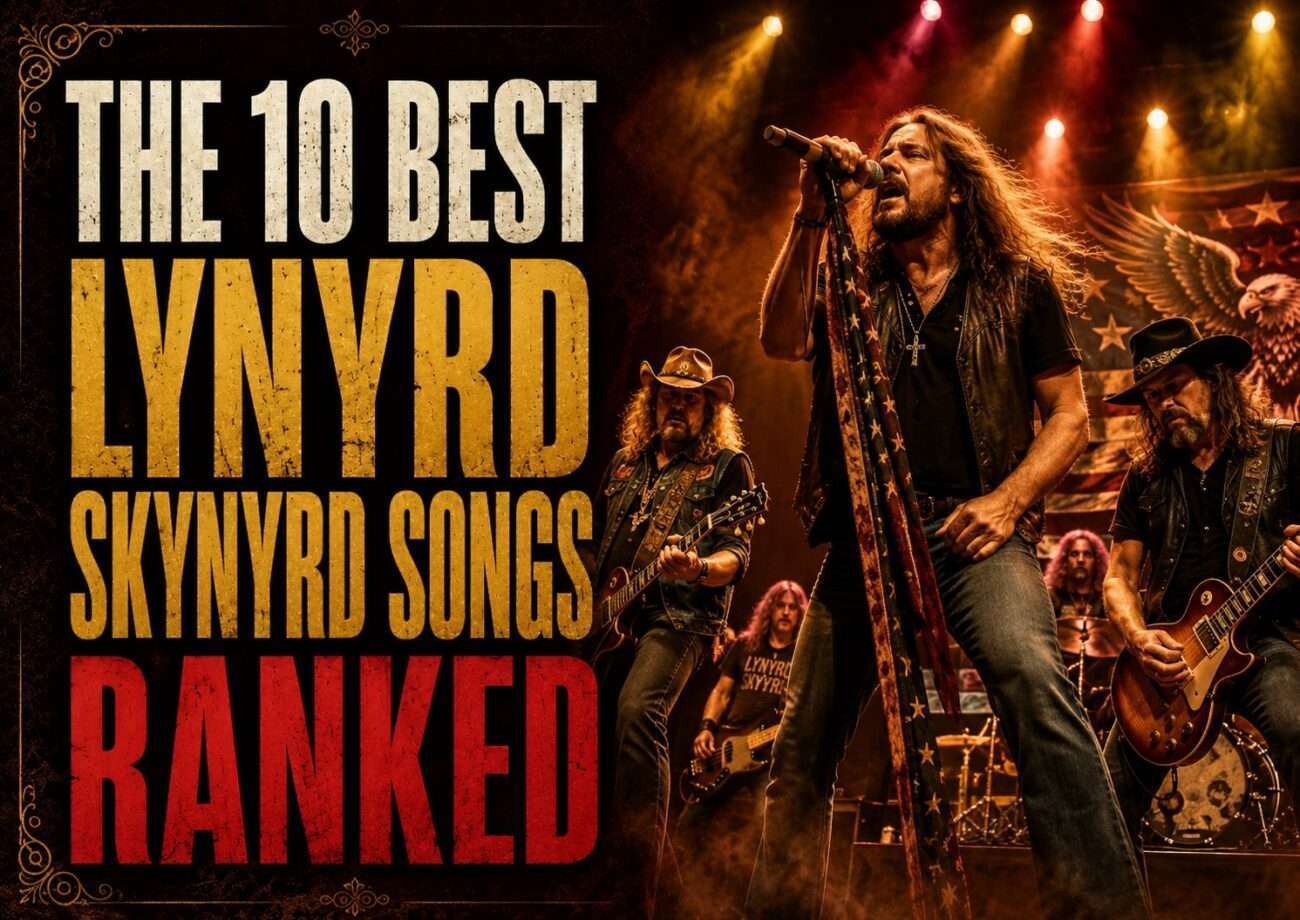
Few bands are as closely identified with a place and a musical style as Lynyrd Skynyrd. Coming out of Jacksonville, Florida, the band took blues, country and hard rock and turned them into the foundation of what became known as Southern rock.
Ronnie Van Zant was the center of it. He wasn’t a technically flashy singer, but he was a remarkable storyteller who could write about family, trouble, life on the road, Southern identity and ordinary people without sounding like he was trying to create mythology. Around him, Lynyrd Skynyrd developed the three-guitar attack that became one of the band’s signatures. The band’s official history specifically credits that guitar approach, along with songs such as “Sweet Home Alabama” and “The Ballad of Curtis Loew,” with helping establish a Southern-rock blueprint that influenced generations of musicians.
The original band’s story also carries unavoidable tragedy. The 1977 plane crash killed Van Zant, guitarist Steve Gaines, backing vocalist Cassie Gaines and others, abruptly ending a remarkably productive five-year recording run. Lynyrd Skynyrd was inducted into the Rock & Roll Hall of Fame in 2006.
What makes this ranking difficult is that the famous songs aren’t the whole story. Skynyrd’s albums were filled with character studies, blues workouts and guitar-heavy tracks that reward listeners who go beyond the two songs everybody knows.
Here are the 10 best Lynyrd Skynyrd songs, ranked.

10. The Ballad of Curtis Loew
Album: Second Helping | Released: 1974
“The Ballad of Curtis Loew” shows how strong Ronnie Van Zant could be when he stopped writing rock anthems and simply told a story.
Curtis is an aging Black blues musician whom the young narrator visits whenever he can scrape together enough money. Van Zant fills the song with small details, giving the character a life that feels larger than the few minutes we spend with him.
The guitars serve the story instead of overpowering it, which is exactly the right decision. Lynyrd Skynyrd’s official history singles out “The Ballad of Curtis Loew” alongside “Sweet Home Alabama” as one of Van Zant’s finest songwriting moments on Second Helping.
It isn’t one of the band’s biggest hits. It is one of the songs that proves Skynyrd was about much more than riffs.
9. Workin’ for MCA
Album: Second Helping | Released: 1974
“Workin’ for MCA” is Lynyrd Skynyrd writing about the music business while still trying to survive inside it.
Van Zant approaches the record-label relationship with exactly the right amount of suspicion and humor. The band wants success, but nobody is pretending the people writing the checks are doing it out of love.
Musically, the track is classic Skynyrd. The guitars drive hard without turning into noise, and the rhythm section gives Van Zant enough space to deliver the lyric conversationally.
It’s also the kind of song that makes more sense as you learn about the band’s relentless work ethic. Skynyrd didn’t appear overnight with “Sweet Home Alabama.” Years of rehearsing, touring and developing the material came first, and “Workin’ for MCA” carries some of that hard-earned attitude.
8. Saturday Night Special
Album: Nuthin’ Fancy | Released: 1975
“Saturday Night Special” immediately attacks with one of Lynyrd Skynyrd’s tougher guitar riffs, but the lyric is more interesting than the heaviness initially suggests.
Van Zant uses the song to question the value of cheap handguns and the violence surrounding them. That’s worth remembering because the band is sometimes reduced to a simplified image that doesn’t account for the contradictions inside Van Zant’s songwriting.
The music remains muscular throughout. This is not a delicate protest song; it’s Skynyrd using its own hard-rock vocabulary to make the argument.
That tension between the sound and the subject gives “Saturday Night Special” a depth that isn’t always acknowledged when it turns up on classic-rock radio.
Continue the Countdown
More Top 10 Classic Rock Rankings
Keep going with more rankings from the guitar-driven bands and artists who defined classic rock.
7. What’s Your Name
Album: Street Survivors | Released: 1977
“What’s Your Name” has the loose, mischievous energy of a band telling stories from the road. Van Zant turns one wild night into a character sketch, while the guitars and piano give the track a more playful swing than some of Skynyrd’s heavier songs.
The timing of its release gives the song an unavoidable sadness. Street Survivors appeared only days before the October 1977 plane crash, making it the final studio album released during Ronnie Van Zant’s lifetime.
Commercially, “What’s Your Name” became one of the band’s biggest singles, reaching No. 13 on the Billboard Hot 100.
Without that tragic context, however, the recording remains exactly what it was designed to be: a funny, swaggering road song from a band that had become exceptionally good at making rock and roll sound effortless.
6. That Smell
Album: Street Survivors | Released: 1977
“That Smell” may be one of Ronnie Van Zant’s most chilling songs because the warning at its center was very real.
The song addresses destructive behavior and the growing sense that reckless living inside the band’s world could eventually have serious consequences. Van Zant doesn’t romanticize it. The tone is accusatory, worried and almost prophetic.
The guitars create an appropriately ominous atmosphere, and the repeated refrain gives the song a sense of danger that grows rather than disappears.
Because of what happened shortly after Street Survivors was released, listeners inevitably hear “That Smell” differently now. But even without hindsight, it stands as one of the band’s strongest examples of Van Zant observing the world immediately around him and turning it into a warning.
5. Tuesday’s Gone
Album: (Pronounced ‘Lĕh-‘nérd ‘Skin-‘nérd) | Released: 1973
“Tuesday’s Gone” reveals the softer side of Lynyrd Skynyrd without giving up the band’s identity.
The song is about leaving something behind and understanding that life is going to move whether you’re ready or not. Van Zant’s delivery carries resignation rather than melodrama, which makes the lyric considerably more affecting.
The arrangement takes its time. Piano and guitar create an almost dreamlike atmosphere, and the band resists the urge to turn every section into a showcase.
That’s an important part of Skynyrd’s greatness. For all the attention paid to the guitarists, some of the band’s strongest recordings are powerful because the musicians know when not to crowd the song.
“Tuesday’s Gone” is the best example.
4. Gimme Three Steps
Album: (Pronounced ‘Lĕh-‘nérd ‘Skin-‘nérd) | Released: 1973
Ronnie Van Zant could turn trouble into comedy better than almost anybody.
“Gimme Three Steps” tells the story of a man caught with another man’s woman and suddenly facing a gun. The narrator has absolutely no interest in proving how tough he is; he just wants enough distance to escape.
That’s what makes the song so entertaining. Van Zant undercuts the macho-rock image by making himself the guy smart enough to run.
The guitar riff supplies all the swagger the narrator lacks, and the rhythm has enough Southern swing to keep the story moving.
The band’s official modern discography still puts “Gimme Three Steps” among the core songs representing Lynyrd Skynyrd’s legacy, alongside “Simple Man,” “Sweet Home Alabama” and “Free Bird.”
It’s storytelling, humor and guitar rock in one package.
3. Simple Man
Album: (Pronounced ‘Lĕh-‘nérd ‘Skin-‘nérd) | Released: 1973
“Simple Man” wasn’t one of Lynyrd Skynyrd’s major chart singles, yet it gradually became one of the band’s most important songs.
Van Zant frames the lyric as advice from a mother to her son: don’t chase wealth for its own sake, understand yourself and try to live with some basic decency. There is nothing complicated about the message, which is precisely why it has endured.
The arrangement builds beautifully. The opening feels intimate, but the guitars gradually give the song more weight without destroying the reflective tone.
What makes “Simple Man” especially powerful is how little cynicism it contains. Van Zant could be funny, confrontational and suspicious, but here he allows himself to be completely sincere.
The band’s official catalog continues to treat “Simple Man” as one of its defining recordings.
For many fans, it would be No. 1.
2. Sweet Home Alabama
Album: Second Helping | Released: 1974
Three guitar notes are enough.
The opening of “Sweet Home Alabama” has become so familiar that it’s easy to forget what a remarkably effective rock record sits underneath all the cultural baggage that accumulated around it.
Ed King’s famous guitar figure is bright and immediately recognizable, Billy Powell’s piano adds another layer of Southern character and Van Zant delivers the lyric with his usual conversational confidence. The song became Lynyrd Skynyrd’s highest-charting Hot 100 single, reaching No. 8 in 1974.
The lyric has generated decades of discussion, particularly Van Zant’s references to Neil Young and Alabama politics. Reducing the song to a simple political statement misses some of the contradictions and irony within it, but those arguments have also become part of the record’s history.
Musically, there is no argument. “Sweet Home Alabama” is one of the most recognizable American rock songs ever recorded.
For almost any other band, that would make it No. 1.
1. Free Bird
Album: (Pronounced ‘Lĕh-‘nérd ‘Skin-‘nérd) | Released: 1973
“Free Bird” begins as a ballad and ends like the band has decided to set the stage on fire.
That transformation is why the song works.
Ronnie Van Zant’s opening performance is surprisingly restrained. The lyric describes someone who knows he can’t make the promises another person wants from him. Rather than presenting freedom as purely heroic, the song acknowledges that somebody else gets hurt when you refuse to stay.
Then the guitars take over.
Allen Collins’ extended solo turns the second half of “Free Bird” into one of rock’s defining instrumental passages. The tempo increases, the emotional tension changes completely and the song becomes less about explaining freedom than physically demonstrating what it feels like.
Chart success doesn’t tell the story. “Free Bird” peaked at No. 19 on the Billboard Hot 100 in 1975, well below “Sweet Home Alabama.” Yet its cultural life has become enormous. Billboard was still documenting new uses of “Free Bird” in 2025, more than fifty years after its original appearance on the band’s debut album.
And then there is the concert legacy. Yelling “Free Bird!” became such a rock-show cliché that the request itself turned into part of popular culture.
Strip all of that away and the original recording still delivers.
“Sweet Home Alabama” may be the bigger pop hit. “Simple Man” may carry the strongest message.
But “Free Bird” is Lynyrd Skynyrd’s masterpiece.
That’s why it’s No. 1.
What Did We Leave Out?
The hardest omission is “I Know a Little.” Steve Gaines brought a different kind of guitar sophistication to the band, and the song swings harder than much of the material surrounding it on Street Survivors. It’s one of the clearest examples of where Skynyrd’s music might have gone had the original band’s story continued.
“Call Me the Breeze” also came very close. Lynyrd Skynyrd didn’t write it — J.J. Cale did — but their version turned the song into a Southern-rock workout perfectly suited to the band’s multiple guitars and Billy Powell’s piano.
Other serious contenders include “On the Hunt,” “The Needle and the Spoon,” “Don’t Ask Me No Questions,” “You Got That Right,” “Cry for the Bad Man,” “I Ain’t the One” and “Down South Jukin’.” The band’s current official catalog still highlights many of these deeper cuts alongside the giant hits.
That’s what gets lost when Skynyrd is reduced to “Free Bird” and “Sweet Home Alabama.” The original band’s album catalog is considerably deeper than its greatest-hits reputation suggests.
Why Lynyrd Skynyrd’s Best Songs Still Work
The guitars are the obvious answer, but they’re not the complete answer.
Lynyrd Skynyrd’s three-guitar approach gave the group an enormous sound without requiring every player to do the same thing. The guitarists could create rhythm, harmony and lead lines around one another, producing something much richer than simply stacking more distortion onto a track. The band’s own history identifies that three-guitar attack as one of the defining characteristics of the classic sound.
Then there was Ronnie Van Zant.
He wrote in plain language and rarely sounded impressed with himself. His characters got drunk, made mistakes, ran from trouble, loved their families and wondered whether they were living correctly. That storytelling gave the guitars something human to surround.
The Rock & Roll Hall of Fame describes Skynyrd’s history as one of extraordinary talent and survival, which is fitting for a band whose songs continued long after the original lineup was gone.
The music was Southern, but the subjects were universal.
That’s why it lasted.
Want to See Lynyrd Skynyrd Live?
Lynyrd Skynyrd remains on the road in 2026, and this is another especially timely ticket connection.
The band’s official tour page confirms 19 co-headlining North American appearances with Foreigner during summer 2026. The current lineup continues performing a catalog built around songs such as “Simple Man,” “Gimme Three Steps,” “Sweet Home Alabama” and the inevitable show-closing “Free Bird.” Concert Ticket Source also currently lists Lynyrd Skynyrd among its featured classic-rock touring acts.
Johnny Van Zant now carries the vocal role once held by his brother Ronnie, while the modern show has become both a concert and a celebration of a catalog stretching back more than fifty years.
For fans of Southern rock, there aren’t many opening guitar notes more likely to bring an entire crowd to its feet.
Check Lynyrd Skynyrd concert dates and tickets at Concert Ticket Source
70s Music Wisdoms may receive compensation from partners featured on this site.