By Howard Dee
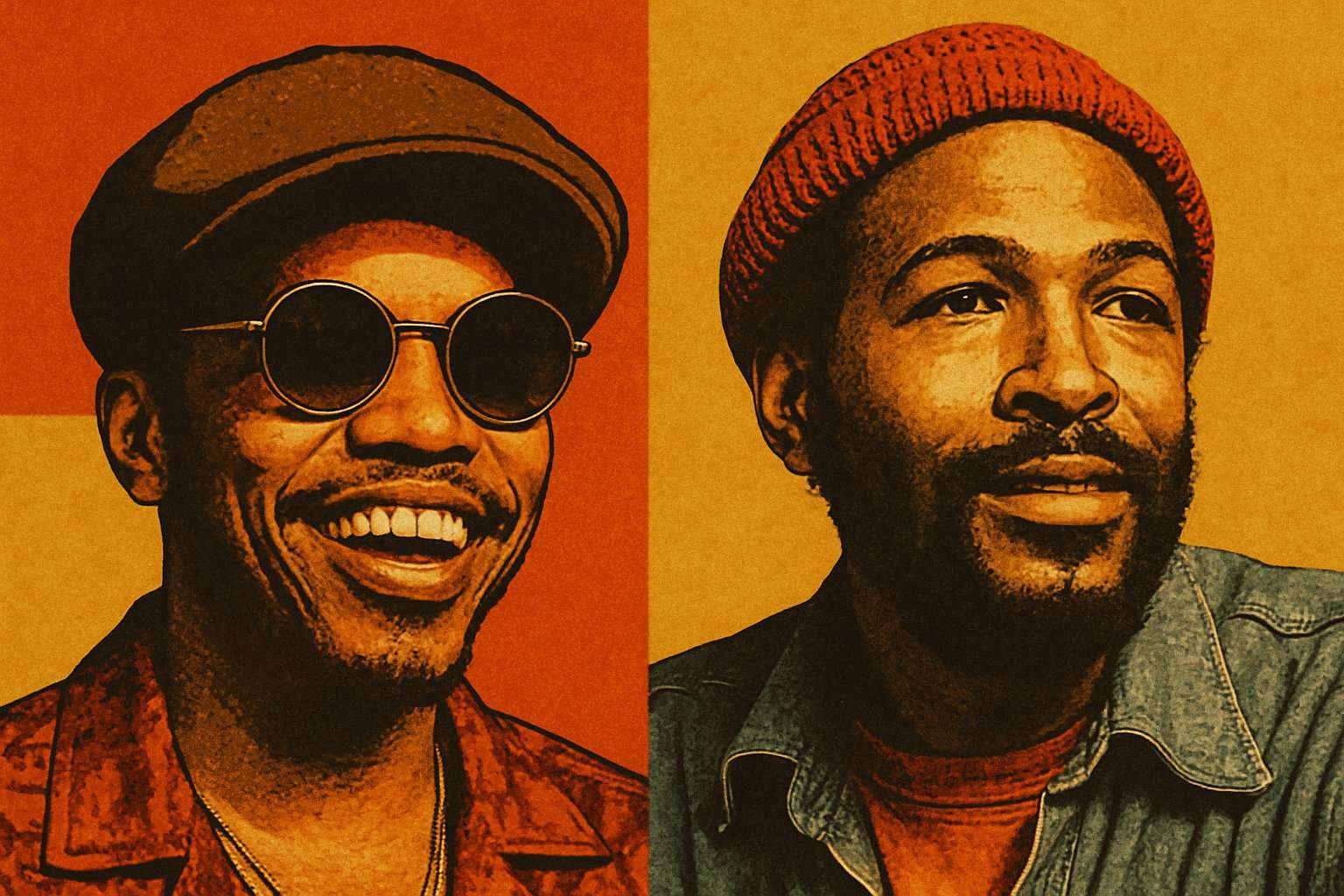
Every generation gets one artist who can make joy sound spiritual, pain sound beautiful, and rhythm feel like a heartbeat. In the 1970s, that artist was Marvin Gaye — one of the most emotionally honest, musically sophisticated, and socially aware performers the world has ever seen. Today, that role belongs to Anderson .Paak, a relentlessly creative musician who carries soul, funk, and gospel in his DNA and delivers it with the same mix of warmth, grit, and humanity that Marvin embodied.
This isn’t about imitation.
It’s about lineage.
Marvin Gaye shaped an era by blending heart, groove, and conscience. Anderson .Paak steps into the modern world with that same compass. Two different timelines, one artistic spirit. Let’s break down exactly why these two artists feel connected across 50 years — even though they were born into completely different Americas.
The Groove Is the Truth
Marvin Gaye understood something fundamental: if the groove is irresistible, the message will travel farther. His music moved bodies first and minds second. “What’s Going On,” “I Want You,” “Got to Give It Up,” “Inner City Blues,” “Mercy Mercy Me” — all of them were socially or emotionally heavy, but built around grooves so undeniable you couldn’t help but fall in.
Anderson .Paak inherited that rulebook. He doesn’t preach. He doesn’t lecture. He doesn’t force meaning onto the listener. He lets the rhythm open the door. “Come Down,” “The Bird,” “Carry Me,” “Reachin’ 2 Much,” “Tints,” and “Lockdown” all hit with that same Marvin energy — heavy content wrapped in feel-good, soul-drenched production.
Marvin Gaye was a messenger disguised as a hitmaker.
.Paak is a hitmaker disguised as a messenger.
Either way, you dance first. Then you realize what the artist is saying.
Soul Without Borders
Marvin Gaye never belonged to a single genre. He could sing:
- pure soul
- Motown pop
- gospel-inspired ballads
- funk and disco
- proto-synth R&B
- lush orchestral arrangements
He didn’t pivot — he expanded.
Anderson .Paak is the same kind of genre shapeshifter. He blends:
- soul
- funk
- R&B
- hip hop
- gospel
- jazz
- rock
But like Marvin, he does it from the inside out. He feels genres as tools, not cages. Listen to .Paak’s albums Malibu, Oxnard, Ventura, or An Evening with Silk Sonic — you’ll hear Marvin’s freedom in every sonic choice.
There’s no mimicry.
Just the same genetic code: music with no walls.
A Voice That Sounds Human First, Perfect Second
Marvin Gaye had one of the greatest voices ever recorded — but what made him special wasn’t perfection. It was vulnerability. Marvin’s voice cracked, whispered, sighed, soared, and floated. He sang like he was telling you a secret.
Anderson .Paak has that same quality:
raspy
warm
imperfect
emotion-first
story-driven
In a world full of overly tuned vocals, .Paak sounds alive. He doesn’t polish the flaws out — he builds the performance around them. Marvin did that in the 70s when everyone else was trying to hit perfect notes. .Paak does it today when everyone else is trying to hit perfect algorithms.
Both men understood something most singers never learn:
The emotion is the instrument. The voice is just the speaker.
Lyricism with a Conscience
Marvin Gaye could’ve coasted on love songs forever — but he didn’t. He became the voice of an era. “What’s Going On” was a risk. A challenge. A spiritual document wrapped in immaculate groove.
Marvin addressed:
- police brutality
- war
- environmental collapse
- racial tension
- inequality
- addiction
- heartbreak
Anderson .Paak steps into that same social-moral lane. “Lockdown” is a modern protest anthem — gritty, lived-in, unpretentious. “The Season | Carry Me” tackles poverty, trauma, and resilience. “The Waters” grapples with systemic struggle. Even his love songs are textured by life’s complexity, not fantasy.
He speaks about the world without preaching — the exact Marvin Gaye approach.
The Rhythm Section Is the Soul of the Music
People forget Marvin Gaye started as a drummer. His rhythmic instincts shaped everything he created — the syncopation, the pocket, the way the band moved around his voice.
Anderson .Paak is the same kind of rhythm-first architect.
He’s a drummer first.
A bandleader second.
A vocalist third.
Watch him perform live behind the kit — it’s the closest living echo of Marvin’s “musician first, singer second” identity. Bruno Mars even built Silk Sonic around that distinction: .Paak is the heartbeat, the groove engine, the rhythmic center.
This is not a coincidence. It’s legacy.
Joy as Resistance
Marvin Gaye delivered joy in a decade full of turbulence. His joy wasn’t naive — it was defiant. A way of saying: We’re hurting, but we’re still dancing.
Anderson .Paak operates with that same emotional mission.
His music is fun, but never shallow.
It’s joyful, but never empty.
It’s upbeat, but built on real-life struggle.
Marvin Gaye used joy to survive the 1970s.
Anderson .Paak uses joy to survive the 2020s.
Different decades. Same medicine.
Making Pain Sound Beautiful
Marvin’s gift wasn’t singing beautifully.
It was singing pain beautifully.
Anderson .Paak carries the same fire.
He sings about:
- addiction
- broken families
- incarceration
- poverty
- grief
- resilience
And yet the music never feels heavy-handed. It feels warm. Human. Possible. Marvin had that effect. .Paak has that effect.
Some artists reveal pain to shock you.
These two reveal pain to connect with you.
The Silk Sonic Confirmation
If there was any doubt that Anderson .Paak was the modern heir to Marvin’s soul, Silk Sonic erased it. Leave the Door Open was pure 70s elegance — lush, tender, falsetto-driven, romantic, and musically impeccable.
Bruno Mars brought the charisma.
.Paak brought the Marvin.
Together, they made an album Marvin Gaye could’ve heard in 1977 and immediately understood.
The Spirit They Share
Marvin Gaye and Anderson .Paak both carry:
- spiritual warmth
- groove-first philosophy
- social awareness
- rhythmic intelligence
- emotional vulnerability
- genre fluidity
- soulful grit
- joy with depth
- voices that sound human before they sound perfect
This isn’t a comparison for clicks.
It’s a comparison that musicians, critics, and fans all quietly acknowledge.
Marvin Gaye changed what soul music could say.
Anderson .Paak changes how soul music gets delivered today.
Both men are messengers — not just singers.
Both carry soul as if it’s a responsibility — not a brand.
Both built careers on truth.
Final Thoughts from Howard Dee
I grew up in a world where Marvin Gaye’s music felt like a heartbeat — a blend of groove, honesty, love, and longing that no one else could replicate. And today, when I watch Anderson .Paak perform, I feel that heartbeat again. Not in imitation. But in spirit.
Marvin spoke for a generation searching for meaning.
.Paak speaks for a generation searching for grounding.
Different worlds. Same voice.
Different eras. Same mission.
Different struggles. Same soul.
Marvin Gaye lit the torch.
Anderson .Paak is carrying it.
Explore More Marvin Gaye
Continue exploring the music, stories, and iconic moments that shaped Marvin Gaye’s incredible legacy. Discover more song histories, deep dives, fun facts, and 1970s music insights that bring his artistry into full focus.
- Inside Marvin Gaye’s Legacy and Music
- The 15 Best Marvin Gaye Songs
- A lyrical Deep Dive into “What’s Going On”