🗣️ Howard Dee’s Take on the Song
I first heard “Closer to the Heart” on the Exit… Stage Left live album. What struck me right away was how short and direct it was — about three minutes — a far cry from the sprawling 10-minute epics Rush is known for. But what it lacked in length, it made up for in message.
Unlike most songs of its era, especially in the late 1970s post-Vietnam War, it wasn’t a protest anthem. It didn’t demand revolution or take aim at a specific leader. Instead, it offered a simple, powerful idea: if we want a better world, we need to lead with our hearts — all of us. That message still resonates with me today. It’s timeless. And unfortunately, still necessary.

🎼 Background on the Song
“Closer to the Heart” was released in September 1977 as the lead single from A Farewell to Kings, Rush’s fifth studio album. It marked a shift in the band’s sound — still rooted in progressive rock, but infused with a more melodic, accessible sensibility. The band had just returned from recording in Rockfield Studios in Wales, and the more open, organic feel of the surroundings found its way into the music.
The lyrics were co-written by Neil Peart, Rush’s drummer and philosophical architect, and Peter Talbot, a close friend of the band. The song stands out in Rush’s catalog not for technical complexity but for moral clarity. Its central idea — that change must come “closer to the heart” — is expressed with poetic economy and spiritual urgency.
The song quickly became a fan favorite and a concert staple. Though it never cracked the Top 40 in the U.S., it was Rush’s first hit in the UK and remains one of their most enduring anthems, appearing on nearly every tour setlist for the next three decades.
🧠 Dive into the Lyrics — Stanza by Stanza
“And the men who hold high places
Must be the ones who start
To mold a new reality
Closer to the heart
Closer to the heart”
🧢 Howard Dee’s Take
Right off the bat, the song starts with a challenge to leadership — but it’s not angry or accusatory. It’s hopeful. This was released in the shadow of the Vietnam War and Watergate, but rather than shouting for leaders to step down, it asks them to step up.
This line always resonated with me because it reflects what I wish leadership looked like: thoughtful, ethical, guided by what’s best for the people. Not power for power’s sake, but purpose. If those in power started leading with empathy, we might just have a fighting chance.
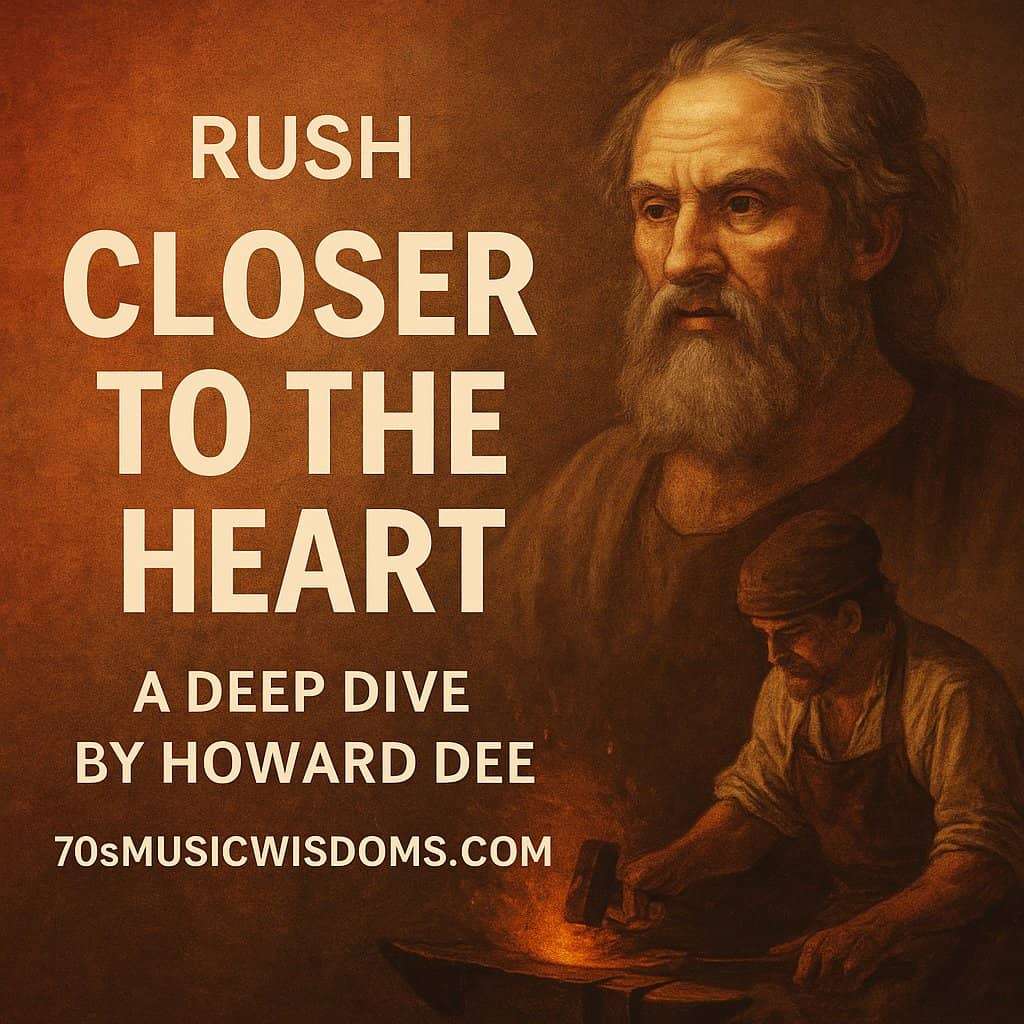
“The blacksmith and the artist
Reflect it in their art
They forge their creativity
Closer to the heart
Yes, closer to the heart”
🧢 Howard Dee’s Take
When I first heard this, I imagined a small European town in the 15th or 16th century — people living by craft, not by spreadsheet. But to me, this is really about all of us. The blacksmith and artist are stand-ins for today’s teachers, factory workers, designers, and creators.
Rush is saying: it’s not just on leaders to change the world. It’s on each of us to reflect truth and values in what we do every day — whether we’re hammering metal or shaping ideas.
“Philosophers and ploughmen
Each must know his part
To sow a new mentality
Closer to the heart
Yes, closer to the heart”
🧢 Howard Dee’s Take
This is the democratization of wisdom. The philosophers — the thinkers — and the ploughmen — the workers — both matter equally in the creation of a better world. That’s a radical message, especially from a band that could’ve just written about spaceships and dystopias.
For me, it’s a reminder that your title doesn’t define your impact. Whether you write code or write books, you have the ability — and the obligation — to do it closer to the heart.
“You can be the captain
And I will draw the chart
Sailing into destiny
Closer to the heart
Closer to the heart”
🧢 Howard Dee’s Take
This last verse is all about collaboration. One leads, one guides — but neither one is more important than the other. It’s mutual trust, shared purpose.
I love the imagery of sailing into destiny. It’s optimistic. It says: we can go somewhere better if we each do our part with intention, and we stay aligned with the right internal compass.
🔁 Final Thoughts from Howard Dee
What makes “Closer to the Heart” timeless is its simplicity. Rush is known for grand ideas and complex suites, but this song? This one gets to the soul of things — fast. And the message is clear: if you want to fix the world, start by fixing yourself.
The sad part is, this song could’ve been written yesterday. Our leaders are still acting in self-interest. Society is still divided. But the song offers a challenge we can still accept: be more thoughtful, more intentional, more human. Closer to your heart.
📌 Song Recap
- Released: September 1977
- Album: A Farewell to Kings
- Billboard Performance: Moderate U.S. radio play; Top 40 in the UK
- Notable Facts: First Rush song co-written by an outside lyricist (Peter Talbot)
- Live Legacy: Performed on nearly every tour from 1977 through 2010
🎶 Other Song Deep Dives
- “Vienna” – Billy Joel
- “Cat’s in the Cradle” – Harry Chapin
- “Turn the Page” – Bob Seger
- “Dreams” – Fleetwood Mac
🔗 More Rush on 70sMusicWisdoms.com
- Rush Artist Profile
- Top 10 Rush Songs According to Billboard Magazine
- 10 Interesting Facts About Rush-Coming Soon
- Rush Albums Ranked – Coming Soon
🎶 Artist Resources
💬 What Does This Song Mean to You?
Has “Closer to the Heart” spoken to you differently over the years?
Do you think its message is still relevant today?
Share your thoughts in the comments below.
Let’s talk about what this song means to you, and what it could still mean for all of us.