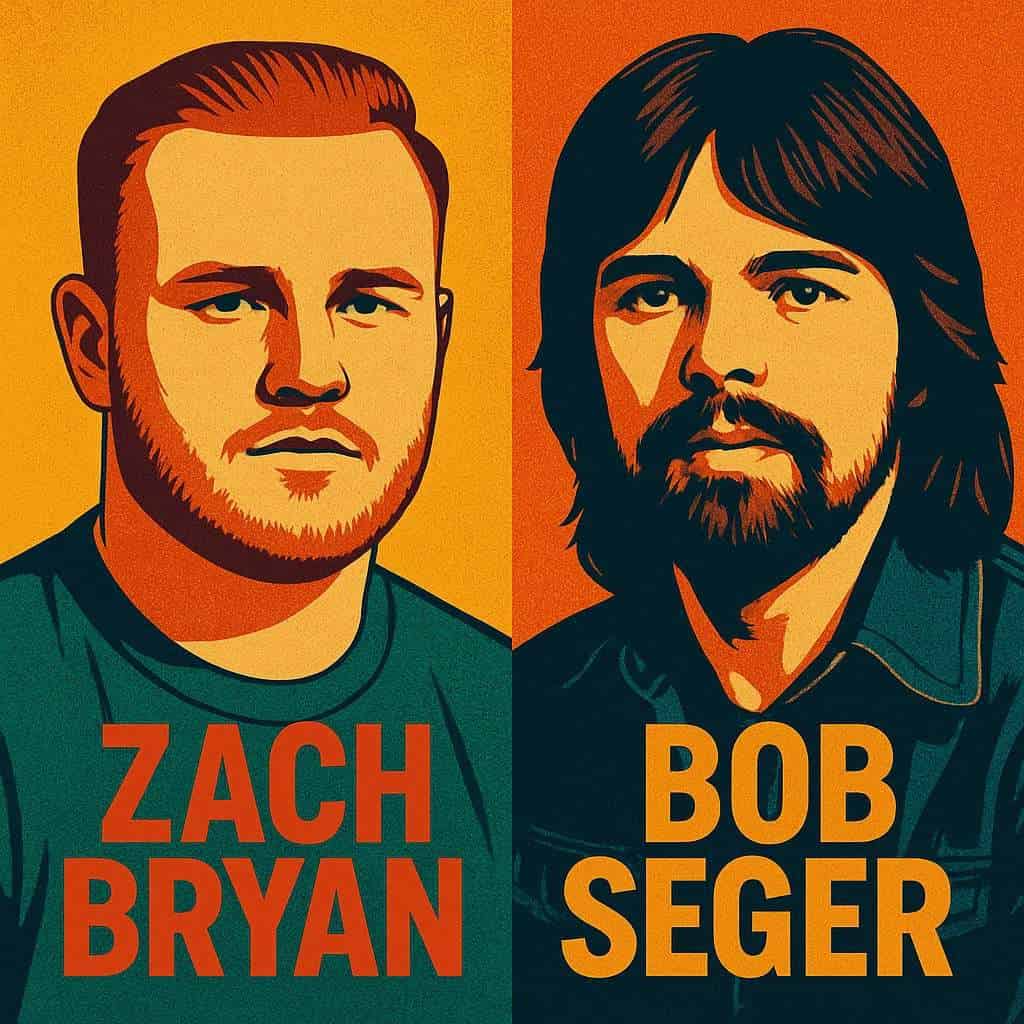
This page compares Zach Bryan vs Bob Seger, exploring how their songwriting, themes, and emotional storytelling connect across generations of American heartland music. It highlights the shared grit, honesty, and lived-in experience that define both artists.
Zach Bryan and Bob Seger come from completely different eras, but their music carries the same emotional weight and grounded authenticity. This comparison breaks down the themes, influences, and storytelling parallels that link a 1970s rock legend to one of today’s most impactful modern songwriters. If you’ve ever wondered why fans often place Zach Bryan in the lineage of heartland icons like Bob Seger, this article gives you a clear, music-driven answer.
Howard Dee’s Take
I didn’t expect Zach Bryan to remind me of anyone from the 1970s, but the first time I heard him, the connection to Bob Seger was hard to ignore. Zach has that same stripped-down honesty that hits you without warning — no flash, no filters, just reflections on life that feel lived rather than written. Seger did that before anyone knew what “heartland rock” was, and Zach Bryan is somehow tapping into that same well decades later. Different sound, different generation, same emotional truth.
Why Fans Compare Zach Bryan vs Bob Seger
Listeners pick up on the same core qualities in both artists: emotional authenticity, plainspoken truth-telling, and a refusal to hide behind production tricks. You don’t need a producer’s statement to explain their appeal — the songs do the talking. Whether it’s Seger singing about the roads he wore down or Zach Bryan reflecting on the weight of memory and heartbreak, both artists feel like they’re letting you read pages from a life they actually lived.
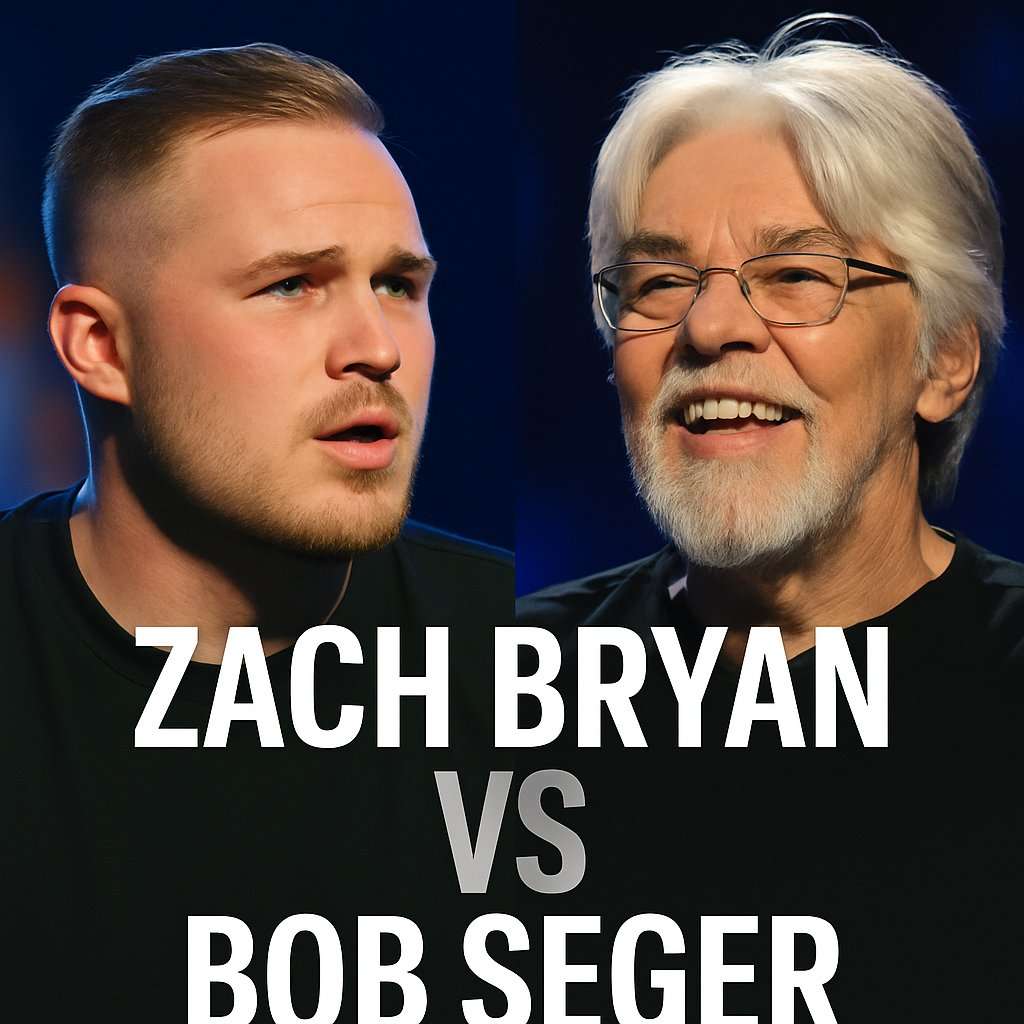
The Shared DNA of Their Songwriting
Raw, Unfiltered Vocals
Neither singer smooths out the rough edges.
- Seger had the gravel, the road dust, and the “lived-too-much-too-young” rasp.
- Bryan has the cracked, emotional quiver that sounds like it was recorded at 2 a.m. after a real fight or a real goodbye.
The imperfections are the hook.
Blue-Collar, Heartland Themes
Seger’s songs were built on:
- long drives
- working too hard
- relationships that slipped away
- regrets you only admit at night
Bryan hits the very same emotional corners — not with 70s bar-band rock, but with acoustic grit and quiet honesty. Different instruments, same backbone.
Stories Rooted in Real People
Seger’s “Mainstreet,” “Against the Wind,” and “Turn the Page” all read like scenes from a life.
Bryan’s “Something in the Orange,” “Condemned,” and “Oklahoma Smokeshow” do the same — conversations, memories, and mistakes turned into melodies.
Both artists write songs you picture, not just hear.
Where Their Sounds Diverge
This is where generations show their fingerprints.
Bob Seger
- Big choruses
- Live-band power
- Muscle Shoals influence
- Classic 70s heartland rock instrumentation
- Arena-ready sound
Zach Bryan
- Minimalist production
- Acoustic-driven arrangements
- Poetic, journal-like verses
- Softer dynamics with emotional spikes
- More intimacy than volume
Seger went for the full room.
Zach often sounds like he’s singing from the far end of a quiet porch.
Is Zach Bryan Today’s Version of Bob Seger?
In terms of mission? Yes.
In terms of sound? No — and it doesn’t need to be.
What connects them isn’t genre; it’s purpose.
Seger spoke for the working-class Midwest of the 1970s.
Bryan speaks for today’s generation trying to process grief, love, trauma, and identity in public, often without a filter.
Both fill a cultural gap that no one else was filling at the time.
How Both Artists Speak to Their Generations
Bob Seger’s Generation
He gave a voice to:
- people aging out of their youth
- people carrying responsibilities they didn’t ask for
- people learning how fast life moves
- people trying to find meaning in work, love, and memory
Zach Bryan’s Generation
He speaks to:
- people navigating anxiety, grief, and identity
- people growing up in fractured families
- people tired of engineered, algorithm-ready music
- people longing for something real
Seger’s fans were fighting the weight of adulthood.
Bryan’s are fighting the weight of existence in the digital age.
But both groups find comfort in the same raw honesty.
Final Thoughts from Howard Dee
Every time I hear Zach Bryan, I feel that familiar honesty that made Seger so important in the 1970s. Both artists write the kind of songs that only come from someone who’s lived a little and isn’t afraid to tell the truth, even when it’s ugly. You don’t listen to either of them for perfection — you listen because what they’re singing feels like the real story, not the polished one. Different decades, different instruments, but the same kind of emotional gravity that keeps people coming back.
🔍 Explore More Bob Seger
- Bob Seger – Life, Music, Greatest Hits & 1970s Legacy
- Top 15 Bob Seger Songs You’ll Love
- 10 Interesting Facts About Bob Seger
- Turn the Page: A Lyric Deep Dive
🔗 Artist Resources
- Official Bob Seger Website
- Rock & Roll Hall of Fame – Bob Seger
- Spotify – Bob Seger Essentials Playlist
- Zach Bryan Official Website
- Zach Bryan Spotify Essentials
🎸 Explore Other 1970s Artist Profiles
If you love Bob Seger’s music, you’ll probably enjoy these deep dives into other iconic artists of the 1970s. Each profile includes a full biography, top songs, fun facts, lyric insights, and more.
- Billy Joel: Full Artist Profile
- The Eagles: Artist Profile & History
- Fleetwood Mac: Artist Profile
- Genesis:Artist Profile
- Steve Miller Band: Artist Overview
- Elton John: Artist Profile
- Carole King: Artist Profile
🔍❓ Bob Seger FAQ
Why do people compare Zach Bryan and Bob Seger?
Fans connect the two because both lean heavily on personal storytelling, emotional honesty, and heartland themes. They also both write from experience rather than performance.
Are Zach Bryan and Bob Seger musically similar?
Not in sound — Seger uses full-band rock arrangements, while Bryan leans into acoustic, stripped-down production. The similarity lies in their writing approach, not their instrumentation.
Is Zach Bryan influenced by Bob Seger?
Bryan hasn’t directly cited Seger, but the overlap in themes, tone, and emotional delivery makes the comparison natural for listeners.
Who has had a bigger impact on their generation?
Seger defined heartland rock in the 1970s. Bryan is becoming the emotional voice of a younger generation dealing with very different pressures. Each fits the moment they came from.