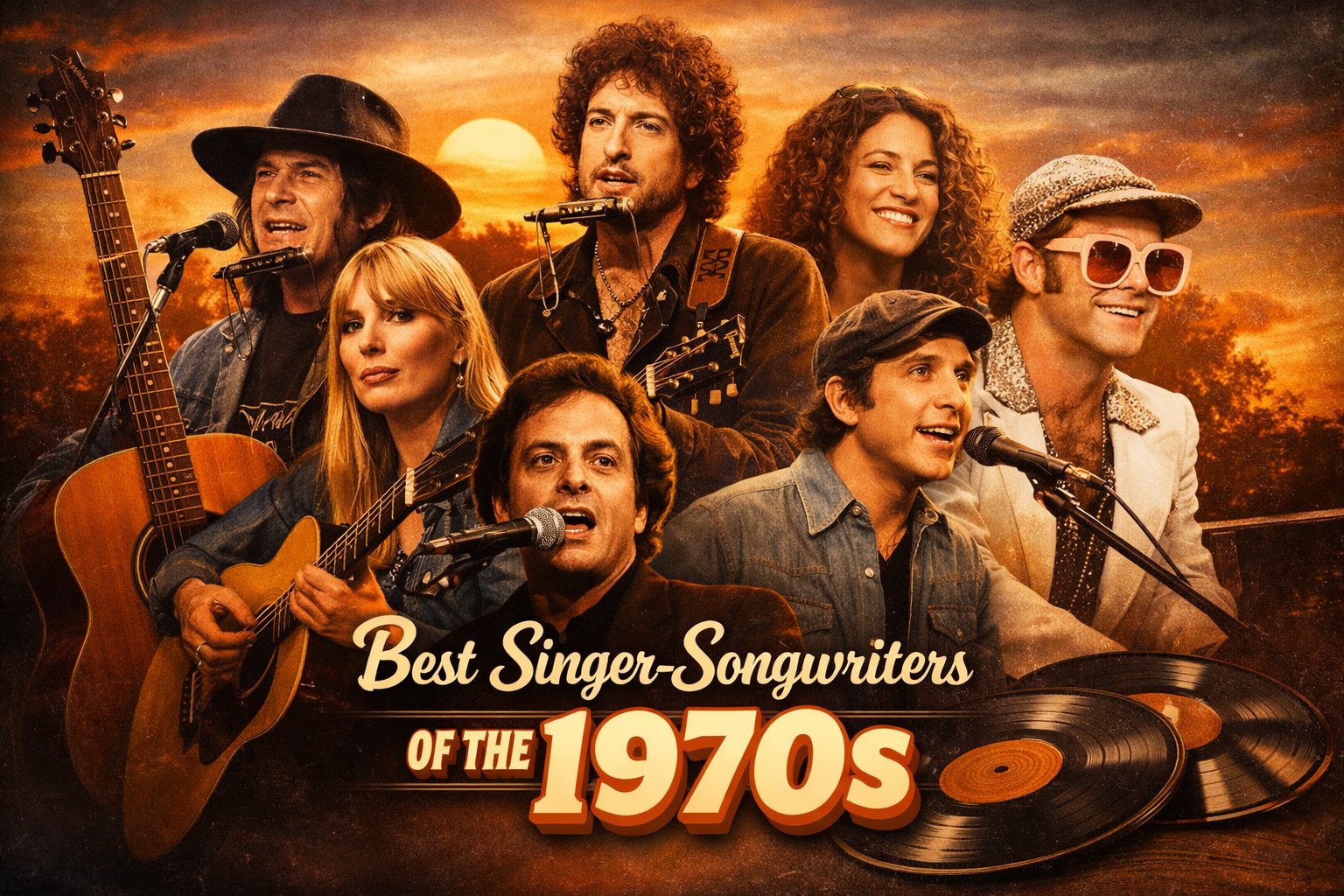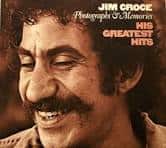
This Jim Croce biography explores the life, music, and legacy of one of the most honest and relatable singer-songwriters of the 1970s. Known for his plainspoken lyrics, vivid storytelling, and emotional clarity, Croce built a catalog of songs that felt lived-in and real. Though his time in the spotlight was heartbreakingly brief, his music continues to resonate across generations.
HOWARD DEE’S TAKE
Jim Croce has always felt different to me than most artists of the 1970s. His songs don’t feel like performances—they feel like conversations you overheard, or maybe ones you had yourself and didn’t realize how much they mattered until years later. There’s no distance between the singer and the listener. When Jim Croce sings about love, regret, ambition, or exhaustion, it’s not dressed up. It’s just there, plain and unguarded.
What’s always struck me is how earned his success was. Croce didn’t come out of the gate as a star. He lived the grind, stepped away from music entirely, worked regular jobs, got married, became a father, and only then came back with something worth saying. That’s why his songs land the way they do. They weren’t written to chase trends or charts—they were written because he’d already lived the stories.
Early Life and Musical Foundations
Jim Croce was born James Joseph Croce on January 10, 1943, in South Philadelphia, a neighborhood defined by tight communities, strong personalities, and stories that were passed down as currency. Raised in an Italian-American household, Croce grew up surrounded by music, conversation, and character—elements that would later define his songwriting.
His parents encouraged musical training early. Croce learned accordion and piano before settling on guitar, which became his primary instrument and storytelling tool. Even as a teenager, he gravitated less toward technical flash and more toward songs that said something. He wasn’t chasing virtuosity; he was chasing meaning.
Croce attended Villanova University in the early 1960s, studying psychology and German. College exposed him to the folk revival that was sweeping campuses across the country. Coffeehouses and informal gatherings became laboratories where Croce refined his approach—simple melodies, conversational phrasing, and lyrics built around people rather than abstractions. His songs didn’t preach. They observed.
The Road Years and the Reality of the Folk Circuit
After college, Croce committed fully to music, entering the grueling world of the 1960s folk circuit. Alongside his wife Ingrid Jacobson, whom he married in 1966, Croce toured relentlessly. They played wherever they could—colleges, small clubs, radio stations, living rooms—often for little money and no guarantees.
In 1966, Croce released Facets, a self-produced album sold largely at performances. While it captured his emerging voice, it failed to open industry doors. The experience left Croce increasingly disillusioned with the business side of music. The romantic idea of the traveling folk singer collided with the reality of exhaustion, financial strain, and creative compromise.
By the late 1960s, Croce walked away from music altogether. This was not a hiatus—it was a conscious rejection. He took blue-collar jobs in construction and factory work, deciding that unless music could be honest and sustainable, it wasn’t worth the personal cost. These years away from the stage would prove essential. They gave Croce the lived experience that later made his songs feel so grounded and earned.
The Army, Observation, and the Seeds of Storytelling
During this period, Croce also spent time in the U.S. Army National Guard. While his service was not central to his public image, it sharpened something critical in his songwriting: observation. Croce listened. He noticed names, personalities, reputations, and how stories traveled faster than truth.
It was during this time that he became aware of a soldier named Leroy Brown who had gone AWOL. The man himself was not a legend, but the name stayed with Croce. It had rhythm. It carried weight. It sounded like someone people would talk about.
That instinct—recognizing the narrative power of everyday details—would later become one of Croce’s defining strengths.
Fatherhood, Return to Music, and a New Urgency
Everything changed in 1970 when Croce and Ingrid welcomed their son, Adrian James Croce, known as A.J. Becoming a father reframed Croce’s relationship with time, ambition, and legacy. Music was no longer about chasing a dream; it was about saying what mattered while there was time to say it.
Encouraged by Ingrid, Croce returned to songwriting with renewed focus. The songs that emerged were sharper, more economical, and emotionally precise. They reflected adult concerns—love complicated by distance, dreams that came with costs, and the quiet fear that time moves faster than we expect.
This was not the work of a young man chasing success. It was the work of someone who had already stepped away and come back only because he had something real to communicate.
Breakthrough: You Don’t Mess Around with Jim (1972)
Croce signed with ABC Records and released You Don’t Mess Around with Jim in 1972. The album marked his long-delayed breakthrough and immediately distinguished him from many of his contemporaries.
Songs like “Operator (That’s Not the Way It Feels)” and “Time in a Bottle” revealed an artist unafraid of vulnerability, while the title track showcased his gift for character-driven storytelling. The production was restrained, allowing Croce’s voice and lyrics to remain front and center.
Audiences responded because the songs felt real. Croce wasn’t performing at listeners—he was speaking with them.
“Bad, Bad Leroy Brown”: Myth, Observation, and Consequence
“Bad, Bad Leroy Brown,” released on Life and Times (1973), is often mischaracterized as a novelty song. In reality, it is a masterclass in Croce’s narrative method.
The song’s foundation came from Croce’s time in the Army National Guard, where the name Leroy Brown lodged itself in his memory. Croce understood instinctively that names carry stories, whether earned or exaggerated. He combined that name with street legends from his South Philadelphia upbringing—men whose reputations often mattered more than their reality.
Rather than glorifying toughness, Croce constructed a myth only to dismantle it. Leroy is introduced as “the baddest man in the whole damn town,” only to be undone in the final verse. The song isn’t about strength; it’s about hubris and consequence. Reputation can protect you—until it can’t.
That balance between humor and truth is pure Croce. The song reached number one in 1973 not because it was gimmicky, but because it smuggled a traditional folk cautionary tale into mainstream radio.
Maury Muehleisen: The Quiet Architect of Croce’s Sound
Maury Muehleisen is often described as Jim Croce’s guitarist, but that undersells his role. Muehleisen was not simply an accompanist; he was a structural partner whose musical sensibility fundamentally shaped how Croce’s songs landed emotionally.
Classically trained and deeply melodic, Muehleisen brought a refined fingerpicking style that contrasted perfectly with Croce’s plainspoken delivery. Where Croce’s voice carried the narrative, Muehleisen’s guitar provided emotional subtext. His lines didn’t compete with the lyric—they guided it, underscored it, and, in many cases, elevated it beyond what a solo acoustic arrangement could achieve.
This balance was critical. Croce’s songwriting relied on intimacy and clarity. Too much production would have diluted the honesty; too little could have made the songs feel bare. Muehleisen’s arrangements filled the space without cluttering it, giving Croce’s stories room to breathe.
Their partnership also allowed Croce to lean fully into his role as storyteller. With Muehleisen anchoring the harmonic structure, Croce could focus on phrasing, timing, and emotional nuance. The result was a sound that felt effortless but was, in reality, carefully calibrated.
Muehleisen was also a gifted songwriter in his own right, and Croce recognized that talent. Their collaboration was built on mutual respect rather than hierarchy. That equality is audible in the recordings—nothing feels subordinate. The guitar doesn’t follow the vocal; it converses with it.
The loss of Muehleisen alongside Croce in the 1973 plane crash is often treated as secondary to Croce’s death, but in truth, the tragedy silenced one of the most complementary partnerships of the era. Together, they had found a rare equilibrium between lyric and arrangement, simplicity and sophistication.
“Time in a Bottle”: Fatherhood, Mortality, and Time Anxiety
No song better captures Jim Croce’s inner life than “Time in a Bottle.” Written shortly after the birth of his son A.J., the song is often mistaken for a generic love ballad. In truth, it is a meditation on time, mortality, and the fear of not having enough of either.
Croce wrote the song after receiving a phone call from Ingrid, telling him she was pregnant. Rather than expressing joy through celebration, Croce processed the news through reflection. The lyrics don’t imagine a future filled with achievements—they imagine more time. That distinction matters.
“If I could save time in a bottle, the first thing that I’d like to do…” is not romantic escapism. It is the thought of a man suddenly aware that time is finite, unpredictable, and precious. The song is quiet, restrained, and deeply personal. Croce does not assume longevity. He hopes for it.
The song reached number one after Croce’s death, giving it a tragic resonance he never intended but somehow anticipated. In hindsight, “Time in a Bottle” feels less like a love song and more like a letter written with urgency, as if Croce sensed that life does not always allow us the luxury of postponement.
The Final Recordings: A Career Still Opening, Not Closing
By early 1973, Jim Croce was not plateauing—he was refining. The sessions that produced I Got a Name reveal an artist increasingly confident in restraint, focus, and thematic cohesion.
Unlike earlier albums, which balanced storytelling bravado with introspection, these recordings leaned more openly into identity, time, and personal grounding. The title track, written by Charles Fox and Norman Gimbel, resonated deeply with Croce because it aligned with where he was emotionally. After years of uncertainty, he finally felt rooted—not in fame, but in self-understanding.
Songs like “I’ll Have to Say I Love You in a Song” reflected Croce’s belief that music was not a performance tool but a communication tool. The song is modest by design, built on the idea that words fail us in real time, but songs endure. That philosophy mirrors Croce’s entire career arc.
Importantly, Croce had already begun talking about stepping away from relentless touring once his obligations were fulfilled. He was candid about burnout and wary of becoming trapped in a cycle he had already escaped once before. His intention was not to disappear, but to rebalance—to write, record, and live more deliberately.
That context reframes I Got a Name as the beginning of a second phase rather than a final chapter. The album suggests an artist preparing to slow down, deepen, and mature, not chase momentum for its own sake. The tragedy of Croce’s death lies not only in what was lost, but in what was clearly still forming.
Tragedy and Immediate Aftermath
On the evening of September 20, 1973, Jim Croce and guitarist Maury Muehleisen boarded a small chartered plane following a concert at Northwestern State University in Natchitoches, Louisiana. Shortly after takeoff, the aircraft struck a tree and crashed, killing everyone on board. Jim Croce was 30 years old.
The timing of the tragedy made it especially devastating. Croce was in the middle of a demanding tour schedule and had already begun talking openly about slowing down once his commitments were fulfilled. He was not chasing further fame or expansion—he was planning a recalibration. Friends and colleagues later recalled that Croce was tired, reflective, and increasingly focused on returning home to his family. The crash ended that possibility abruptly.
News of Croce’s death spread quickly through the music world, sending shockwaves through an industry that had only just begun to fully absorb his presence. Unlike many artists whose careers fade before being reassessed, Croce’s was frozen at its creative peak. There was no decline, no reinvention phase, no late-career compromise. What existed was all there would ever be.
In the weeks following his death, Croce’s music took on an unintended gravity. “Time in a Bottle,” a song written out of a quiet anxiety about time and mortality, rose to number one on the charts. The public reception reframed the song almost overnight—not as a meditation, but as an elegy. While Croce never intended it that way, the song’s success underscored how deeply his words had already embedded themselves into listeners’ lives.
The immediate aftermath also brought renewed attention to Croce’s catalog as a whole. Albums sold steadily, radio airplay increased, and audiences revisited his work with a new awareness of its emotional precision. There was no sense of exploitation in this resurgence; rather, it felt like a collective pause—listeners realizing they had been given something rare and brief, and wanting to understand it fully before moving on.
Croce’s death did not create his legacy, but it clarified it. What he left behind was complete not because it was finished, but because it was never diluted. In the absence of what might have been, the strength of what was became impossible to ignore.
Legacy: Why Jim Croce’s Impact Is Larger Than His Catalog
Jim Croce’s legacy cannot be measured by album count or career length. It is measured by density—how much truth, clarity, and lived experience he packed into a brief window.
Croce proved that authenticity could outperform spectacle. At a time when rock music was becoming louder, more theatrical, and increasingly detached from everyday life, he doubled down on narrative simplicity. He trusted that if a story was honest enough, it didn’t need embellishment.
His influence extends well beyond folk or singer-songwriter circles. Croce demonstrated that character-driven songwriting could succeed on mainstream radio without sacrificing intelligence or emotional depth. That lesson quietly reshaped how personal storytelling fit into popular music.
Equally important is what Croce refused to become. He did not mythologize himself. He did not lean into excess. He did not pretend that success erased doubt or fatigue. His songs acknowledged limits—of time, of ambition, of certainty—and that humility gave them durability.
“Time in a Bottle” has become emblematic of his legacy not because of tragedy alone, but because it captures Croce’s worldview: time is precious, unpredictable, and never guaranteed. That awareness informed not just his lyrics, but his life choices—stepping away when necessary, returning only when it felt honest.
Croce left behind a catalog that feels complete because it was never padded. Every song earns its place. Every story serves a purpose. There is no filler, no posturing, no false bravado.
In the end, Jim Croce didn’t burn out or fade away. He spoke clearly, listened carefully, and left before repetition could dilute his voice. That restraint—rare in any era—is why his music still feels necessary.
Frequently Asked Questions About Jim Croce
Who was Jim Croce and why is he still important today?
Jim Croce was a singer-songwriter whose music focused on storytelling, emotional honesty, and everyday human experience. His importance lies in his ability to turn ordinary moments—love, regret, ambition, fatigue—into songs that feel deeply personal and universally relatable. Even decades later, his work remains relevant because it avoids trends and speaks directly to lived experience.
What inspired Jim Croce’s songwriting style?
Croce’s songwriting was shaped by observation rather than imagination alone. His years working blue-collar jobs, touring small venues, serving in the Army National Guard, and navigating marriage and fatherhood gave him a grounded perspective. Instead of writing abstract or symbolic lyrics, he focused on characters, conversations, and consequences drawn from real life.
What is the real story behind “Bad, Bad Leroy Brown”?
The name “Leroy Brown” came from Croce’s time in the Army National Guard, where he heard about a soldier who had gone AWOL. Rather than writing a literal account, Croce used the name as a foundation and built a larger-than-life character inspired by neighborhood legends and reputation culture. The song ultimately serves as a cautionary tale about bravado and consequence, not a celebration of toughness.
Why is “Time in a Bottle” considered Jim Croce’s most emotional song?
“Time in a Bottle” was written shortly after Croce learned he was going to become a father. Rather than expressing joy through optimism, the song reflects a quiet anxiety about time, mortality, and the fear of not having enough moments with the people he loved. Its posthumous success gave it added weight, but the song’s emotional core was always rooted in Croce’s awareness of life’s fragility.
Who was Maury Muehleisen and why was he important to Jim Croce’s music?
Maury Muehleisen was Croce’s primary musical partner and guitarist during his most successful period. His classically influenced fingerpicking style provided emotional balance and depth, allowing Croce’s storytelling to remain clear and intimate. Their collaboration was built on equality, not hierarchy, and became a defining element of Croce’s sound.
How did Jim Croce die?
Jim Croce died on September 20, 1973, in a plane crash in Natchitoches, Louisiana, following a concert. Guitarist Maury Muehleisen was also killed in the accident. Croce was 30 years old and at the peak of his career.
Did Jim Croce plan to continue touring and recording?
Despite his growing success, Croce had begun speaking openly about slowing down. He was exhausted by constant touring and wanted to focus more on family life and deliberate recording rather than nonstop performance. His final recordings suggest an artist preparing for a more measured second phase rather than chasing momentum.
Why does Jim Croce’s music still resonate across generations?
Croce’s music endures because it prioritizes truth over spectacle. His songs deal with universal themes—time, love, pride, and limitation—without exaggeration or posturing. Because the emotions are honest and the stories are grounded, new listeners continue to discover his work and find it relevant to their own lives.
Final Thoughts from Howard Dee
Jim Croce’s music has always felt less like entertainment and more like perspective. His songs don’t demand attention; they earn it. The older I get, the more I realize how rare that is. Croce didn’t try to impress anyone with complexity or volume—he trusted that honesty, delivered plainly, would be enough.
What stays with me most is his awareness of time. Long before tragedy gave his work unintended weight, Croce was already writing as someone who understood that life moves faster than we expect. Time in a Bottle isn’t powerful because of what happened later—it’s powerful because it captures a truth we all eventually face: we don’t get as much time as we think, and what we do with it matters.
That’s why Jim Croce still feels essential. His catalog is small, but it’s complete. He said what he needed to say, left nothing padded or performative behind, and trusted the songs to carry the meaning forward. Decades later, they still do.
Explore More Jim Croce
Discover more about Jim Croce’s music, stories, and lasting influence through curated articles that dive deeper into their greatest songs, fascinating behind-the-scenes moments, and the legacy he left on 1970s music.
Jim Croce Trivia
Think you know Jim Croce? Test your knowledge with trivia questions that explore his history, chart-topping hits, albums
Artist Resources
Continue Your ’70s Journey
Discover more legendary artists who shaped the greatest decade in music.
Explore their stories, top songs, fun facts, and deep dives into the tracks that defined a generation.
👉 Explore the Complete 1970s Rock Artists Guide