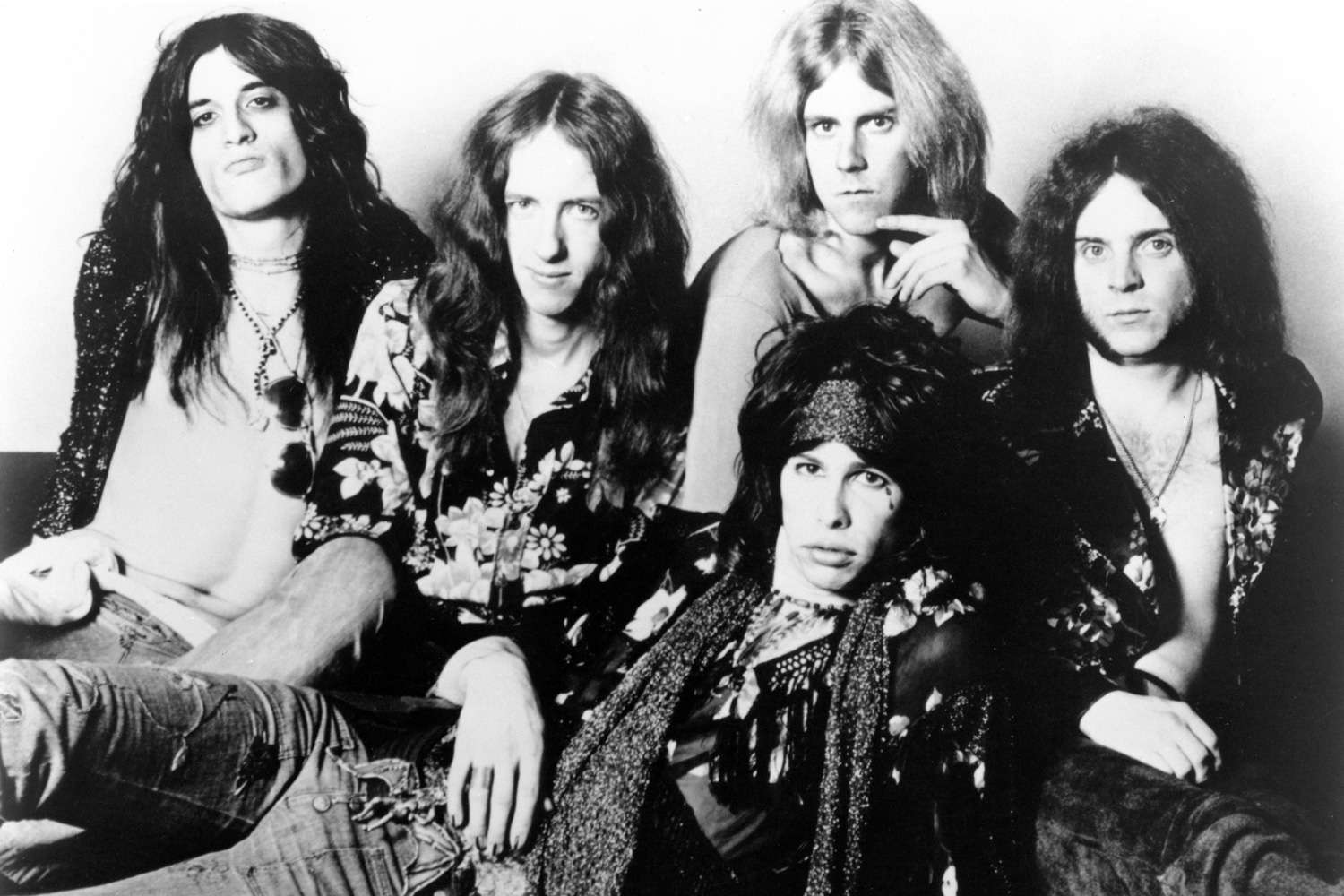
This article explores ten essential Aerosmith facts, focusing on the band’s rise during the 1970s and the internal dynamics, creative risks, and pivotal moments that shaped their long-term legacy. Rather than surface-level trivia, each fact provides historical context and explains why these moments mattered in the evolution of one of America’s defining rock bands.
Howard Dee’s Take
When people talk about Aerosmith, the conversation usually jumps straight to excess — the nicknames, the chaos, the comeback. And sure, that’s part of the story. But it’s never been the whole story for me. What’s always interested me more is how close this band came to never becoming what they eventually were, and how much of their success was earned through persistence rather than luck.
Aerosmith didn’t glide into greatness. They worked their way into it, often imperfectly, sometimes recklessly, but always honestly. You can hear that in their music and see it in the decisions they made along the way — the risks they took, the tensions they survived, and the moments where things almost fell apart. Those details matter, because they explain why Aerosmith lasted when so many bands with similar talent didn’t.
These facts aren’t here to glorify or tear down the band. They’re here to give context — to show how Aerosmith actually functioned, why certain moments mattered, and how a group that looked chaotic from the outside managed to build something durable underneath it all. That’s the version of the story that’s always resonated with me, and it’s the one worth telling.
1. Aerosmith’s Name Was the First Sign They Were Building Something Built to Last
Before Aerosmith became synonymous with American hard rock, the band struggled to settle on a name that felt right. Early options like “The Hookers” and “Spike Jones” were tossed around and quickly discarded, not because they were offensive or unusable, but because they felt small — temporary labels that wouldn’t grow with the band. The name that ultimately stuck, Aerosmith, came from drummer Joey Kramer, who had been writing the word in his notebooks years before the band officially formed.
That choice mattered more than it seemed at the time. In the early 1970s, band names often signaled genre, attitude, or irony. “Aerosmith” didn’t do any of that. It wasn’t rooted in blues clichés, British mystique, or counterculture symbolism. Instead, it sounded modern, physical, and abstract — a name that suggested motion and power without boxing the band into a specific image. It gave Aerosmith room to evolve.
When the group finalized its classic lineup with Steven Tyler, Joe Perry, Tom Hamilton, Joey Kramer, and later Brad Whitford, the name already felt bigger than a local act. As they rose through the Boston music scene and signed with Columbia Records in 1972, “Aerosmith” became an identity rather than a gimmick. In hindsight, that flexibility helped the band survive stylistic shifts, internal turmoil, and even near-collapse. Long before they were famous, Aerosmith chose a name that could carry the weight of becoming legendary — and that decision set the tone for everything that followed.
2. “Dream On” Was Written Years Before Fame — and Its Success Came Even Later
“Dream On” is often remembered as Aerosmith’s defining song, but its journey to becoming a hit was anything but immediate. Steven Tyler wrote the song years before the band had a record deal, drawing inspiration from listening to his father practice classical piano at home. At the time, it wasn’t conceived as a rock anthem or a career-defining statement — it was simply a song that mattered to him personally.
When Aerosmith released their self-titled debut album in 1973, “Dream On” didn’t explode. It received some regional airplay and modest attention, but it didn’t initially break the band nationally. What changed wasn’t the song — it was the band. As Aerosmith toured relentlessly and built a reputation through live performance, audiences began responding to “Dream On” differently. It took on new weight in concert, especially as Tyler’s vocal performance grew more confident and theatrical.
By the time the song was re-released in 1976, Aerosmith was no longer an unknown quantity. The band’s rising profile allowed listeners to finally hear “Dream On” as it was meant to be heard — not as an outlier, but as the emotional foundation beneath their swagger. Its climb into the Top 10 years after it was written is a rare example of a song catching up to the band rather than launching it. That delayed success helped define Aerosmith’s identity: a group whose biggest moments were earned over time, not handed to them overnight.
3. “The Toxic Twins” Nickname Masked a Creative Partnership That Drove the Band
The nickname “The Toxic Twins” is often used as shorthand for Steven Tyler and Joe Perry’s excess in the 1970s, but it obscures something more important: their creative interdependence. Yes, the partying was real and eventually destructive, but the nickname stuck because it sat on top of a partnership that powered Aerosmith’s rise. When Tyler and Perry were aligned, the band didn’t just function — it accelerated.
Their collaboration worked because it was built on tension rather than harmony. Perry brought riffs rooted in blues and feel, while Tyler shaped melodies, phrasing, and performance around them. The songs didn’t emerge from calm, methodical sessions; they emerged from friction. That push-pull energy is all over Aerosmith’s 1970s catalog, giving the music a sense of volatility that fans could hear and feel.
By the late 1970s, that same intensity began working against the band. Substance abuse magnified conflicts, communication broke down, and the partnership fractured. When Perry left, the loss wasn’t just personal — it removed the creative engine that had driven Aerosmith’s most important work. The later reunion and resurgence only underscored the point: Aerosmith didn’t fully sound like Aerosmith without that combustible Tyler–Perry dynamic in place. The nickname may have captured the chaos, but it was the chemistry underneath it that actually mattered.
4. Aerosmith’s Relationship With MTV Was a Second Reinvention, Not a Continuation
It’s often said that Aerosmith “embraced MTV,” but that phrasing oversimplifies what actually happened. When MTV launched in 1981, Aerosmith was no longer operating from a position of strength. Internal fractures and creative drift had already pushed them out of the center of the rock conversation. While their image and music might have translated well visually, the band wasn’t yet in a position to capitalize on the new medium.
That changed in the mid-1980s, when Aerosmith re-entered the cultural bloodstream with renewed focus and discipline. MTV didn’t just amplify their comeback — it reframed the band. Videos like “Dude (Looks Like a Lady)” presented Aerosmith not as a legacy act, but as a living, present-tense force that understood the visual language of the era. Steven Tyler, in particular, proved unusually adaptable, turning the camera into an extension of his stage presence rather than a constraint.
What made this reinvention work was intent. Aerosmith didn’t treat MTV as a novelty or a marketing obligation. They treated it as a new performance space. By the time later videos dominated rotation in the late 1980s and early 1990s, Aerosmith had effectively crossed into a second career phase — one that introduced them to younger audiences without erasing their 1970s identity. MTV didn’t save Aerosmith. But it gave them the platform to show they still belonged.
5. The Run-DMC “Walk This Way” Collaboration Reintroduced Aerosmith to a New Generation—Visually and Culturally
By the mid-1980s, Aerosmith faced a problem that ends many legacy bands: their music still existed, but their cultural relevance did not. The collaboration with Run-DMC on “Walk This Way” in 1986 didn’t simply revive an old hit—it reframed Aerosmith entirely. The song worked because the original track was already rhythm-driven and conversational, making it unusually adaptable to hip-hop. But the real breakthrough came from how the collaboration was presented.
The music video placed Aerosmith and Run-DMC on opposite sides of a wall, rehearsing separately, divided by genre, generation, and audience. As the song builds, the wall is literally broken down, forcing the two worlds into the same space. The symbolism was unmistakable and, at the time, genuinely disruptive. This wasn’t nostalgia, and it wasn’t parody. It was confrontation, collaboration, and crossover happening in real time.
Crucially, Aerosmith didn’t appear defensive or diminished. Steven Tyler and Joe Perry entered the frame as equals, energized and self-aware rather than clinging to past authority. For younger viewers, this wasn’t a comeback—it was an introduction. The collaboration didn’t succeed because Aerosmith needed saving; it succeeded because their 1970s material was strong enough to survive translation into a new cultural language. That moment didn’t rewrite Aerosmith’s legacy—it reopened it.
6. Aerosmith Became the Best-Selling American Hard Rock Band Through Longevity, Not Hype
Aerosmith’s commercial success wasn’t built on a single dominant era — it was built through decades of sustained sales. According to the Recording Industry Association of America, Aerosmith has earned over 85 million certified units in the United States, giving them more gold and platinum certifications than any other American rock band. Worldwide, their total album sales are estimated at approximately 150 million records.
What makes this achievement notable is how it accumulated. Aerosmith didn’t rely on one defining album to carry their catalog. Their 1970s releases — particularly Toys in the Attic and Rocks — laid a foundation that continued generating sales long after their initial release. Those albums never stopped moving units because they didn’t feel tied to a narrow moment in time. They were physical, groove-driven, and adaptable to new audiences.
This is why Aerosmith is widely regarded as the best-selling American hard rock band of all time. Their dominance came from durability rather than domination — from being rediscovered repeatedly rather than overwhelming the charts once. Few bands manage that kind of cumulative endurance, and even fewer do it across multiple generations. Aerosmith did, and the numbers confirm it.
7. Aerosmith Continued Writing Songs Together Even When the Band Was Barely Speaking
At the height of their internal tensions in the late 1970s, Steven Tyler and Joe Perry were often barely communicating outside of the music itself. Personal conflicts, substance abuse, and exhaustion from nonstop touring had eroded trust within the band. Yet despite that breakdown, Aerosmith continued writing and recording together — sometimes functioning creatively while barely functioning personally.
What makes this remarkable is how little that dysfunction shows up in the music. Songs from albums like Rocks and Draw the Line sound confident, cohesive, and intentional, even as the relationships behind them were deteriorating. Perry would bring riffs rooted in blues and groove, and Tyler would shape vocal phrasing and melody around them, often with minimal discussion. The chemistry remained intact long after the communication did.
This disconnect helps explain both Aerosmith’s brilliance and their eventual collapse. The band could still create powerful music because the creative instincts were deeply ingrained, but without personal stability, that system couldn’t sustain itself. When the Tyler–Perry partnership finally fractured, the loss wasn’t subtle — it removed the creative engine that powered Aerosmith’s most important work. Fact #7 isn’t about drama for drama’s sake; it’s about how fragile even the strongest musical chemistry can be when the foundation underneath it erodes.
8. Aerosmith Used Covers Strategically at Key Moments in Their Career
Aerosmith’s use of cover songs followed a clear pattern across their career. Early on, they leaned into blues and R&B standards such as “Train Kept A-Rollin’” and “Milk Cow Blues” to establish credibility and connect themselves to rock’s foundational roots. These recordings helped position the band within a lineage rather than as a trend-driven act.
Later covers tended to appear during periods of transition. Their 1978 version of “Come Together” arrived as internal tensions mounted and expectations increased, yet it became one of their stronger late-1970s chart performances, reaching #23 on the Billboard Hot 100. Similarly, “Helter Skelter” surfaced during the unstable Night in the Ruts era, reflecting a band reaching back to familiar material during uncertainty.
Rather than flooding albums with covers, Aerosmith deployed them sparingly and purposefully. This matters because it shows that covers were never filler for the band — they were tools, used to reinforce identity early on or to stabilize momentum when the ground underneath them shifted.
9. Aerosmith Nearly Lost Their 1970s Legacy to a Poorly Timed Film Project
In the late 1970s, Aerosmith was invited to participate in the film Sgt. Pepper’s Lonely Hearts Club Band, a high-profile musical project that featured major artists of the era, including the Bee Gees and Peter Frampton. Aerosmith recorded “Come Together” for the soundtrack and were initially slated for a larger on-screen role as the “Future Villain Band.” Ultimately, their involvement was scaled back, and they did not fully appear in the film.
That outcome turned out to be fortunate. The movie was released in 1978 to overwhelmingly negative reviews and quickly became a cultural punchline. Several artists closely associated with the film saw their credibility suffer as a result. Aerosmith, however, escaped the worst of the fallout by remaining only partially connected — their cover of “Come Together” succeeded independently, while the film itself faded.
This near-miss matters because it highlights how timing and restraint unintentionally protected Aerosmith’s reputation during a vulnerable moment. At a point when the band was already under internal strain, a deeper association with a widely ridiculed project could have accelerated their decline. Instead, Aerosmith walked away with a successful single and avoided being defined by a cinematic failure. Sometimes longevity isn’t just about smart decisions — it’s about narrowly avoiding the wrong ones.
10. Aerosmith’s Longevity Was Earned by Rebuilding Discipline, Not Reinventing the Band
One of the most overlooked facts about Aerosmith’s survival is that their long-term success wasn’t driven by radical reinvention. When the band regrouped in the mid-1980s, they didn’t abandon their identity or chase trends wholesale. Instead, they rebuilt discipline — personally, professionally, and creatively — around the same core instincts that powered their 1970s rise.
The original lineup’s commitment to sobriety and structure didn’t just stabilize relationships; it stabilized output. Touring schedules became sustainable, recording sessions became focused, and internal communication improved. This allowed Aerosmith to operate again as a functioning band rather than a collection of competing forces. Importantly, the music that followed didn’t reject the past. It refined it.
This final fact matters because it reframes Aerosmith’s endurance. Many bands survive by becoming something else. Aerosmith survived by becoming functional again. The durability of their catalog, the strength of their core chemistry, and the lessons learned from earlier collapse all converged to give the band a second life — one that lasted decades. Longevity, in Aerosmith’s case, wasn’t accidental. It was rebuilt deliberately, after nearly being lost.
Howard Dee’s Final Thoughts
What strikes me most after laying all of this out isn’t how wild Aerosmith’s story was — it’s how fragile it actually was. For a band that feels inevitable in hindsight, there were countless moments where things could have gone the other way. Wrong decisions, bad timing, personal collapse, or just plain exhaustion nearly ended them more than once. The fact that they’re still part of the conversation today says less about luck and more about resilience.
I also come away appreciating how much of Aerosmith’s success came from work, not mythology. They toured relentlessly, learned in public, failed loudly, and then did the hard, unglamorous work of rebuilding when things fell apart. That’s not the romantic version of rock history, but it’s the honest one — and it’s why their music still feels grounded instead of frozen in time.
In the end, these facts reinforce something simple: Aerosmith didn’t last because they were untouchable. They lasted because they were adaptable, stubborn, and willing to confront their own limits. That combination — talent paired with endurance — is rare. And it’s why, decades later, their story still feels worth revisiting rather than just remembering.
Explore More About Aerosmith
If you want to dive deeper into Aerosmith’s music and legacy, these articles expand on the moments, albums, and songs referenced throughout this piece.
More Interesting Facts About Other ’70s Artists
If you enjoyed these Aerosmith facts, explore similar deep dives into other legendary artists from the decade:
- Interesting Facts About Billy Joel
- Interesting Facts About Bob Seger
- Interesting Facts About The Doobie Brothers
- Interesting Facts About Genesis
Each article goes beyond surface trivia to explore the decisions, tensions, and turning points that shaped these artists’ careers.
Discover More ’70s Music Facts
Looking to explore more artists and stories from the greatest decade in music?
👉View the Full List of 1970s Artist Facts
This collection is continuously growing and features in-depth fact articles covering the musicians who defined — and survived — the 1970s.