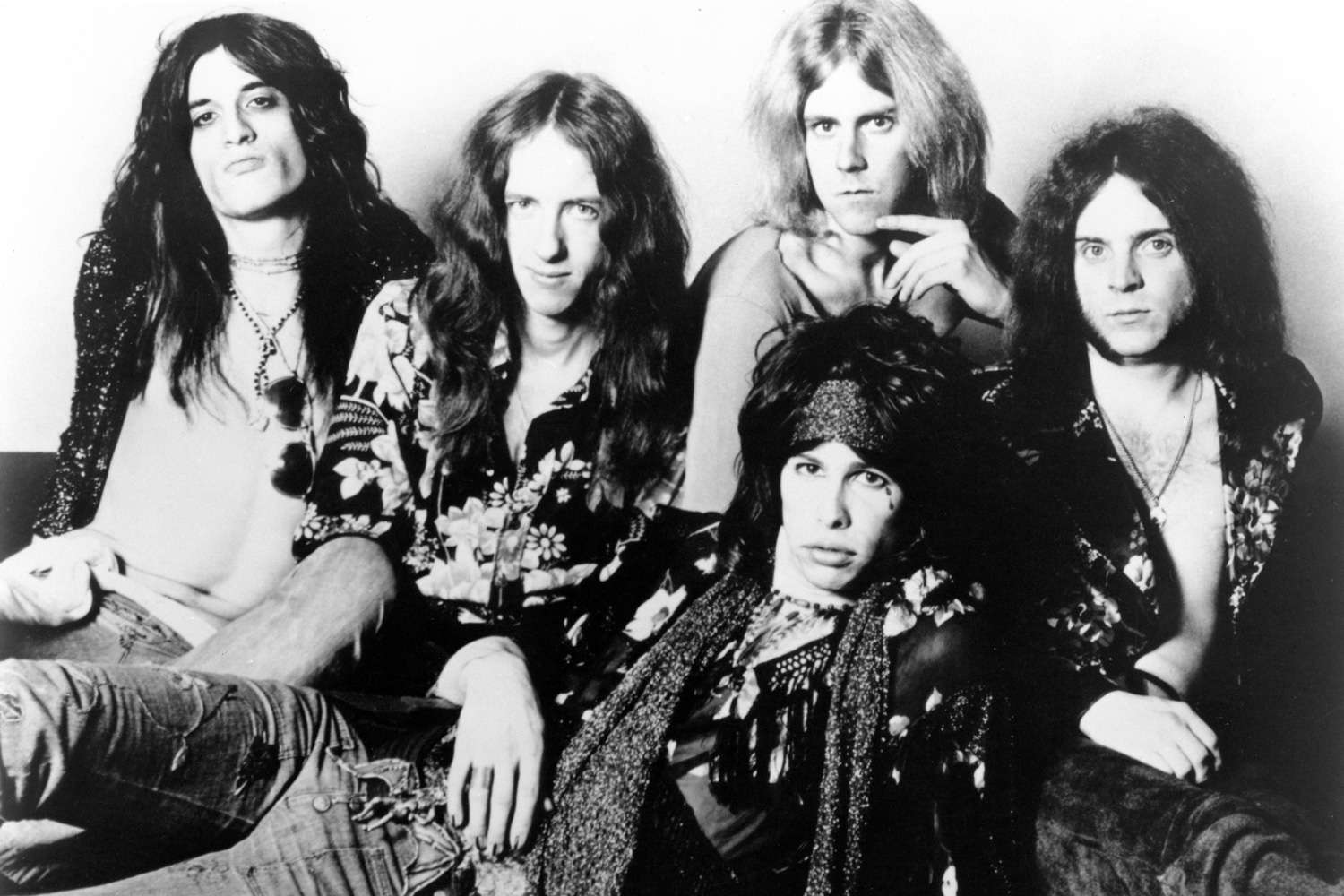
Few bands reshaped the landscape of rock music the way Led Zeppelin did. Rising from the late 1960s British rock scene, they blended blues, folk, and hard-driving power in a way no group had attempted before. Their influence stretched across the entire decade of the 1970s, redefining what albums, concerts, and musical experimentation could look like. This biography explores how Led Zeppelin came together, how they evolved, and why their legacy continues to tower over nearly every band that followed.
Howard Dee’s Take
I was just a kid in junior high the first time I heard anyone talk about Led Zeppelin. Our little school newspaper ran a piece naming them “the best band,” which sounded dramatic to a kid who mostly listened to pop radio and avoided anything that came from the “hard rock” stations. I didn’t know much about them, but I knew the older kids swore by them, which made the name feel larger than life.
I still remember being at a party when “Stairway to Heaven” came on — one of those moments where the room keeps moving but your attention snaps to the music. I didn’t understand the meaning, couldn’t explain the lyrics, and honestly didn’t try. All I knew was that the song felt different in a way I couldn’t articulate at that age. It was cool, it was mysterious, and it pulled you in whether you were ready or not.
Now that I’m in my 60s, I can look back with a deeper appreciation for what Led Zeppelin actually accomplished. Their music wasn’t just loud or intense — it was layered, ambitious, and built with a level of creativity that still holds up today. What I once heard as “cool” now feels like part of rock’s foundation, and I finally understand why that old school newspaper gave them the crown.
Early Life and Musical Beginnings
Led Zeppelin’s story begins in the mid-1960s, when British rock was undergoing a dramatic evolution. Jimmy Page, already one of the most sought-after session guitarists in London, joined The Yardbirds in 1966 and became the band’s final lead guitarist as they shifted toward heavier, more experimental sounds. By 1968, The Yardbirds had fractured from exhaustion, leaving Page with a contractual obligation for a Scandinavian tour and the freedom — finally — to build the band he had envisioned for years.
Page’s first call was to John Paul Jones, a multi-instrumentalist and arranger Page respected deeply from their studio work. Jones had spent years shaping other people’s music behind the scenes, arranging for artists ranging from Donovan to The Rolling Stones. He was quiet and understated but possessed a staggering musical vocabulary. With Page and Jones in place, the next step was finding a vocalist powerful enough to handle the ambitious sound Page wanted.
That voice belonged to Robert Plant. At the time, Plant was unknown outside the Midlands circuit, but his range, phrasing, and on-stage charisma immediately caught Page’s attention. Plant then recommended drummer John Bonham, whose explosive style blended swing, finesse, and raw power in a way that no British drummer of the era could match. Bonham’s playing completed the puzzle. The chemistry was instant — four musicians with entirely different backgrounds who somehow locked into a unified force from the first rehearsal.
In the summer of 1968, the group — temporarily using the name “The New Yardbirds” to satisfy contractual obligations — entered the studio to record their debut album. They had barely performed together, yet the sound was already there: heavy, blues-driven, atmospheric, and unafraid to stretch songs into long, dynamic compositions.
What eventually became Led Zeppelin wasn’t born accidentally. It was the result of Page’s vision, Jones’s musical architecture, Plant’s vocal fire, and Bonham’s seismic drumming — a combination so precise and rare that rock music has spent decades trying to replicate it.
Rise to Fame (1969–1971)
Released in early 1969, Led Zeppelin stunned audiences with its blend of electric blues, acoustic textures, and adventurous production. Critics were slow to understand it — many dismissed the band as a louder version of Cream or The Jeff Beck Group — but the public reacted instantly. Songs like “Dazed and Confused,” “Communication Breakdown,” and “Babe I’m Gonna Leave You” revealed a band with the precision of studio veterans and the rawness of a young, hungry rock act.
The band toured relentlessly through Europe and the United States, gaining a reputation for marathon live shows filled with improvisations that stretched songs far beyond their recorded versions. While the counterculture movement embraced folk singers and psychedelic explorers, Led Zeppelin offered something equally revolutionary: power fused with musicianship, delivered with a confidence that felt nearly mythic.
Later in 1969, the band released Led Zeppelin II, an album recorded in fragments between tour dates. If the first album hinted at Page’s vision, the second made it unmistakable. “Whole Lotta Love” exploded with a riff that defined hard rock, while “Ramble On” and “Thank You” displayed the band’s acoustic-folk sensitivity. The record became a global smash, knocking The Beatles’ Abbey Road from the top of the charts in the U.S. It was clear that Led Zeppelin was no longer following musical trends — they were creating them.
By 1970, with the release of Led Zeppelin III, the band confronted expectations by shifting toward a more acoustic, pastoral sound inspired in part by Page and Plant’s songwriting retreat in Wales. Critics initially resisted the softer direction, but fans embraced the musicianship, and the album later gained recognition as a crucial step in the band’s evolution. It proved Zeppelin wasn’t confined to distortion and volume — they were storytellers, historians, and explorers of folk traditions stretching back centuries.
Global Dominance and Artistic Innovation (1971–1977)
Led Zeppelin’s next album, released in November 1971 and commonly known as Led Zeppelin IV, became one of the most influential rock albums ever recorded. The decision to leave the cover untitled — featuring only four cryptic symbols — was a deliberate break from the commercial machinery of the music industry. Inside was a masterclass in dynamics and style, ranging from the ferocity of “Black Dog” to the joyfully chaotic “Rock and Roll,” the Celtic sweep of “The Battle of Evermore,” and the ethereal build of “Stairway to Heaven.”
“Stairway” became a cultural phenomenon. Though never released as a single, it spread organically through radio, word of mouth, and countless live performances, eventually becoming one of the most recognizable songs in history. For many listeners — including kids hearing it for the first time at a school dance or a friend’s basement party — it served as an introduction to what rock music could be: emotional, mysterious, atmospheric, and grand without being pretentious.
The band followed with Houses of the Holy (1973), expanding their sound into funk, reggae, and orchestral experimentation. “The Rain Song,” “Over the Hills and Far Away,” and “No Quarter” demonstrated a level of craftsmanship few bands of the era could match. Zeppelin toured the world, drawing crowds so massive that they shattered attendance records previously held by The Beatles.
In 1975, the band released Physical Graffiti, a sprawling double album that showcased everything they were capable of — blues rock (“In My Time of Dying”), mysticism (“Kashmir”), funk (“Trampled Underfoot”), and acoustic beauty (“Bron-Y-Aur”). Many fans consider it their most complete work, a project that captured the breadth and ambition of the band at their peak.
By the mid-1970s, Led Zeppelin wasn’t just successful — they were the most powerful band on the planet. Their tours were logistical feats, requiring fleets of trucks, advanced sound systems, and an army of support staff. They purchased their own jet, the legendary Starship. Their music dominated FM radio. Their influence crept into genres far beyond rock: metal, prog, folk, and even hip-hop, which later sampled their rhythms and riffs.
Challenges, Tragedy, and an Abrupt End (1975–1980)
The second half of the 1970s was marked by a series of personal and professional setbacks. During a 1975 vacation in Greece, Robert Plant suffered a near-fatal car accident, leaving him unable to walk or tour for months. The band regrouped to record Presence (1976), an album driven largely by Page’s dark, aggressive guitar work. It was written and recorded in the shadow of uncertainty, and its urgency reflects the tension surrounding the band’s future.
Tragedy struck again in 1977 when Plant’s young son, Karac, died unexpectedly of a viral infection. The band canceled the remainder of their U.S. tour, and the emotional blow cast doubt on whether Led Zeppelin could continue. Still, they returned to the studio to create In Through the Out Door (1979), a more keyboard-focused album shaped heavily by John Paul Jones during a period when Page and Bonham were struggling with addiction. Though different from their earlier work, the album produced “Fool in the Rain” and “All My Love,” songs that became fan favorites.
On September 25, 1980, everything changed. John Bonham died after a long day of drinking and never regained consciousness. It was a devastating, final blow. Led Zeppelin issued a statement in December declaring that they could not continue without him. At a time when most bands replaced fallen members, Zeppelin’s refusal to do so only deepened their mythic status. They walked away at the top, leaving an unfinished but towering body of work.
Legacy and Cultural Impact
Led Zeppelin’s influence is woven into the fabric of modern music. They helped define album-oriented rock, proving that listeners would follow ambitious, conceptual work rather than just singles. They revolutionized live performance with longer shows, expanded instrumentation, and a commitment to pushing songs into new spaces on stage.
Jimmy Page’s production techniques — reverse echo, layered acoustics, close-miking — reshaped studio recording standards. John Bonham remains a gold standard for drummers across genres. John Paul Jones’s arrangements and multi-instrument work laid groundwork for progressive rock and modern alternative music. Robert Plant’s voice set the template for generations of rock vocalists who attempted to match his power, range, and emotional depth.
Today, Zeppelin’s music continues to reach new listeners organically. Streams remain massive. Vinyl buyers keep their albums at the top of reissue charts. Songs like “Kashmir,” “Stairway to Heaven,” and “Immigrant Song” appear in films, television, and sports arenas worldwide. The 2007 Celebration Day reunion — featuring Jason Bonham on drums — reaffirmed something fans already knew: Led Zeppelin’s music is not stuck in the 1970s. It remains alive, urgent, and culturally essential.
They didn’t just make great music. They expanded what rock music was allowed to be.
Key Members of Led Zeppelin
Jimmy Page – Guitarist, Producer, Visionary Architect
Jimmy Page began his career as one of London’s premier session guitarists, playing on hundreds of recordings in the early 1960s before joining The Yardbirds. His background in studio work made him unusually precise and imaginative, blending blues-rooted phrasing with innovative production techniques. When Led Zeppelin formed, Page became the band’s musical architect, shaping arrangements, layering acoustic and electric textures, and developing production methods — like reverse echo and close-miking — that defined their signature sound.
Page’s riffs powered many of Zeppelin’s most iconic tracks, from “Whole Lotta Love” to “Black Dog” to “Kashmir.” But his influence extended far beyond guitar playing. As the band’s producer, Page crafted their albums to feel cinematic, atmospheric, and enormous, helping elevate rock from a singles-driven format into an art form built around albums. His combination of meticulous craftsmanship and improvisational flair became a cornerstone of Zeppelin’s mystique.
Robert Plant – Lead Vocalist, Lyricist, Mystical Frontman
Robert Plant brought a voice unlike anything rock had heard before: soaring, elastic, blues-drenched, and capable of both primal power and delicate nuance. He was influenced by folk traditions, Delta blues, and Middle Eastern melodies, giving Zeppelin a vocal identity that stretched far beyond the typical rock framework. His stage presence — magnetic, free-flowing, and theatrical — helped establish the archetype of the rock frontman for generations to come.
Plant’s lyrics drew from mythology, literature, spirituality, and personal reflection. Songs like “Immigrant Song,” “Ramble On,” and “The Battle of Evermore” showcased his fascination with Tolkien-inspired imagery and ancient storytelling. As Zeppelin evolved, Plant’s writing also grew more introspective, particularly on albums like Presence and In Through the Out Door. His emotional depth and interpretive skill remain essential to the band’s enduring appeal.
John Bonham – Drummer, Rhythmic Force of Nature
John “Bonzo” Bonham is widely regarded as one of the greatest drummers in rock history — not just for his power, but for his unmatched feel, swing, and precision. Before joining Zeppelin, he played in several Midlands bands, honing a style rooted equally in Motown grooves, big band swing, and raw rock aggression. From the moment he joined the group, it was clear his drumming wasn’t just accompanying the music — it was driving it.
Bonham’s playing on “When the Levee Breaks,” “Good Times Bad Times,” and “Kashmir” helped define the band’s identity. His ability to shift seamlessly between thunderous intensity and tight groove made him indispensable in both live improvisations and studio recordings. His death in 1980 wasn’t simply a tragic loss — it brought the entire Led Zeppelin story to an abrupt halt because the remaining members believed the band could not exist without his unique rhythmic voice.
John Paul Jones – Multi-Instrumentalist, Arranger, Unsung Mastermind
John Paul Jones brought deep musical sophistication to Led Zeppelin through his talents on bass, keyboards, mandolin, and arrangements. Before Zeppelin, Jones had already built a career as one of Britain’s most respected arrangers and studio musicians, contributing orchestral ideas and multi-instrument work for artists across genres. His musical intelligence grounded Zeppelin’s sound and gave the band the ability to explore styles far beyond blues and hard rock.
Jones was central to the band’s most atmospheric and harmonically rich compositions, including “No Quarter,” “Ramble On,” and “All My Love.” His keyboard textures expanded Zeppelin’s sonic range, particularly in the mid-to-late ’70s, and his bass lines served as the connective tissue between Page’s guitar and Bonham’s drums. Though often the quietest member publicly, Jones was essential to the band’s evolution, versatility, and long-term creative success.
Led Zeppelin Frequently Asked Questions
1. How did Led Zeppelin form?
Led Zeppelin formed in 1968 after The Yardbirds dissolved, leaving Jimmy Page with outstanding tour commitments. Page recruited John Paul Jones, whom he knew from session work, then discovered Robert Plant and John Bonham through the Midlands music scene. Their chemistry was immediate, and within months they recorded their debut album and began touring as The New Yardbirds before adopting the name Led Zeppelin.
2. Why did the band choose the name “Led Zeppelin”?
The name came from a joke made in 1966 by The Who’s Keith Moon and John Entwistle, who said a new band would “go over like a lead balloon.” Page remembered the line and modified it to “Led Zeppelin,” dropping the “a” in “lead” so Americans wouldn’t mispronounce it. The name captured both their sense of humor and the explosive power of their music.
3. What makes John Bonham’s drumming so influential?
Bonham combined sheer power with a deep sense of groove rooted in Motown, swing, and blues. His foot-speed, dynamic control, and ability to anchor long improvisations set new standards for rock drummers. Tracks like “When the Levee Breaks,” “Good Times Bad Times,” and “Moby Dick” showcase techniques that remain essential study material for drummers today.
4. Why is “Stairway to Heaven” considered such an important song?
“Stairway to Heaven” became a landmark because of its structure, emotional build, and timeless themes. Without ever being released as a single, it spread through radio airplay and live performances, eventually becoming one of the most requested songs in rock history. Its blend of acoustic folk, lyrical mysticism, and a soaring final guitar solo cemented its status as a defining piece of 1970s rock.
5. Why did Led Zeppelin stop touring the United States after 1977?
The band ended their 1977 U.S. tour early after the sudden death of Robert Plant’s son, Karac. The tragedy devastated the band, and Plant stepped away from performing for an extended period. Combined with rising tensions, legal issues, and personal strains, the loss effectively marked the end of major North American tours for Led Zeppelin.
6. What led to the breakup of Led Zeppelin in 1980?
The band disbanded following the death of drummer John Bonham on September 25, 1980. Bonham’s playing was so central to Zeppelin’s identity that Page, Plant, and Jones agreed they could not continue without him. Their public statement made clear that Led Zeppelin was inseparable from its four original members.
7. Did Led Zeppelin ever reunite after breaking up?
Yes, the band reunited for several special performances, most notably the 2007 “Celebration Day” concert at London’s O2 Arena, featuring Jason Bonham on drums. The show received worldwide attention and was later released as a live album and film. However, these events were one-time reunions, and the band never considered a permanent return.
8. How has Led Zeppelin influenced modern music?
Led Zeppelin shaped the development of hard rock and heavy metal through their powerful riffs, dynamic songwriting, and ambitious studio production. Artists across genres — including metal, alternative rock, folk revivalists, and even hip-hop producers — cite their work as foundational. Their impact can be heard in countless modern bands, making their legacy one of the most enduring in rock history.
Final Thoughts from Howard Dee
Looking back now, it’s clear that Led Zeppelin wasn’t just another rock band from the 1970s — they were a turning point. When I first heard “Stairway to Heaven” as a kid, I didn’t have the vocabulary to describe what I was feeling. I just knew it was unlike anything else I’d heard. Decades later, with a lifetime of listening behind me, I understand why that moment stuck. Zeppelin built music that didn’t just fill the room — it expanded it. Their songs felt big, mysterious, and alive, even if you didn’t yet understand the details.
They were a band born from four completely different musical worlds, yet somehow they created a shared language that rewrote the rules of rock. And for those of us who discovered them young, the music became part of the backdrop of growing up — the kind of songs that travel with you, revealing new layers as you get older. That’s the power of Led Zeppelin. Their music meets you where you are, whether you’re a teenager hearing it for the first time or someone in their 60s realizing just how remarkable their journey truly was.
Led Zeppelin didn’t just dominate a decade; they shaped the sound of rock in a way that continues to echo today. And for listeners like me, who came to truly appreciate them later in life, their catalog feels like rediscovering a great book you weren’t ready to understand the first time. You hear it differently. You value it more. And you finally understand why they were — and still are — considered one of the greatest bands ever.
Explore More Led Zeppelin
Led Zeppelin’s music continues to shape how we think about rock, creativity, and the 1970s.
Explore more stories, lists, and deep dives to relive the power behind their legacy.
Led Zeppelin Trivia
Test your knowledge and challenge your friends with our growing collection of Led Zeppelin quizzes. Each one dives deeper into the history, music, and legacy of the band.
Artist Resources
Continue Your ’70s Journey
Discover more legendary artists who shaped the greatest decade in music.
Explore their stories, top songs, fun facts, and deep dives into the tracks that defined a generation.
👉 Explore the Complete 1970s Rock Artists Guide