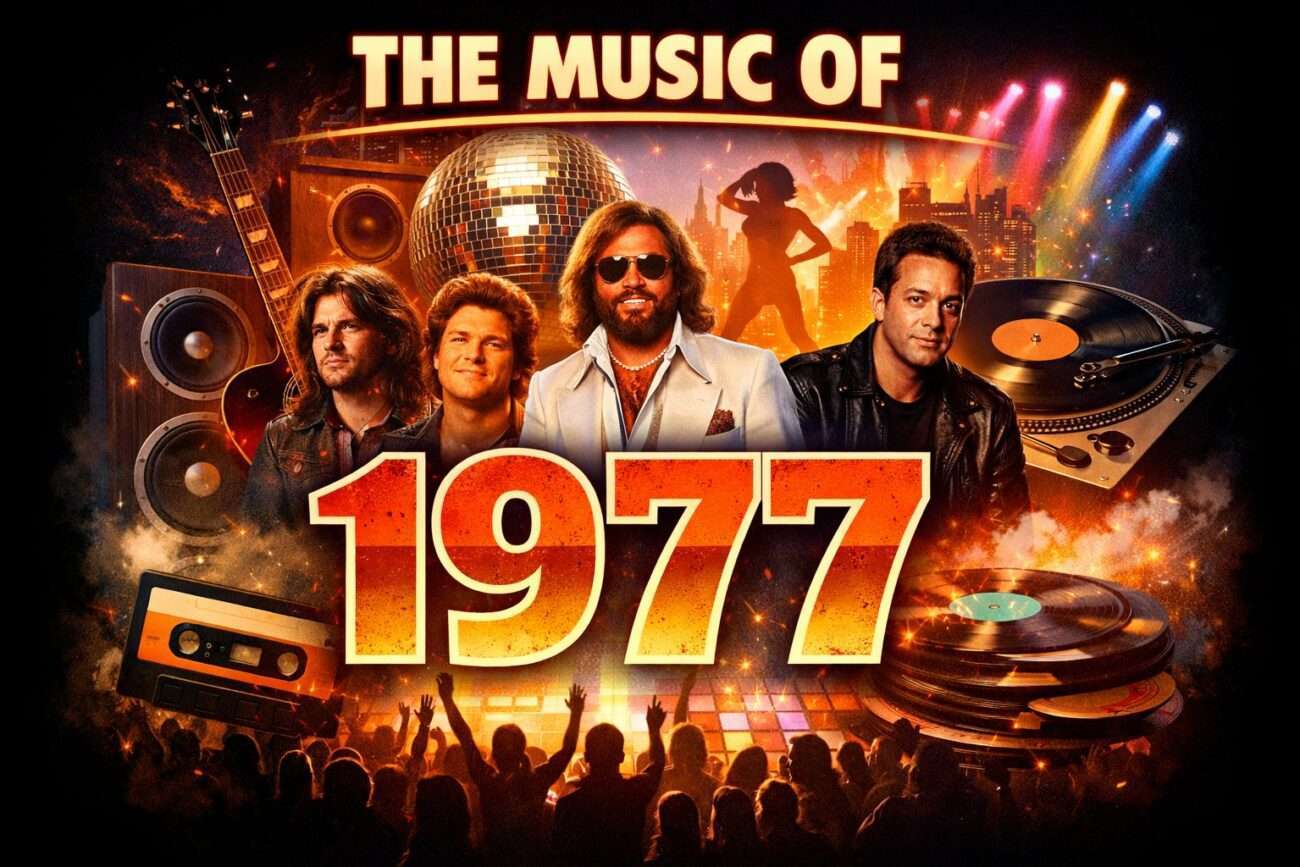
1977 feels like a year that was caught between two worlds.
Rock was still firmly in control, with big, radio-friendly songs and bands that had been building throughout the decade. At the same time, something new was starting to break through. You could hear it in certain rhythms, certain voices, and certain songs that didn’t quite sound like everything else.
By the end of the year, that shift had a name—and it came with the release of Saturday Night Fever. But for most of 1977, the sound of the year was still a mix of what had come before and what was about to take over.
Howard Dee’s Take on 1977
In 1977, I was 13 years old, and for me, music meant one thing—whatever was playing on KHJ in Los Angeles.
I wasn’t thinking about genres or movements. I was just listening to Top 40 radio. Whatever they played, that’s what mattered. And what I remember is how consistent it felt. You’d hear songs from Fleetwood Mac, Eagles, and a handful of others over and over again, and it all just blended together into what I thought music was.
There wasn’t any sense that something big was changing. It just felt like more of the same—great songs, easy to listen to, always on in the background whether you were in the car or at home.
It wasn’t until years later, going back and really listening to 1977, that the shift became obvious. You start to hear songs that don’t quite fit with the rest. A different rhythm. A different feel. The early signs of something new.
And then when Saturday Night Fever came out late in the year, it suddenly makes sense. What felt subtle at the time was actually the beginning of a major change.
But in the moment, as a kid listening to KHJ, you didn’t analyze it—you just lived in it.
Start Here: The Biggest Songs of 1977
If you want to understand 1977 quickly, start with the songs people were actually hearing every day.
🎵 A Few You Couldn’t Escape
“Tonight’s the Night (Gonna Be Alright)” – Rod Stewart
This one was everywhere in 1977, and not in a subtle way. It sat at #1 for eight weeks, which meant you were hearing it constantly—on the radio, in stores, in the background of everyday life.
“Hotel California” – Eagles
This wasn’t just another hit—it felt bigger than that. The opening guitar alone was enough to pull you in, and once it started, you stayed with it.
👉 If you want to go deeper into the story behind this song and why it still holds up today, take a look at the full breakdown of “Hotel California” on the site.
“I Just Want to Be Your Everything” – Andy Gibb
This was one of those songs that seemed to follow you around. No matter what station you were on, it felt like it was always playing.
👉 Explore the full list:
Top 25 Songs of 1977 (Billboard Year-End Hot 100)
The Sound of 1977
Rock Still Leads the Way
Rock was still the backbone of popular music in 1977, and it wasn’t even close for most of the year.
Fleetwood Mac
Fleetwood Mac weren’t just having success—they were dominating. Rumours wasn’t just an album people bought; it was one they kept going back to. Songs like “Dreams” and “Go Your Own Way” became part of everyday listening.
👉 If you want the full story behind how this band reached that level—and why Dreams still gets talked about today—you can explore the complete Fleetwood Mac profile on the site.
Eagles
Eagles were at the peak of their run, and “Hotel California” pushed them even further. It wasn’t just a hit—it became one of those songs that defined an era.
👉 For a deeper look at their rise and the songs that made them one of the biggest bands of the decade, check out the full Eagles feature.
Boston
Boston came in with a completely different kind of energy. Their sound was bigger, louder, and built for arenas, and it connected immediately.
This wasn’t a slow build—they arrived fully formed.
Disco Begins to Break Through
Disco didn’t take over all at once—but in 1977, you could feel it building.
Bee Gees
The Bee Gees were already shifting their sound, moving toward something more rhythm-driven and accessible.
KC and the Sunshine Band
KC and the Sunshine Band helped define that groove—music that made you move without thinking about it.
Then Saturday Night Fever hit late in the year, and everything accelerated. What had been building suddenly became mainstream.
Soft Rock and Story-Driven Songs
Not everything in 1977 was big, loud, or built for arenas.
There was still a strong presence of songs that leaned more into melody and storytelling—songs that didn’t try to grab you right away, but stayed with you after a few listens.
Leo Sayer
Leo Sayer was all over the radio in 1977. Songs like “You Make Me Feel Like Dancing” and “When I Need You” weren’t aggressive—they were smooth, melodic, and easy to come back to. They fit perfectly into Top 40 radio, especially alongside bigger rock songs.
England Dan & John Ford Coley
Songs like “I’d Really Love to See You Tonight” carried into the 1977 radio cycle and helped define that softer side of the dial. These were the kinds of songs you heard late at night or on quieter stations—nothing flashy, just steady and familiar.
Dan Fogelberg
Dan Fogelberg’s “Longer” and “Part of the Plan” became staples around this time. His music leaned more into reflection than radio punch, but it still found its way into regular rotation.
James Taylor
James Taylor was still part of the landscape, even if he wasn’t dominating the charts the way he had earlier in the decade. His style—simple, personal, and direct—was still influencing what people expected from a singer-songwriter.
Carole King
Same with Carole King. Even though her biggest chart moments were earlier in the ’70s, her songwriting style was still everywhere. You could hear that influence across a lot of the softer songs that were getting airplay.
Breakout Artists of 1977
These were the artists who didn’t just have success—they took a major step forward and changed how they were seen.
Billy Joel
With The Stranger, Billy Joel went from building a career to becoming a major force. Songs like “Just the Way You Are” and “Movin’ Out” weren’t just popular—they started showing up everywhere.
👉 If you want to understand why this album changed everything for him, take a look at the full breakdown of The Stranger on the site.
Boston
Boston’s debut wasn’t just successful—it hit immediately and stayed there. Their sound felt bigger than what most bands were doing at the time, and it connected fast.
Foreigner
Foreigner arrived with a sound that felt ready for radio from day one. They didn’t need time to figure it out—they already knew what worked.
The Artists Who Defined 1977
Some artists didn’t just have hits in 1977—they shaped what you were actually hearing day to day. If you had the radio on, these were the names that kept coming back.
Fleetwood Mac
If you listened to the radio in 1977, Rumours wasn’t just an album—it was part of the rotation of your life.
“Dreams,” “Go Your Own Way,” “Don’t Stop”—these weren’t occasional songs. They were everywhere, and they stayed there. It felt like every time you turned on the radio, one of them was playing. And they didn’t wear out, which is what made it different.
What really defined Fleetwood Mac that year was consistency. They didn’t just have one hit—they had a run of songs that kept showing up, week after week, and held their place.
Eagles
The Eagles in 1977 were the sound of radio when you wanted something polished and familiar—but still strong.
“Hotel California” was the centerpiece, but it wasn’t just about that one song. It was the way it fit into everything else you were hearing. It had a different feel—longer, more deliberate—but it still worked on Top 40 radio.
This was a band that had figured out exactly how to connect. Their songs didn’t feel forced, and they didn’t feel experimental. They just fit, and because of that, they stuck.
👉 For a deeper look at their run in the ’70s and why they became one of the defining bands of the decade, explore the Eagles feature on the site.
Bee Gees
In early 1977, the Bee Gees weren’t fully dominant yet—but if you go back and listen, you can hear it starting.
Their sound was shifting. It wasn’t built around guitars the same way rock was—it was built around rhythm. And even if you didn’t call it “disco” yet, you knew it felt different.
By the time Saturday Night Fever hit late in the year, everything snapped into place. Suddenly, that sound wasn’t just different—it was leading things.
👉 If you want to understand how fast that shift happened, take a look at their artist profile and the Bee Gees’ top hits.
Boston
Boston didn’t build slowly—they arrived all at once.
Their debut album hit in a way that felt immediate. “More Than a Feeling” wasn’t just popular—it stood out. It had a bigger sound than most of what was on the radio, but it still fit into the same rotation.
What made Boston different in 1977 was how quickly they became part of the conversation. There was no warm-up period. One minute they weren’t there, and the next minute, they were everywhere.
KC and the Sunshine Band
KC and the Sunshine Band represented something that didn’t quite match everything else on the radio—but still worked.
Their songs were built around rhythm first. They didn’t rely on the same structure as rock songs, and they didn’t need to. They were simple, direct, and made to move.
At the time, they might have felt like just another part of the mix. But looking back, they were pointing toward where things were going—especially as disco started to take hold.
👉 For a deeper look at their story and why they became one of the defining bands of the decade, explore their profile
Best Albums of 1977
Albums were still where artists made their biggest statements.
- Rumours — Fleetwood Mac
- Hotel California — Eagles
- Boston — Boston
- Saturday Night Fever Soundtrack — Bee Gees
- News of the World — Queen
What It Was Like to Hear Music in 1977
In 1977, you didn’t have to go looking for music—it found you.
The radio was still the center of everything. You’d get in the car, turn it on, and whatever was playing just became part of your day. There wasn’t skipping, there wasn’t building playlists—you listened to what came on, and over time, those songs just stuck.
FM radio was where things really opened up. DJs had more freedom, which meant you didn’t just hear the biggest hits—you’d hear album tracks, longer songs, and things that didn’t always fit the standard format. That’s part of why bands like Fleetwood Mac and Eagles felt so present. Their music wasn’t just in the charts—it was part of the flow of the day.
At the same time, AM radio still played a big role, especially for the most popular songs. That’s where tracks like “Tonight’s the Night” by Rod Stewart or “I Just Want to Be Your Everything” by Andy Gibb showed up again and again.
And then there were the moments you didn’t expect. A song would come on that sounded a little different—something with a groove you hadn’t quite heard before. You didn’t always know what to call it yet, but you noticed it. That’s where disco started to creep in.
Looking back, that’s what stands out. You weren’t choosing between styles—you were hearing all of them, mixed together, in real time.
Deep Dives from 1977
If you want to go beyond the surface, these articles break down specific songs and albums from the year:
👉 You can explore all song deep dives here if you want to go further into the stories behind the music.
Why the Music of 1977 Still Matters
1977 stands out because it captures a moment right before everything shifted.
Rock was still dominant, but disco was starting to reshape the direction of popular music. You can hear both happening at the same time.
That overlap is what makes the year interesting. It’s not just about what was popular—it’s about what was coming next.
Explore More of the 1970s
- Music of 1970
- Music of 1971
- Music of 1972
- Music of 1973
- Music of 1974
- Music of 1975
- Music of 1976
- Music of 1978
- Music of 1979
Each year tells a slightly different story—and 1977 sits right at the turning point.
Closing Thoughts
1977 wasn’t just another year of good songs—it was a year where everything was still working at the same time.
Rock still owned the radio. You couldn’t get away from bands like Fleetwood Mac and Eagles, and honestly, most people weren’t trying to. That sound was familiar, easy to listen to, and it felt like it fit just about any moment.
At the same time, something else was starting to creep in. A different rhythm. A different feel. You didn’t necessarily call it anything yet, but it stood out just enough to notice. And once Saturday Night Fever hit late in the year, it all made sense.
Looking back, that’s what makes 1977 so interesting. It’s one of the last years where everything still felt balanced—before one sound really started to take over.
And if you were listening to the radio back then, you didn’t analyze any of it. You just turned it on… and it was all right there.
Frequently Asked Questions About Music in 1977
What was the #1 song of 1977, and why was it so popular?
“Tonight’s the Night (Gonna Be Alright)” by Rod Stewart finished as the #1 song of the year, and it stayed there for eight weeks. That kind of run meant it wasn’t just popular—it was unavoidable.
What made it stand out was how different it felt. It wasn’t loud or fast. It was slower, more intimate, and a little more daring than most songs at the top of the charts at the time.
Was 1977 more of a rock year or a disco year?
For most of the year, 1977 still leaned toward rock. Bands like Fleetwood Mac and Eagles dominated radio with a polished, familiar sound.
But by the end of the year, things shifted quickly. The release of Saturday Night Fever pushed disco into the mainstream, setting up what would happen in 1978.
Which artists had the biggest impact on 1977?
Fleetwood Mac and Eagles defined the rock side of the year, while the Bee Gees began shaping what would become the dominant sound moving forward.
What makes 1977 interesting is that no single artist controlled the year—it was split between different directions.
Why is 1977 considered a turning point in music history?
Because you can hear the shift happening in real time. Early in the year, rock still feels like the center of everything. By the end, disco is clearly taking over.
1977 sits right in the middle of that change, which is why it feels different from both the years before and after it.
What genres of music were most popular in 1977?
1977 was still primarily a rock-driven year, but it wasn’t limited to just one sound. Rock bands like Fleetwood Mac and Eagles dominated radio with polished, easy-to-listen-to songs that appealed to a wide audience.
At the same time, disco was starting to break through in a serious way. Artists like the Bee Gees and KC and the Sunshine Band introduced a rhythm-driven style that felt different from traditional rock. By the end of the year, both styles were clearly present, which is part of what makes 1977 feel like a transition point.
How did Saturday Night Fever change music in 1977?
The release of Saturday Night Fever late in 1977 didn’t just introduce disco to a wider audience—it made it unavoidable.
Before the film, disco was already growing, but it hadn’t fully crossed into the mainstream. After its release, songs by the Bee Gees and other artists from the soundtrack were everywhere. It changed radio playlists, influenced what artists were recording, and set the tone for what would dominate in 1978.
What were the biggest changes in music from 1976 to 1977?
The biggest difference between 1976 and 1977 was the beginning of a shift in sound.
In 1976, rock still clearly led the way, and while disco existed, it wasn’t yet a major force in mainstream radio. By 1977, that started to change. You began hearing more rhythm-driven songs and a different style that didn’t rely as heavily on guitars.
Artists like Bee Gees were already evolving their sound, and by the end of the year, the direction was clear. 1977 didn’t complete the shift—but it made it obvious that one was happening.
What did it feel like to listen to music in 1977?
Music in 1977 felt constant. You didn’t have to go looking for it—it was always there.
The radio was the center of everything, and whatever was playing became part of your day. You’d hear rock, soft rock, and the early signs of disco all mixed together, often within the same hour.
Looking back, that’s what stands out. It wasn’t one sound dominating—it was a mix, and you experienced it as it happened, without overthinking it.