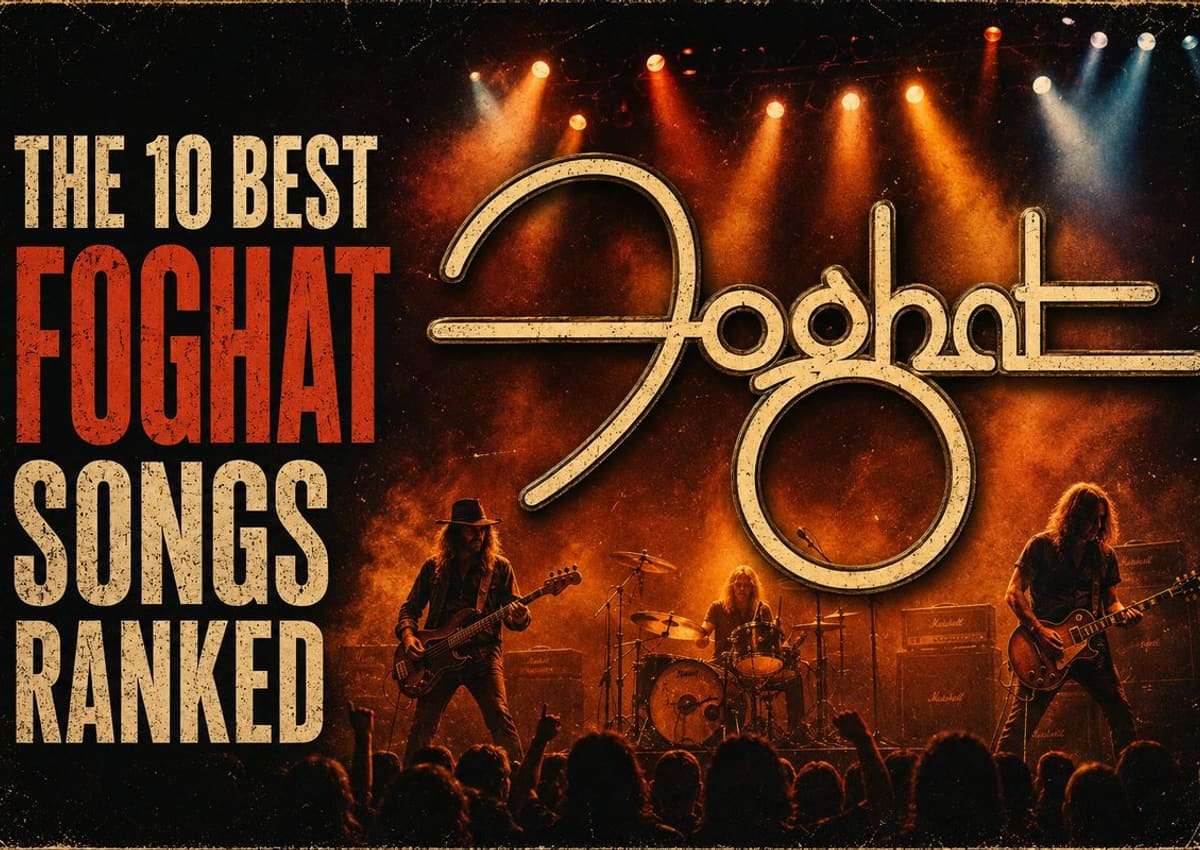
Foghat made hard rock feel physical. The band’s records were built on blues structures, slide guitar, thick rhythm parts and the kind of groove that could turn a simple riff into something enormous once it hit a concert stage. Formed by former Savoy Brown musicians and fronted by Dave “Lonesome Dave” Peverett, Foghat became one of the defining boogie-rock bands of the 1970s.
The formula sounded straightforward: take the blues, turn up the amplifiers and keep the rhythm moving. But the best Foghat records show more craft than that description suggests. Rod Price’s slide guitar gave the band a signature sound, Roger Earl played with a heavy but flexible groove, and Peverett had a voice that could sound rough, amused or surprisingly melodic depending on the song.
Foghat also understood touring. Years of playing theaters, arenas and festivals helped turn songs like “Slow Ride,” “Fool for the City” and “I Just Want to Make Love to You” into more than studio recordings. They became crowd songs, built around riffs and choruses that grew bigger in a room full of people.
This ranking weighs the obvious hits, the strongest album tracks, the covers Foghat made its own and the songs that best represent the band’s transition from blues-rock newcomers to one of FM radio’s most durable hard-rock acts.
Here are the 10 best Foghat songs, ranked.
10. Honey Hush
Album: Energized | Released: 1974 | Songwriter: Lou Willie Turner (Big Joe Turner)
Foghat’s version of “Honey Hush” is a perfect example of how the band approached older American rhythm-and-blues material. The basic song came from Big Joe Turner, but Foghat does not try to recreate a 1950s arrangement. They turn it into a loud, swaggering boogie workout.
The guitars have much more weight, the rhythm section drives harder and Peverett delivers the vocal with the confidence of a band that knows exactly what kind of room it wants to fill. The arrangement also hints at the group’s live identity. Even in the studio, “Honey Hush” feels as if it is waiting for an audience response.
• • •
9. Night Shift
Album: Night Shift | Released: 1976 | Songwriters: Dave Peverett, Rod Price
“Night Shift” has a darker, more workmanlike feel than Foghat’s biggest party anthems. The title alone fits the band’s identity: music for people still moving when most of the world has gone home.
Dave Peverett and Rod Price built the song around a muscular rhythm and a riff that never needs to get overly complicated. The strength comes from repetition, tone and the band’s ability to make the groove feel inevitable. Peverett’s vocal has just enough grit to make the late-night theme believable.
Dan Hartman’s production on the Night Shift album helped capture more of Foghat’s live force than some earlier records. The guitars sound large without becoming muddy, and the rhythm section has room to push.
• • •
8. Ride, Ride, Ride
Album: Foghat (Rock and Roll) | Released: 1973 | Songwriters: Dave Peverett, Rod Price
“Ride, Ride, Ride” comes from Foghat’s second album, the one often identified by its rock-and-roll bread-roll cover. By this point, the band’s identity was already clear: British musicians deeply rooted in American blues, but interested in making the music heavier and more road-ready.
The song has motion built into it. The title becomes a repeated command, while the rhythm gives the track the feel of something moving down a highway. Rod Price’s guitar work supplies the color and Peverett keeps the vocal direct.
What makes the song important is how early it establishes the template Foghat would refine over the next several years. The guitars do not simply decorate the song; they create the forward pressure. Roger Earl’s drumming keeps the pulse steady enough that the repetition becomes hypnotic rather than monotonous.
Continue the Countdown
More Top 10 Classic Rock Song Rankings
Explore more rankings featuring the artists who helped define classic rock radio.
• • •
7. Third Time Lucky (First Time I Was a Fool)
Album: Boogie Motel | Released: 1979 | Songwriter: Dave Peverett
By 1979, Foghat was operating in a very different rock environment. Disco, new wave and changing radio tastes were making the straight-ahead boogie style less dominant than it had been a few years earlier. “Third Time Lucky” showed the band could adjust without losing itself.
The song is more melodic and radio-conscious than the giant riff tracks of the mid-1970s. Peverett’s writing leans into the vocal hook, and the arrangement gives the chorus more space. There is still guitar muscle, but the song does not depend on sheer heaviness.
That shift is exactly why it belongs in the Top 10. A career-spanning list should show range, and “Third Time Lucky” captures a band trying to remain relevant at the end of the decade. It became one of Foghat’s later charting singles and remains a fan favorite because it combines the group’s familiar personality with a smoother approach.
• • •
6. Stone Blue
Album: Stone Blue | Released: 1978 | Songwriter: Dave Peverett
“Stone Blue” is heavy Foghat at its most focused. The title track from the 1978 album begins with the kind of riff that seems designed to push air through speakers, and the band never lets the tension disappear.
Peverett’s lyric connects blues feeling with rock-and-roll release. The idea is simple: when things go wrong, the music helps pull you through. That message fits Foghat perfectly because the band always treated rock less as an intellectual exercise than as something physical and restorative.
Rod Price’s slide work gives the track personality, while Craig MacGregor and Roger Earl make the rhythm section feel dense without dragging. The song also benefits from production that leaves the guitars aggressive instead of polishing away the edges.
• • •
5. Drivin’ Wheel
Album: Night Shift | Released: 1976 | Songwriters: Dave Peverett, Rod Price
“Drivin’ Wheel” sounds like a Foghat song even before the vocal starts. The riff, tempo and guitar tone all suggest motion, and once the band locks into the groove, there is almost no wasted movement.
Peverett and Price understood road imagery because Foghat lived on the road. The band’s reputation was built through relentless touring, so songs about driving, working late and moving from town to town never sounded like artificial themes.
The track also shows the value of restraint. The riff is strong enough that the band does not need to fill every space. Roger Earl holds the groove steady, Craig MacGregor gives the low end weight and Price adds guitar details without turning the track into a solo showcase.
• • •
4. Fool for the City
Album: Fool for the City | Released: 1975 | Songwriter: Dave Peverett
“Fool for the City” is one of Foghat’s definitive statements. The song celebrates noise, movement and urban energy, and the band plays it with the excitement of people who genuinely believe the city is where the action is.
The opening immediately establishes the tone. The guitars are large, Peverett sounds energized and the chorus is built for an audience to shout back. The song does not have the hypnotic length of “Slow Ride,” but it has just as much personality.
The album itself marked a major step for Foghat. Fool for the City became the band’s first platinum record and established the version of Foghat that most classic-rock listeners still recognize. Producer Nick Jameson helped give the record a bigger, cleaner sound while preserving the band’s rough edges.
• • •
3. Home in My Hand
Album: Energized | Released: 1974 | Songwriters: Dave Peverett, Rod Price
“Home in My Hand” is the kind of track that separates casual Foghat listeners from longtime fans. It was never the giant crossover hit, but it became an important live song because it captures the band’s road-hardened personality so well.
The groove is looser than “Slow Ride,” and the horns on the studio version give the arrangement a different texture. Underneath, though, the structure is classic Foghat: blues-derived movement, strong guitar interplay and a vocal that sounds comfortable living inside the rhythm.
The title fits the life of a touring band. Home is not necessarily a building; it is whatever you can carry while moving from city to city. Foghat’s musicians understood that experience firsthand, and the song has the lived-in feel of people writing about their actual routine.
• • •
2. I Just Want to Make Love to You
Album: Foghat | Released: 1972 | Songwriter: Willie Dixon
Foghat did not write “I Just Want to Make Love to You,” but the band transformed it so completely that the song became part of its identity. Willie Dixon’s blues standard had already been recorded by major artists, including Muddy Waters, but Foghat approached it from a different direction.
The tempo is faster, the guitars are louder and Rod Price’s slide attack changes the character of the track. Instead of a smoky Chicago blues performance, Foghat delivers something designed for early-1970s rock audiences.
That transformation is the key. A weak cover copies the original or adds volume without adding personality. Foghat does neither. The band keeps the directness of Dixon’s writing while rebuilding the arrangement around its own strengths.
The song also became even more important through Foghat’s live performances. The version on Foghat Live helped introduce the track to another generation of listeners and showed how naturally the arrangement expanded onstage.
• • •
1. Slow Ride
Album: Fool for the City | Released: 1975 | Songwriter: Dave Peverett
“Slow Ride” is Foghat’s signature song and one of the defining boogie-rock records of the 1970s. From the opening riff, there is no confusion about what the band is trying to do. The song establishes a groove, settles into it and then keeps finding ways to make that groove feel bigger.
The album version runs more than eight minutes, which gives Foghat room to stretch the arrangement. There are guitar exchanges, dynamic changes and sections where the rhythm seems to pull back only so it can return with more force. The shorter single edit made the song easier for radio, but the long version better explains why it became such a concert staple.
Peverett’s writing is simple in the best possible sense. The chorus is instantly memorable, and the lyric never distracts from the physical pull of the music. Rod Price’s guitar gives the track its sharp edges, while Roger Earl’s drumming is crucial to keeping an extended groove from becoming static.
The song became Foghat’s biggest hit and has remained a classic-rock fixture for decades. Its longevity comes from the same thing that made it successful in the first place: it feels good at high volume.
“Fool for the City” may define Foghat’s attitude, and “I Just Want to Make Love to You” may best represent its blues roots. But “Slow Ride” combines groove, guitar tone, live energy and radio impact more completely than anything else in the catalog.
What Did We Leave Out?
Foghat’s catalog has plenty of songs that could challenge the bottom half of this list. “Chateau Lafitte ’59 Boogie” is a natural choice for fans who love the band’s longer, looser boogie side. “Eight Days on the Road” fits the group’s touring identity perfectly, while “Road Fever” is another track that often became more exciting onstage than it was on record.
“Wild Cherry,” “Take It or Leave It,” “Terraplane Blues” and “Chevrolet” all show different sides of the band’s blues foundation. Later-era fans may also argue for tracks beyond the 1970s, especially because Foghat continued recording and touring long after its commercial peak.
The challenge is that Foghat’s best work was never only about singles. The albums and live shows were central to the experience.
Why Foghat’s Best Songs Still Work
Foghat’s appeal is easy to describe but difficult to duplicate. The band understood groove. It could take a blues progression or a two-chord riff and make it feel powerful for far longer than the basic musical ingredients would suggest.
That happens because the players listen to one another. Roger Earl does not simply keep time; he creates the pulse the guitars can lean against. Rod Price’s slide adds a voice of its own, and Dave Peverett understands when to sing over the band and when to become part of the rhythm.
Foghat also benefited from knowing exactly what kind of band it was. Even when styles changed, the group rarely sounded embarrassed by its blues-boogie foundation. “Third Time Lucky” might be smoother, but it still sounds like Foghat. “Stone Blue” might be heavier, but the groove remains central.
Most importantly, these songs were built for live performance. The riffs are easy to recognize, the choruses invite participation and the arrangements leave room for the band to stretch. That is why “Slow Ride,” “Fool for the City” and the rest still make sense on classic-rock radio and onstage decades later.