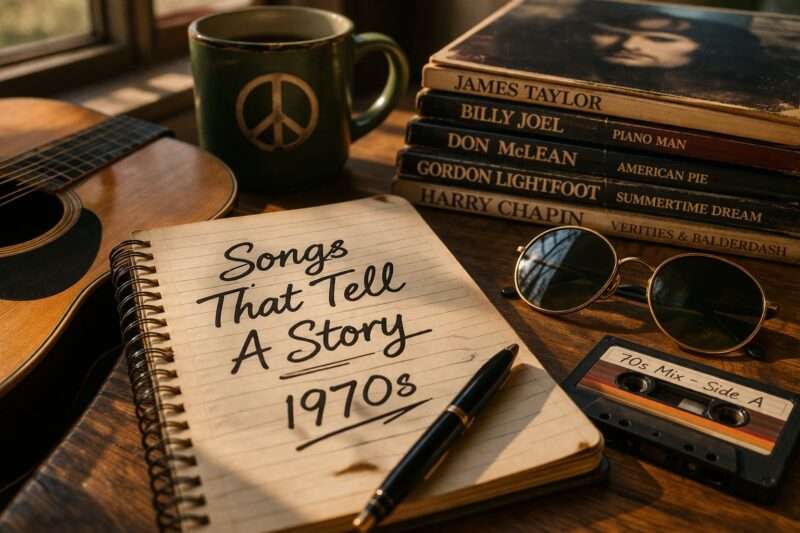
Few songwriters of the rock era built a catalog as rich, varied, and enduring as Billy Joel. Emerging during the fertile singer-songwriter movement of the early 1970s, Joel combined classical piano training with sharp storytelling instincts, creating songs that captured everyday American life with unusual clarity. Over the next two decades he would become one of the defining voices of his generation, producing a body of work that included chart-topping hits, deeply personal ballads, and narrative songs that often felt closer to short stories than pop music.
This complete Billy Joel songs list includes all 121 songs organized by album, covering his full catalog from Cold Spring Harbor (1971) through River of Dreams (1993). Whether you’re looking for his biggest hits or exploring deeper album tracks, this guide provides a clear, structured path through one of the most enduring songbooks in rock history.
Because his music spans more than twenty years of recording and several distinct musical eras, many listeners eventually go searching for a complete list of Billy Joel songs—not just the famous hits, but the deeper album tracks that reveal the full scope of his songwriting. From early compositions like “She’s Got a Way” and “Everybody Loves You Now” to later classics such as “Leningrad” and “The River of Dreams,” Joel’s catalog reflects the evolution of both the artist and the culture around him.
This guide provides a complete Billy Joel songs list organized by album, covering every track released on his studio records from Cold Spring Harbor (1971) through River of Dreams (1993), along with notable non-album singles. For longtime fans it serves as a reference to the entire catalog, while for newer listeners it offers a clear path through one of the most influential songbooks of the modern rock era.

Billy Joel Song Catalog at a Glance
Billy Joel recorded 121 songs across 12 studio albums between 1971 and 1993, along with several standalone singles and compilation releases. His catalog spans early singer-songwriter piano ballads, arena rock hits, jazz-influenced experiments, and socially conscious storytelling songs.
This guide organizes every Billy Joel song by album, from Cold Spring Harbor through River of Dreams, along with notable standalone singles that were never included on studio records.
If you’re looking for a complete Billy Joel songs list, this page provides a full reference to his songwriting catalog.
Start Here: Billy Joel’s Most Popular Songs
For listeners who are just beginning to explore Billy Joel’s catalog—or for longtime fans looking to revisit the essentials—these songs provide the clearest introduction to his work. While this guide covers every track across his studio albums, the songs below represent the moments where his songwriting, storytelling, and cultural impact came together most powerfully.
- Piano Man — The signature song that introduced Joel’s storytelling style, built around vivid characters and a setting drawn directly from his early career in Los Angeles piano bars.
- Uptown Girl — A polished pop hit that blends doo-wop influences with a narrative about class and romance, becoming one of his most recognizable songs worldwide.
- Just the Way You Are — A Grammy-winning ballad that showcased Joel’s ability to write direct, emotionally resonant love songs without excess ornamentation.
- My Life — An anthem of independence that captured the voice of late-1970s youth, combining sharp lyrics with a confident, driving arrangement.
- Vienna — A deeply reflective album track that has grown in meaning over time, offering a perspective on patience, ambition, and the pace of life.
- We Didn’t Start the Fire — A rapid-fire historical narrative that traces major global events across four decades, demonstrating Joel’s ability to merge pop structure with cultural commentary.
- Scenes from an Italian Restaurant — One of Joel’s most ambitious compositions, weaving multiple musical sections and characters into a single narrative arc.
- Only the Good Die Young — A controversial and energetic hit that reflects Joel’s knack for combining provocative themes with memorable melodies.
- New York State of Mind — A defining ballad that captures the emotional pull of New York City, becoming one of Joel’s most enduring live performances.
- It’s Still Rock and Roll to Me — A #1 hit that humorously critiques changing musical trends while reaffirming the core identity of rock music.
These songs offer a strong entry point into Billy Joel’s catalog, but they represent only a portion of his work. To explore his songwriting in greater depth—including lesser-known album tracks and hidden gems—continue through the complete list below or visit our full ranking of Billy Joel’s greatest songs.
Howard Dee’s Take
Most fans meet Billy Joel the same way I did—through the hits. For many of us growing up in the late 1970s and early 1980s, songs like “My Life,” “Just the Way You Are,” and “Only the Good Die Young” were everywhere. They played on the radio constantly, showed up on compilation albums, and eventually became staples of classic rock stations.
But the real discovery happens later. At some point you stop listening to the greatest hits and start exploring the albums. That’s when the catalog opens up. Songs like “Summer, Highland Falls,” “Vienna,” and “Scenes from an Italian Restaurant” reveal a songwriter operating at a completely different level than the singles alone suggest. Over time, you realize Billy Joel wasn’t just writing radio songs—he was documenting moments in American life.
Jump to Album
Cold Spring Harbor (1971)
Billy Joel’s debut album arrived under difficult circumstances. Released in 1971, Cold Spring Harbor suffered from a mastering error that sped up the recordings and altered the sound of Joel’s voice. Despite those technical problems, the album offered a revealing glimpse of a young songwriter still finding his identity.
The record leaned heavily toward introspective piano ballads, drawing clear influence from the emerging singer-songwriter movement. While it did not produce major hits, several songs later became important pieces of Joel’s live repertoire and demonstrated the emotional honesty that would define his later work.
👉 For a deeper look at how the album was recorded and why it remains an important starting point in Joel’s career, read our Cold Spring Harbor Album Review.
| Song | Notes |
|---|---|
| She’s Got a Way | Early romantic ballad, later became a hit through live version |
| You Can Make Me Free | Optimistic early Joel composition |
| Everybody Loves You Now | Concert staple |
| Why Judy Why | Emotional early ballad |
| Falling of the Rain | Reflective songwriting |
| Turn Around | Folk-influenced track |
| You Look So Good to Me | Romantic early composition |
| Tomorrow Is Today | Deeply personal song |
| Nocturne | Instrumental piano piece |
| Got to Begin Again | Reflective closing track |
Song Spotlight: She’s Got a Way
“She’s Got a Way” became one of the most surprising success stories in Billy Joel’s catalog. Although it appeared quietly on Cold Spring Harbor, the song gained new life several years later when Joel performed it on his live album Songs in the Attic. That performance reintroduced the song to audiences and eventually turned it into a charting single.
The song’s appeal lies in its simplicity. Rather than relying on elaborate storytelling or dramatic arrangement, Joel builds the entire piece around a delicate piano progression and a straightforward expression of admiration. In many ways, the song reflects the early stage of Joel’s songwriting—earnest, direct, and emotionally sincere.
Piano Man (1973)
After the commercial disappointment of his debut, Billy Joel relocated to Los Angeles and began performing under a pseudonym in a piano bar. Those experiences eventually inspired the songs that would form Piano Man, the album that introduced him to a national audience.
The record blends autobiographical storytelling with vivid character sketches, setting the stage for Joel’s later reputation as one of rock’s most effective narrative songwriters.
| Song | Notes |
|---|---|
| Travelin’ Prayer | Gospel-inspired opener |
| Piano Man | Signature song, breakthrough hit |
| Ain’t No Crime | Blues-rock track |
| You’re My Home | Romantic fan favorite |
| The Ballad of Billy the Kid | Storytelling song |
| Worse Comes to Worst | Upbeat rock tune |
| Stop in Nevada | Western-inspired storytelling |
| If I Only Had the Words | Reflective ballad |
| Somewhere Along the Line | Classic Joel piano song |
| Captain Jack | Early fan favorite |
Song Spotlight: Piano Man
Few songs capture a musician’s early career quite like “Piano Man.” Written about Joel’s time performing in Los Angeles bars, the song introduces listeners to a cast of characters who gather nightly around the piano.
Its storytelling structure, memorable harmonica hook, and vivid imagery helped transform the song into Joel’s defining anthem. Over time, “Piano Man” became more than a hit single—it became a cultural shorthand for the experience of chasing dreams in the music industry.
Streetlife Serenade (1974)
Released just a year later, Streetlife Serenade showed Joel experimenting with broader musical ideas. The album did not produce a major hit, but it contains several songs that would become beloved deep cuts among longtime fans.
| Song | Notes |
|---|---|
| Streetlife Serenader | Instrumental opener |
| Los Angelenos | Rock storytelling |
| The Great Suburban Showdown | Observational songwriting |
| Root Beer Rag | Instrumental piano showcase |
| Roberta | Blues-rock track |
| The Entertainer | Commentary on music industry |
| Last of the Big Time Spenders | Upbeat rock |
| Weekend Song | Concert staple |
| Souvenir | Reflective ballad |
| The Mexican Connection | Instrumental closer |
Song Spotlight: The Entertainer
“The Entertainer” stands as one of Billy Joel’s earliest songs about the realities of the music business. Written after record executives insisted that “Piano Man” be shortened for radio play, the song reflects Joel’s frustration with industry expectations.
The lyrics describe a performer constantly adapting to audience tastes, revealing the tension between artistic ambition and commercial success.
Turnstiles (1976)
After returning to New York, Billy Joel recorded Turnstiles, an album deeply connected to the identity and spirit of the city.
| Song | Notes |
|---|---|
| Say Goodbye to Hollywood | Phil Spector-inspired tribute |
| Summer, Highland Falls | Fan favorite |
| All You Wanna Do Is Dance | Reggae-influenced track |
| New York State of Mind | Signature ballad |
| James | Reflective songwriting |
| Prelude/Angry Young Man | Concert opener |
| I’ve Loved These Days | Jazz-influenced ballad |
| Miami 2017 | Post-apocalyptic storytelling |
Song Spotlight: Summer, Highland Falls
“Summer, Highland Falls” remains one of Joel’s most emotionally complex compositions. The song captures the emotional highs and lows that accompany both personal ambition and mental struggle.
Over time, the track has become a fan favorite precisely because it resists easy interpretation. Its lyrics describe the shifting moods of life rather than a single narrative event.
The Stranger (1977)
By the time Billy Joel began recording The Stranger, his career stood at a turning point. Although Turnstiles had established him as a serious songwriter and helped rebuild his connection to New York audiences, commercial success had still been elusive. That changed when Joel partnered with producer Phil Ramone, whose production style brought clarity and energy to Joel’s songwriting without losing the emotional intimacy that defined his music.
Released in 1977, The Stranger became the album that transformed Billy Joel into an international star. The record blended rock, jazz influences, narrative storytelling, and deeply personal songwriting, producing several of the most recognizable songs of his career. Tracks like “Movin’ Out,” “Just the Way You Are,” “Only the Good Die Young,” and “Scenes from an Italian Restaurant” helped the album reach audiences far beyond the singer-songwriter circuit where Joel had originally emerged.
Today, The Stranger is widely considered the defining album of Joel’s career and one of the most important records of the 1970s singer-songwriter era. If you’d like to explore the story behind its creation, the Phil Ramone collaboration, and the cultural impact of the songs, you can read our full Stranger Album Deep Dive.
| Song | Notes |
|---|---|
| Movin’ Out (Anthony’s Song) | Hit single |
| The Stranger | Signature song |
| Just the Way You Are | Grammy-winning hit |
| Scenes from an Italian Restaurant | Epic storytelling |
| Vienna | Beloved deep cut |
| Only the Good Die Young | Controversial hit |
| She’s Always a Woman | Romantic classic |
| Get It Right the First Time | Jazz-influenced |
| Everybody Has a Dream | Reflective closer |
Song Spotlight: Vienna
“Vienna” began as a quiet album track on The Stranger, but over time it has become one of the most meaningful songs in Billy Joel’s entire catalog. When the album was released in 1977, the song wasn’t pushed as a single and initially lived in the shadow of bigger hits like “Just the Way You Are,” “Movin’ Out,” and “Only the Good Die Young.” Yet for many listeners, “Vienna” eventually became the song they returned to most.
The inspiration came from a story Joel heard about his father’s family in Austria. As he later explained in interviews, older relatives in Vienna didn’t share the American obsession with rushing through life. Instead of pushing relentlessly toward the next achievement, they believed life unfolded in stages and that patience was part of the process. That idea became the foundation of the song’s central message: slow down, you’re not supposed to have everything figured out yet.
What makes “Vienna” so powerful is how its meaning evolves with age. Younger listeners often hear it as reassurance that the future will eventually come into focus. Older listeners tend to hear something different — a reminder that life isn’t a race and that fulfillment often arrives later than expected. Few songs capture that perspective with the same gentle clarity.
If you’d like to explore the lyrics, the story behind the song, and why it resonates so strongly decades later, you can read the full Vienna Lyric Deep Dive.
52nd Street (1978)
Following the enormous success of The Stranger, Joel expanded his musical palette with jazz influences.
| Song | Notes |
|---|---|
| Big Shot | Hit single |
| Honesty | Classic ballad |
| My Life | Signature hit |
| Zanzibar | Fan favorite |
| Stiletto | Jazz-rock track |
| Rosalinda’s Eyes | Nostalgic storytelling |
| Half a Mile Away | Upbeat track |
| Until the Night | Soul-influenced |
| 52nd Street | Jazz-inspired closer |
Song Spotlight: My Life
“My Life” captured the independent spirit of late-1970s youth culture. With its confident tone and energetic rhythm, the song became one of Joel’s most recognizable hits.
The lyrics reject outside expectations and emphasize personal autonomy, a theme that resonated with listeners navigating adulthood during a changing social era.
Glass Houses (1980)
Released in 1980, Glass Houses marked a noticeable shift in Billy Joel’s sound. After the polished production of The Stranger and 52nd Street, Joel moved toward a more guitar-driven style influenced by the rising energy of new wave and rock radio. The album produced several major hits, including “You May Be Right” and “It’s Still Rock and Roll to Me,” while also delivering fan favorites like “Sleeping with the Television On.”
| Song | Notes |
|---|---|
| You May Be Right | Rock hit |
| Sometimes a Fantasy | Upbeat rock |
| Don’t Ask Me Why | Pop-influenced |
| It’s Still Rock and Roll to Me | #1 hit |
| All for Leyna | Fan favorite |
| I Don’t Want to Be Alone | Emotional track |
| Sleeping with the Television On | Cult favorite |
| C’etait Toi | French-influenced |
| Close to the Borderline | Rock track |
| Through the Long Night | Gentle ballad |
Song Spotlight: It’s Still Rock and Roll to Me
Written during the rise of new wave music, “It’s Still Rock and Roll to Me” reflects Joel’s frustration with shifting trends in the industry. The song humorously critiques fashion-driven musical fads while asserting that the core spirit of rock music remains unchanged.
The Nylon Curtain (1982)
Released in 1982, The Nylon Curtain marked one of the most ambitious albums of Billy Joel’s career. Influenced by the studio experimentation of The Beatles, Joel pushed his songwriting and production further than on any previous record. The album tackled heavier themes than his earlier work, including economic decline, political tension, and the lasting impact of the Vietnam War.
Songs like “Allentown,” “Pressure,” and “Goodnight Saigon” reflected a more serious and cinematic style of storytelling, showing Joel at the peak of his artistic ambition. If you’d like a deeper look at how the album was recorded and why it represents such an important moment in Joel’s career, you can read the full Nylon Curtain Album Deep Dive.
| Song | Notes |
|---|---|
| Allentown | Social commentary hit |
| Laura | Beatles-influenced |
| Pressure | Synth-driven hit |
| Goodnight Saigon | Powerful Vietnam War narrative and one of Joel’s most emotional songs — explore the full story in our Goodnight Saigon Lyric Deep Dive |
| She’s Right on Time | Holiday favorite |
| A Room of Our Own | Character song |
| Surprises | Atmospheric track |
| Scandinavian Skies | Experimental piece |
| Where’s the Orchestra? | Reflective closer |
Song Spotlight: Allentown
“Allentown” stands as one of Billy Joel’s most powerful social commentaries. Inspired by the economic struggles of industrial towns in Pennsylvania, the song examines the fading promise of the American working class.
The lyrics resonate far beyond the specific location referenced in the title, capturing a broader story about generational expectations and economic change.
An Innocent Man (1983)
Released in 1983, An Innocent Man saw Billy Joel looking backward for inspiration. Instead of following the darker tone of The Nylon Curtain, Joel created an album that paid tribute to the vocal groups and pop styles of the 1950s and early 1960s that influenced him growing up. The record produced several major hits, including “Uptown Girl,” “Tell Her About It,” and “The Longest Time,” while showcasing Joel’s ability to reinterpret classic pop traditions within a modern sound.
| Song | Notes |
|---|---|
| Easy Money | Rock opener |
| An Innocent Man | Doo-wop tribute |
| The Longest Time | A cappella hit |
| This Night | Classical influence |
| Tell Her About It | #1 hit |
| Uptown Girl | Signature hit |
| Careless Talk | Pop-soul |
| Christie Lee | Jazz-rock |
| Leave a Tender Moment Alone | Ballad |
| Keeping the Faith | Nostalgic closer |
Song Spotlight: Uptown Girl
Inspired by Joel’s relationship with Christie Brinkley, “Uptown Girl” became one of his most recognizable songs. The track pays tribute to 1960s doo-wop influences while telling the story of a working-class man captivated by a glamorous woman.
The Bridge (1986)
Released in 1986, The Bridge continued Billy Joel’s run of successful albums while reflecting a period of transition in his career. The record blends rock, pop, and jazz influences and features several notable collaborations, including a duet with Ray Charles on “Baby Grand.” Songs like “A Matter of Trust” and “Modern Woman” kept Joel firmly on radio, while the album as a whole showed him experimenting with new sounds as the musical landscape of the late 1980s began to change.
| Song | Notes |
|---|---|
| Running on Ice | Upbeat opener |
| This Is the Time | Romantic ballad |
| A Matter of Trust | Rock hit |
| Modern Woman | Pop single |
| Baby Grand | Ray Charles duet |
| Big Man on Mulberry Street | Jazz-inspired |
| Temptation | Soul influence |
| Code of Silence | Collaboration |
| Getting Closer | Reflective closer |
Song Spotlight: A Matter of Trust
“A Matter of Trust” explores the complexities of relationships and emotional vulnerability. The song’s driving rock arrangement contrasts with lyrics that reflect the difficulty of maintaining honesty within a romantic partnership.
Storm Front (1989)
Released in 1989, Storm Front introduced a new chapter in Billy Joel’s career with a refreshed band lineup and a more modern production style. The album produced one of Joel’s biggest hits, “We Didn’t Start the Fire,” along with other standout tracks such as “I Go to Extremes” and “And So It Goes.” Blending personal reflection with historical and political themes, Storm Front showed Joel adapting his songwriting to the changing sound of the late 1980s while maintaining the storytelling style that defined his music.
| Song | Notes |
|---|---|
| That’s Not Her Style | Rock opener |
| We Didn’t Start the Fire | oel’s rapid-fire history lesson covering major global events from 1949–1989. Explore the meaning behind the references in our We Didn’t Start the Fire Lyric Deep Dive. |
| The Downeaster Alexa | Maritime storytelling |
| I Go to Extremes | Emotional hit |
| Shameless | Ballad |
| Storm Front | Atmospheric track |
| Leningrad | Cold War reflection |
| State of Grace | Reflective |
| When in Rome | Upbeat track |
| And So It Goes | Piano ballad |
Song Spotlight: Leningrad
“Leningrad” was inspired by Billy Joel’s 1987 tour of the Soviet Union, where he met a Russian circus clown named Viktor Razinov. The song contrasts Joel’s childhood in Cold War America with Viktor’s life growing up in the Soviet Union, showing how two men raised on opposite sides of a political divide ultimately shared many of the same human experiences. For a closer look at the story behind the song and the real-life encounter that inspired it, see our Leningrad Lyric Deep Dive.
River of Dreams (1993)
Released in 1993, River of Dreams became Billy Joel’s final studio album of original pop songs. The record blends gospel, rock, and reflective songwriting, featuring major hits like the title track “The River of Dreams” and the personal ballad “Lullabye (Goodnight, My Angel).” The album closed Joel’s recording career on a thoughtful note, with songs that looked back on life, faith, and the passage of time.
| Song | Notes |
|---|---|
| No Man’s Land | Social commentary |
| The Great Wall of China | Personal reflection |
| Blonde Over Blue | Character song |
| A Minor Variation | Jazz influence |
| Shades of Grey | Philosophical |
| All About Soul | Hit single |
| Lullabye (Goodnight, My Angel) | Personal lullaby |
| The River of Dreams | Signature hit |
| Two Thousand Years | Reflective |
| Famous Last Words | Final studio album song |
Song Spotlight: Famous Last Words
“Famous Last Words” closes River of Dreams and holds a special place in Billy Joel’s catalog because it became the final song he released on a studio album of original material. Written during a period of personal and professional transition, the song reflects Joel’s uncertainty about whether he would continue recording new pop music.
In the years since the album’s release, Joel has often acknowledged that “Famous Last Words” effectively became the closing chapter of his songwriting career as a recording artist. The song’s reflective tone and lyrics about moving forward without looking back give the album a fitting and symbolic ending.
Notable Non-Album Songs
| Song | Year | Notes |
|---|---|---|
| You’re Only Human (Second Wind) | 1985 | Inspirational single |
| The Night Is Still Young | 1985 | Compilation release |
| House of Blue Light | 1980 | B-side |
| All My Life | 2007 | Joel’s last original single before a long break from songwriting, written as a tribute to his wife Katie Lee. |
| Turn the Lights Back On | 2024 | Billy Joel’s first new original single in 17 years |
The Breadth of Billy Joel’s Songwriting
Billy Joel’s catalog spans far more than a single musical style. Over the course of his career, he moved comfortably between rock, jazz, classical influences, doo-wop, and socially conscious storytelling. That willingness to experiment helped his music remain fresh even as musical trends changed.
Equally important was Joel’s ability to capture everyday life in vivid detail. Many of his songs feel less like pop compositions and more like short stories set to music. Whether describing a bartender listening to lonely patrons in “Piano Man” or the struggles of factory workers in “Allentown,” Joel consistently wrote songs that felt rooted in real experiences.
That combination of musical versatility and narrative depth explains why his catalog continues to attract new listeners decades after many of the songs were written.
Explore Billy Joel’s Music in Depth
- Billy Joel: Start Here (Artist Hub)
- Billy Joel Biography
- The 15 Best Billy Joel Songs
- The 15 Best Billy Joel Deep Cuts
- The 15 Most Career-Defining Early Songs of Billy Joel (1971–1976)
- Cold Spring Harbor Album Review
- The Nylon Curtain Album Review
- Billy Joel – 10 Billy Joel Lyrics That Hit Harder After 50
- Billy Joel and the Singer-Songwriter Era: Same Stage, Different Wiring
FAQ: Billy Joel Songs
How many songs did Billy Joel write?
Billy Joel wrote or co-wrote the vast majority of songs in his catalog, totaling well over 100 compositions across his studio albums, singles, and additional releases. Unlike many artists of his era, Joel was known for writing both the music and lyrics for most of his material.
What are Billy Joel’s most famous songs?
Some of Billy Joel’s most famous songs include “Piano Man,” “Uptown Girl,” “Just the Way You Are,” “My Life,” and “We Didn’t Start the Fire.” These tracks became major radio hits and remain staples of his live performances.
What album has the most Billy Joel hits?
The Stranger (1977) is widely considered Billy Joel’s most successful album. It produced several hit singles including “Just the Way You Are,” “Movin’ Out,” and “Only the Good Die Young,” and helped establish Joel as a major international star.
What was Billy Joel’s first hit song?
Billy Joel’s first major hit was “Piano Man,” released in 1973. The song reached the Top 40 and quickly became his signature composition, remaining a highlight of his concerts for decades.