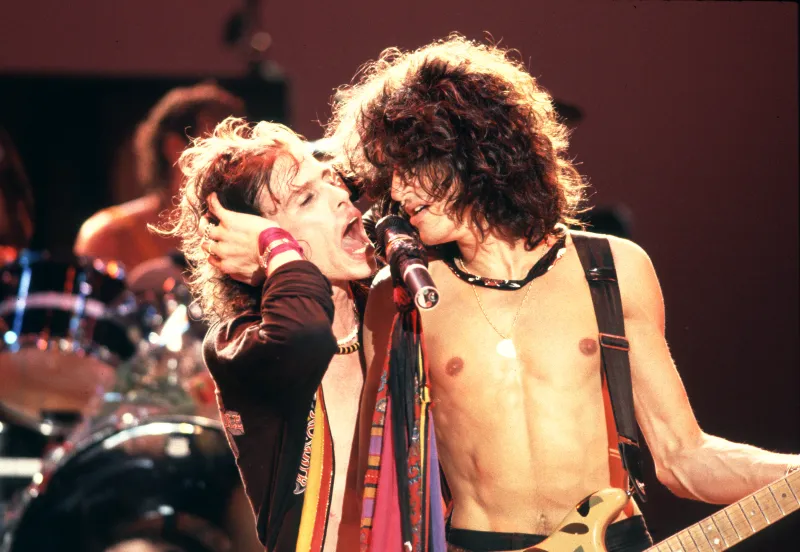
This article ranks Aerosmith’s top 10 songs of the 1970s using Billboard chart performance as the foundation, while also considering cultural impact and long-term fan connection. Rather than simply listing the band’s biggest hits, it explores why these songs mattered at the time, how they were received by fans, and how they helped establish Aerosmith as one of the defining American hard rock bands of the decade.
Howard Dee’s Take
Aerosmith’s songs from the 1970s hit a little differently than a lot of classic rock for me. They didn’t feel distant or untouchable — they felt right there, like the band could’ve been blasting out of a car next to yours or shaking the walls of some packed arena you dreamed about being in. Their music had swing, grit, and just enough danger to feel exciting without ever drifting into fantasy. These weren’t songs built to impress critics; they were built to move people.
What’s stayed with me over the years is how well these songs hold up when you hear them in sequence. You can track Aerosmith’s growth through the music itself — the confidence getting sharper, the grooves getting deeper, and the performances getting more commanding. Even before the later resurgence reminded everyone how strong their catalog was, these songs already told the story. They’re not just great Aerosmith tracks; they’re foundational pieces of what American hard rock sounded like at its peak.
1. Dream On
Why This Song Ranks Here
“Dream On” sits at the top because it represents the origin story and the payoff of Aerosmith’s entire 1970s run. Released in 1973, the song didn’t explode immediately, but it grew steadily through radio play and live performances, eventually peaking at #6 on the Billboard Hot 100 in 1976 after being reissued. That delayed success matters. It shows how Aerosmith built momentum the hard way, with fans discovering and rediscovering the song as the band’s profile rose.
What also sets “Dream On” apart is how different it sounded from much of the band’s later catalog. The song is dramatic, piano-driven, and emotionally exposed, culminating in Steven Tyler’s now-iconic scream. Fans embraced it not as a typical hard rock anthem, but as something more aspirational and vulnerable. Over time, “Dream On” became a rite of passage at concerts and a defining moment in Aerosmith’s live sets, cementing its status as the band’s most enduring and universally recognized song of the decade.
Howard Dee’s Take
“Dream On” has always felt like the song Aerosmith needed to write before they could become Aerosmith. It doesn’t sound like their later swagger-heavy material, but it explains where everything came from. When that final scream hits, it feels less like a vocal trick and more like a statement — a young band announcing that they’re aiming higher than anyone expects. Every time I hear it, I’m reminded that this wasn’t a band that arrived fully formed. They grew into their greatness, and this song is the proof.
2. Walk This Way
Why This Song Ranks Here
“Walk This Way” earns the #2 spot because it’s the song that pushed Aerosmith from major rock band to full-blown cultural force in the 1970s. Released in 1975 from Toys in the Attic, the track climbed to #10 on the Billboard Hot 100 in 1976, making it one of the band’s highest-charting singles of the decade at the time. Its success helped Toys in the Attic become the album that truly broke Aerosmith nationwide, moving them from growing popularity into undeniable mainstream presence.
What made fans latch onto “Walk This Way” was its unusual structure and attitude. Joe Perry’s instantly recognizable riff locks into a stop-start groove that feels almost percussive, while Steven Tyler’s rapid-fire, half-spoken lyrics turned the song into a call-and-response experience in concert. It wasn’t just something fans listened to — it was something they participated in. Night after night, the song became a guaranteed eruption point in Aerosmith’s live sets, reinforcing their reputation as a band built for the stage.
Howard Dee’s Take
“Walk This Way” feels like Aerosmith fully stepping into their own skin. It’s loose, cocky, and rhythmic in a way that doesn’t sound like anyone else at the time. What I’ve always loved about it is that it doesn’t feel polished or overthought — it feels instinctive. You can almost hear the band grinning as it comes together. Long before the later crossover moment gave it a second life, this song already felt unstoppable, like it was designed to fill arenas whether the band planned it or not.
3. Sweet Emotion
Why This Song Ranks Here
“Sweet Emotion” ranks this high because it marked a clear turning point in how fans and radio embraced Aerosmith. Released in 1975 from Toys in the Attic, the song climbed to #36 on the Billboard Hot 100, which may sound modest on paper, but its long-term impact far outweighed its chart position. Over time, it became one of the band’s most recognizable tracks, helped by relentless radio play and its hypnotic opening that listeners could identify within seconds.
What truly set “Sweet Emotion” apart for fans was how unusual it sounded for a hard rock band. Built around Tom Hamilton’s iconic bassline rather than a guitar riff, the song unfolds slowly, layering talk box effects, percussion, and atmosphere before exploding into a groove-heavy payoff. In concert, that slow build created anticipation, pulling audiences in before releasing the tension all at once. Fans didn’t just hear “Sweet Emotion” — they felt it, and it quickly became one of the band’s most reliable crowd-connecting moments.
Howard Dee’s Take
“Sweet Emotion” always struck me as Aerosmith showing confidence in restraint. They didn’t rush it, and they didn’t try to overpower you from the first second. They trusted the groove, trusted the space, and let the song breathe. That opening bass line still gives me chills because it signals that something big is coming — and Aerosmith delivers every time. It’s the kind of song that makes you stop what you’re doing and listen, which is probably why it’s never really gone away.
4. Back in the Saddle
Why This Song Ranks Here
“Back in the Saddle” earns its place near the top because it represents Aerosmith at full swagger and full volume. Released in 1976 as the opening track on Rocks, the song didn’t chart as high as some of their radio hits, but its importance was never about singles performance. Instead, it became one of the most defining concert openers of Aerosmith’s 1970s peak, instantly setting the tone for what fans were about to experience.
Fans responded to “Back in the Saddle” because it felt unapologetic and aggressive without being stiff. The opening sound effects, Joe Perry’s grinding riff, and Steven Tyler’s primal vocal delivery created an atmosphere that was theatrical but still dangerous. In live settings, the song functioned as a declaration — Aerosmith wasn’t easing into the show; they were charging straight at the audience. Over time, it became inseparable from the band’s identity as a hard rock powerhouse.
Howard Dee’s Take
“Back in the Saddle” is Aerosmith throwing the doors open and daring you to keep up. Every time I hear it, it feels like the start of something big — not just a song, but an event. It doesn’t try to be subtle or clever. It just announces itself and goes. To me, this is Aerosmith at their most confident, when they knew exactly who they were and weren’t interested in dialing it back for anyone.
5. Last Child
Why This Song Ranks Here
“Last Child” lands at #5 because it captures Aerosmith’s groove-first identity at its peak. Released in 1976 from Rocks, the song reached #21 on the Billboard Hot 100, giving the band another strong single while reinforcing that their power wasn’t limited to obvious radio-friendly tracks. By this point, fans trusted Aerosmith enough to follow them into deeper, funkier territory — and “Last Child” rewarded that trust.
What made “Last Child” resonate was its heavy, rolling rhythm and bluesy confidence. The song leaned harder into groove than flash, with Joe Perry’s riff locking tightly with Tom Hamilton’s bass and Joey Kramer’s swinging drum pattern. In concert, “Last Child” became a crowd mover rather than a sing-along — a song that made arenas feel loose and physical. Fans embraced it as proof that Aerosmith could be heavy without being rigid, and funky without losing bite.
Howard Dee’s Take
“Last Child” has always felt like Aerosmith settling into their power instead of showing it off. There’s no rush in this song — it just rolls forward with confidence. Every time I hear it, I’m struck by how comfortable the band sounds, like they know they don’t need to impress anyone anymore. It’s swagger without the showboating, and that’s why it’s one of those songs that keeps pulling you back in.
6. Toys in the Attic
Why This Song Ranks Here
“Toys in the Attic” earns the #6 spot because it showcases Aerosmith’s explosive energy in its purest form. As the title track and opener of their 1975 breakthrough album, the song wasn’t a major singles chart climber, but that was never the point. For fans, it became a statement piece — fast, aggressive, and impossible to ignore. From the first frantic drum hits to the closing scream, it announced that this band was operating at a different level.
What made “Toys in the Attic” connect so strongly with fans was how it captured the chaos of their live shows in under four minutes. The song moved at breakneck speed, driven by Joey Kramer’s relentless drumming and Steven Tyler’s feral vocal delivery. In concert, it often felt like the band throwing a match into the room. Fans embraced it as proof that Aerosmith wasn’t just about hooks and swagger — they could hit hard and fast when they wanted to, and they could do it convincingly.
Howard Dee’s Take
“Toys in the Attic” has always sounded to me like Aerosmith refusing to take a breath. It’s frantic, a little unhinged, and completely confident. When I hear it, I don’t think about charts or radio — I think about a band daring you to keep up with them. It’s the kind of song that reminds you why Aerosmith felt dangerous in the first place, and why their albums were more than just collections of singles.
7. Same Old Song and Dance
Why This Song Ranks Here
“Same Old Song and Dance” earns the #7 spot because it represents the moment Aerosmith’s groove-first identity clicked with a wider audience. Released in 1974 from Get Your Wings, the song climbed to #36 on the Billboard Hot 100, becoming one of the band’s first singles to break through nationally. It signaled that Aerosmith wasn’t just another blues-rock band — they had personality, attitude, and a rhythmic edge that stood out on radio.
Fans connected with the song’s loose, rolling feel and its conversational delivery. Steven Tyler’s vocals glide rather than attack, riding the rhythm instead of overpowering it, while the band locks into a pocket that feels effortless. In live performances, “Same Old Song and Dance” became a crowd-settler in the best sense — a song that pulled people in, got heads nodding, and set the stage for heavier moments to follow. It helped establish Aerosmith’s reputation as a band that could swing as hard as they rocked.
Howard Dee’s Take
“Same Old Song and Dance” always feels like Aerosmith finding their footing. It’s confident without being cocky, relaxed without losing edge. When I hear it, I think about a band realizing they don’t need to rush or overplay — the groove will do the work for them. It’s one of those songs that quietly proves why Aerosmith lasted, because it’s built on feel, not flash.
8. Draw the Line
Why This Song Ranks Here
“Draw the Line” earns the #8 spot because it captures Aerosmith at the height of their power — and right on the edge of it. Released in 1977 as the title track from Draw the Line, the song reached #42 on the Billboard Hot 100, but its importance goes beyond chart position. By this point, Aerosmith was an arena-level band, and fans heard that scale — and strain — directly in the music.
What resonated with fans was the song’s raw intensity and urgency. Joe Perry’s jagged riff and Steven Tyler’s snarling delivery gave the track a sense of danger that felt real, not manufactured. In concert, “Draw the Line” hit hard because it sounded like a band pushing itself forward at full speed, refusing to slow down. Fans embraced it as a darker, heavier statement that reflected where Aerosmith was creatively and culturally in the late ’70s.
Howard Dee’s Take
“Draw the Line” has always sounded to me like Aerosmith daring themselves to keep going. There’s tension in it — not just in the lyrics, but in the way the band plays. It feels less controlled than their earlier hits, and that’s exactly why it works. When I hear it, I don’t think about perfection. I think about a band living fast, playing loud, and trusting that the intensity will carry the song across the finish line.
9. Come Together
Why This Song Ranks Here
“Come Together” earns the #9 spot because it showed that Aerosmith could reinterpret a classic without losing their own identity. Released in 1978 on the Sgt. Pepper’s Lonely Hearts Club Band movie soundtrack, the band’s cover reached #23 on the Billboard Hot 100, making it one of their stronger-charting singles of the late 1970s. At a time when Aerosmith’s momentum was beginning to strain, the song reminded fans and radio programmers that the band could still deliver a powerful, modern-sounding track.
Fans responded to Aerosmith’s version because it didn’t feel like a novelty cover. Steven Tyler leaned into the song’s menace rather than its mystery, and Joe Perry’s guitar added weight and grit that distinguished it from the original. In live settings, “Come Together” fit naturally into Aerosmith’s setlists, sounding less like a tribute and more like a statement. For many listeners, it reinforced the idea that Aerosmith could stand shoulder-to-shoulder with the bands that inspired them.
Howard Dee’s Take
I’ve always liked that Aerosmith didn’t try to out-clever “Come Together.” They made it heavier, dirtier, and more physical — which is exactly what you’d want them to do. When I hear their version, it feels less psychedelic and more street-level, like they pulled the song into their own world instead of tiptoeing around its legacy. It’s a reminder that even when Aerosmith looked back, they still sounded like themselves.
10. No More No More
Why This Song Ranks Here
“No More No More” closes the list because it captures Aerosmith’s self-awareness at the peak of their 1970s run. Released in 1975 on Toys in the Attic, the song wasn’t pushed as a major single, but it became a favorite among fans who followed the band closely. By this point, Aerosmith had already tasted massive success, and the song’s weary tone reflected the cost of nonstop touring and excess without turning preachy or sentimental.
Fans connected with “No More No More” because it felt honest. The song balances groove and exhaustion, swagger and resignation, all wrapped in a rhythm that still swings hard. In concert, it played like a knowing nod between the band and the audience — a moment of reflection before the next burst of volume. It didn’t need to be a hit to matter. It felt like Aerosmith letting listeners see behind the curtain.
Howard Dee’s Take
“No More No More” has always felt like Aerosmith telling the truth without slowing the music down. There’s fatigue in it, but also confidence — like they know exactly what this life costs and are choosing it anyway. I’ve always appreciated that they didn’t dress it up or soften it. It’s a reminder that even at their most successful, Aerosmith was still grounded in reality, and that honesty is what makes the song stick with you long after it ends.
Frequently Asked Questions
What is Aerosmith’s biggest song of the 1970s?
“Dream On” is widely considered Aerosmith’s biggest song of the 1970s based on chart performance, longevity, and cultural impact. Originally released in 1973, the song gained momentum over several years and reached #6 on the Billboard Hot 100 in 1976 after being reissued. Its continued radio presence and iconic vocal climax have made it the band’s most enduring track from the decade.
Which Aerosmith song charted the highest on Billboard in the 1970s?
Among Aerosmith’s 1970s releases, “Dream On” achieved the highest Billboard Hot 100 peak, reaching #6. Other major charting songs from the decade include “Walk This Way,” which reached #10, and “Last Child,” which peaked at #21. These songs helped establish Aerosmith as a consistent singles act while still maintaining album-driven credibility.
Why is “Walk This Way” considered one of Aerosmith’s most important songs?
“Walk This Way” is considered one of Aerosmith’s most important songs because it helped define their 1970s identity and later played a key role in their 1980s resurgence. Originally released in 1975, the song became a concert staple and Top 10 hit. Its rhythmic delivery, call-and-response structure, and cultural adaptability allowed it to resonate across generations.
Did Aerosmith focus more on albums or singles in the 1970s?
Aerosmith was primarily an album-driven band in the 1970s. While they produced several successful singles, their reputation was built through cohesive albums like Toys in the Attic and Rocks, supported by relentless touring. Many fan-favorite songs that define their legacy were not their highest-charting singles but became staples through live performance and long-term radio play.
What Aerosmith songs were most popular with fans at concerts?
Fan-favorite Aerosmith concert songs in the 1970s included “Walk This Way,” “Back in the Saddle,” “Sweet Emotion,” and “Same Old Song and Dance.” These tracks were known for their crowd participation, strong grooves, and ability to translate powerfully to live settings. Over time, they became synonymous with Aerosmith’s onstage identity.
Why are Aerosmith’s 1970s songs still popular today?
Aerosmith’s 1970s songs remain popular because they are built on groove, strong riffs, and emotional delivery rather than trends that dated quickly. The music emphasizes feel over polish, allowing it to hold up across changing formats and generations. As a result, these songs continue to receive radio play, streaming attention, and placement in films, television, and live performances.
What album produced the most iconic Aerosmith songs of the 1970s?
Toys in the Attic produced the most iconic Aerosmith songs of the 1970s, including “Dream On,” “Walk This Way,” “Sweet Emotion,” and “No More No More.” The album marked the band’s full commercial breakthrough and remains their most influential release of the decade, both critically and culturally.
Why does Aerosmith’s music from the 1970s define American hard rock?
Aerosmith’s 1970s music helped define American hard rock by blending blues roots with groove, swagger, and live intensity. Unlike many contemporaries, the band emphasized swing and feel over rigid heaviness. That approach influenced generations of rock musicians and established a distinctly American counterpoint to British hard rock dominance.
Howard Dee’s Final Take
Putting together a list like this always reminds me how deep Aerosmith’s 1970s catalog really is. These aren’t just songs that happened to chart well — they’re tracks that grew alongside the band and their audience. You can hear Aerosmith finding their voice, gaining confidence, and eventually owning the space they were in. That kind of progression doesn’t happen by accident, and it’s part of why their music still feels alive when you play it today.
What really stands out is how physical these songs are. They weren’t designed for passive listening. They were built to be played loud, to move people, and to hold up in front of real crowds night after night. Even decades later, that energy comes through. For me, this list isn’t just about ranking hits — it’s about capturing a moment when American hard rock felt raw, honest, and unstoppable, and Aerosmith was right
Explore More Aerosmith
If you want to dive deeper into Aerosmith’s music and legacy, these articles expand on the moments, albums, and songs referenced throughout this piece.
- Aerosmith in the 1970s: From Boston Bars to America’s Hard Rock Band
- 10 Interesting Facts About Aerosmith
More Top 10 Lists You’ll Love
- Top 10 Fleetwood Mac Songs of the 1970s
- Top 10 Genesis Songs
- Top 10 Doobie Brothers Songs
- Top 10 David Bowie Songs
Discover More Top 1970s Music Lists
If you’re enjoying this list, there’s a lot more to explore.
Our Top 1970s Music Lists page brings together the best songs, artists, and moments of the decade — from Billboard-ranked hits to deep dives into the music that defined the era.
👉 Explore all our Top 1970s music lists here