
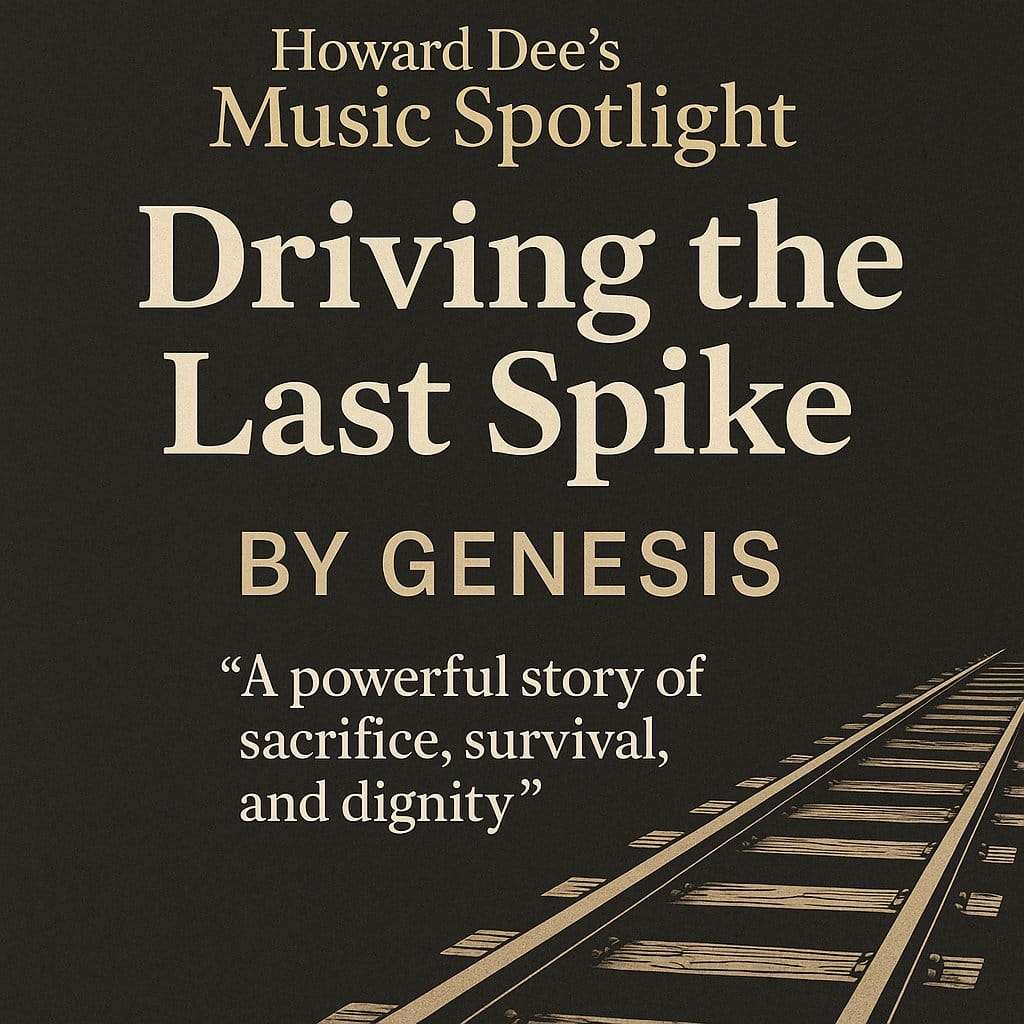
🎧 Introduction from Howard Dee
When you think of Genesis, you probably think of pop hits like “Invisible Touch” or the theatrical art rock of their Peter Gabriel years. But every once in a while, they delivered something deeper. Something epic.
For me, Driving the Last Spike is that song. I didn’t discover it until I revisited their We Can’t Dance album years later, and it hit me in a way few songs do. This wasn’t just another track — this was a story. A cinematic, emotional journey about hard work, sacrifice, and the unsung heroes who built the modern world.
It became personal. The more I listened, the more I felt connected to the story it told — not just about railroad workers, but about all of us who’ve ever struggled, persevered, and wondered if anyone would remember what we gave. That’s why I chose Driving the Last Spike for this Music Spotlight.
🎧 Driving the Last Spike: Genesis’s Unsung Masterpiece
Released in 1991 on We Can’t Dance, Driving the Last Spike is a 10-minute epic that never aimed for radio dominance. Instead, it offers a cinematic and emotional journey into the lives of Britain’s 19th-century railway workers — the navvies — who built the tracks that connected a nation, often at the cost of their lives.
Genesis had always excelled at storytelling, but this was different. Gone were the fantasy tales and cryptic lyrics of their earlier years. In their place was something grounded and deeply human. Through Phil Collins’s heartfelt delivery and the band’s restrained, elegant arrangement, Driving the Last Spike gives voice to the forgotten men whose labor and sacrifice shaped history, only to be erased from it.
This song goes beyond history.
It’s about all of us — about fathers and sons, about hard work, sacrifice, and doing what needs to be done without ever receiving recognition. When I listen to Driving the Last Spike, I can’t help but think of the quiet struggles and dignity of working people everywhere. It feels personal, even intimate, in a way few Genesis songs ever have.
In this deep dive, we’ll explore the song’s lyrics section by section to unpack its story, themes, and emotional power. Because while Driving the Last Spike may not be Genesis’s most famous track, it just might be one of their most important.
🚂 Section-by-Section Deep Dive
Departure and Uncertainty
Leaving my family behind me
Not knowing what lay ahead
Waving goodbye, as I left them in tears
Remembering all we’d said
The story opens with a painful departure. The narrator — a railway worker — leaves behind his family, stepping into the unknown. The imagery is simple but powerful: a tearful goodbye and an uncertain future. This isn’t fantasy or metaphor. It’s a real-life sacrifice, and the cost is already heavy.
Faith and Doubt
I looked to the sky, I offered my prayers
I asked Him for guidance and strength
But the simple beliefs of a simple man
Lay in His hands, and on my head
Faith becomes a theme here, but it’s not triumphant. The worker turns to God not with certainty, but desperation. The “simple beliefs” of ordinary men often face harsh tests, especially in the brutal world they’re entering.
The Toll of the Job
I gave everything that they wanted
But still they wanted more
We sweat and we toiled
Good men lost their lives
I don’t think they knew what for
The reality of the job sets in. This isn’t noble work romanticized. It’s backbreaking labor, loss, and exploitation. Good men die, but the people in charge remain distant and indifferent.
Dignity That Cannot Be Broken
I sold them my heart
I sold them my soul
I gave everything I had
But they couldn’t break my spirit
My dignity fought back
Despite it all, the narrator refuses to let go of his dignity. This is the emotional core of the song — the idea that no matter how harsh life becomes, we hold onto something that can’t be taken from us.
Disaster Strikes
We worked in gangs for all we were worth
The young boys pulling the wagons
We were digging the tunnels, shifting the earth
It was then that it happened
No-one knew how the cracks appeared
But as it fell they all disappeared
Stone fell like rain
The most haunting moment arrives. A tunnel collapses, taking lives in an instant. The danger of the job becomes horrifyingly real, and tragedy enters the song with devastating force.
Survivor’s Guilt and Bitterness
The smoke cleared, the dust it settled
No one knew how many had died
All around there were broken men
They’d said it was safe, and they’d lied
Survivor’s guilt and anger take over. “They’d said it was safe” reflects the all-too-familiar betrayal workers often face. Trust is shattered, and pain lingers.
A Good Man Is Hard to Find
You could hear the cries, you could smell the fear
But good fortune that day was mine
And it occurred to me that the heart of a good man
It seems is hard to find
The narrator reflects not just on survival, but on human nature. In the face of loss, he questions what makes a “good man” — and how rare they truly are in this world.
Pushing Through the Grind
How we worked, how we worked like
The devil for our pay
Through the wind, through the snow
And through the rain
Sweat stinging my eyes, there has to be a better life
Even after disaster, the work goes on. There’s no glory here — just labor. The yearning for a better life, however, remains alive in the narrator’s mind.
The Haunting of Home
But I can hear my children’s cry
I can see the tears in their eyes
Memories of those I’ve left behind
Still ringing in my ears
For all the hardship, it’s the separation from family that haunts him most. This returns to the song’s opening theme — the personal cost of this kind of work.
A Brotherhood That Will Never Return
We came from the North
And we came from the South
With picks and with spades
And a new kind of order
They’ll never see the likes of us again
This is the eulogy. The narrator acknowledges the unique, hard-edged brotherhood they forged — and how those days, and men, are gone forever.
Final Plea
Can you hear me
Can you see
Don’t you hear me
Don’t you see
The song closes with a ghostly refrain. The narrator asks to be remembered — not as a hero, but simply as someone who was there. Someone who worked, loved, lost, and mattered.
🎬 Final Reflection
Driving the Last Spike is more than a song about railway workers.
It’s about dignity, sacrifice, and how history forgets those who built the world around us.
Genesis moved from fantasy and mythology to human stories — and in doing so, created one of their most profound works. Through Phil Collins’s powerful vocals and the band’s mature songwriting, they honored lives that deserved remembering.
For me, this song is a personal anthem of quiet strength. Not every hero stands in the spotlight. Some, like the narrator here, simply did the work and asked only to be heard.
Today, we listen.
🎵 Explore More Genesis
- Genesis Artist Profile
- Howard Dee’s Top 10 Favorite Genesis Songs
- 10 Interesting Facts About Genesis
- Phil Collins Artist Profile
- Top 12 Phil Collins Songs
- 10 Interesting and Surprising Facts about Phil Collins
- Top 10 Peter Gabriel Songs
- Peter Gabriel Artist Profile


