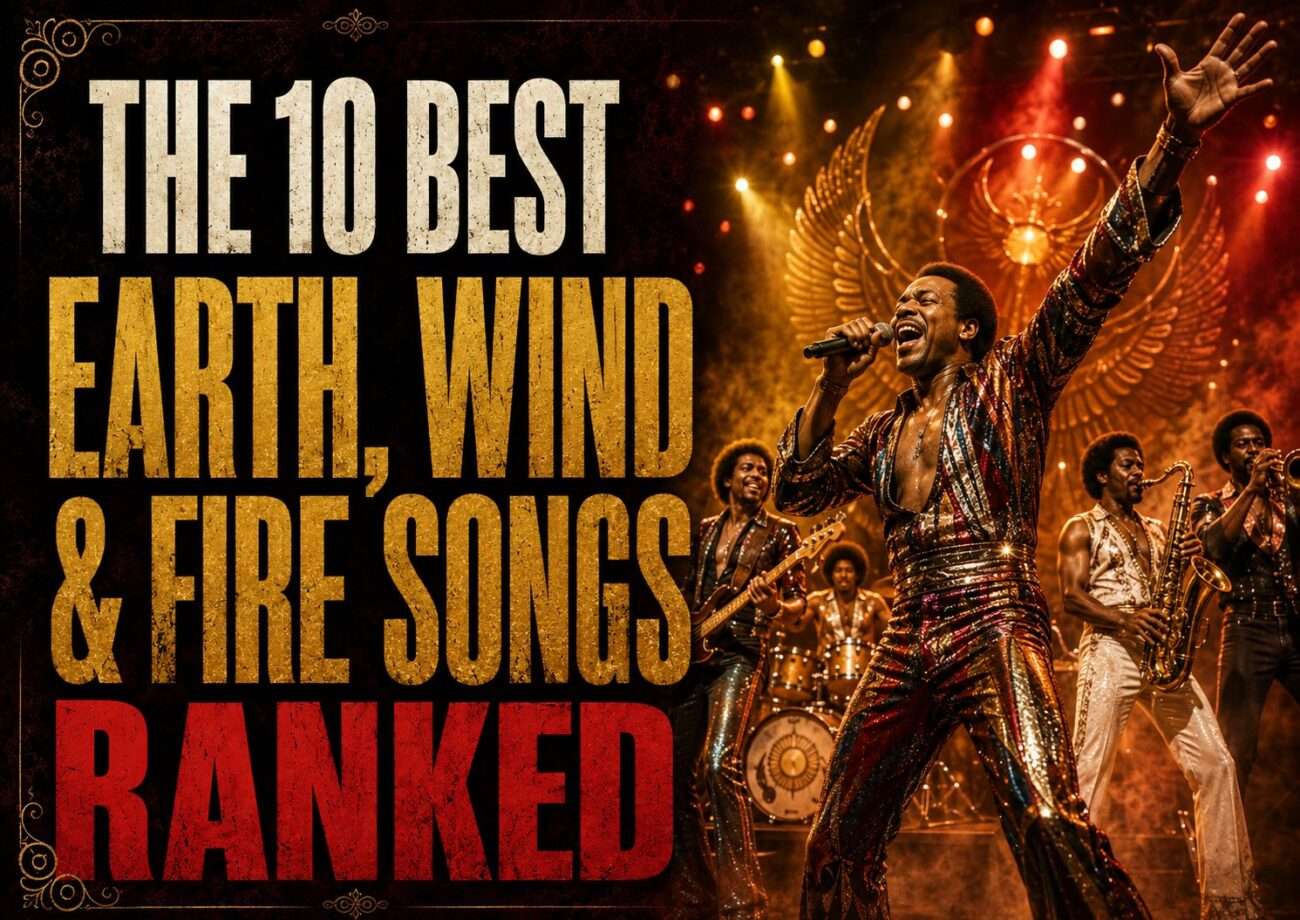
Earth, Wind & Fire was never just a funk band, a disco band or an R&B group. Maurice White built something far more ambitious: a musical universe that could include jazz, soul, gospel, pop, Latin rhythms, complex horn arrangements and spiritual themes without losing the groove.
The classic lineup included Maurice White, Philip Bailey, Verdine White, Ralph Johnson, Larry Dunn, Al McKay, Johnny Graham, Andrew Woolfolk and Fred White, giving the group an unusual amount of instrumental and vocal firepower. The Recording Academy has specifically highlighted the ensemble nature of Earth, Wind & Fire’s sound, with that combination of musicians helping create the band’s extraordinarily rich musical identity.
Their breakthrough reached another level with That’s the Way of the World in 1975. “Shining Star” became their first No. 1 pop hit, the album itself reached No. 1, and Earth, Wind & Fire earned their first Grammy Award. From there, the catalog just kept expanding.
The hardest part of this ranking is how many different versions of Earth, Wind & Fire deserve representation. There are deep funk records, soaring Philip Bailey ballads, sophisticated pop songs and dance-floor anthems that seem to become more popular with every generation.
Here are the 10 best Earth, Wind & Fire songs, ranked.

10. Getaway
Album: Spirit | Released: 1976
“Getaway” is Earth, Wind & Fire operating at full speed. The rhythm section never seems to settle, the horns arrive in bursts and Philip Bailey’s falsetto cuts across the arrangement with remarkable precision.
The lyric is appropriately simple because the music does most of the communicating. The entire track feels like an invitation to escape whatever is weighing you down and move toward something lighter.
That sense of motion separates “Getaway” from some of the group’s smoother material. Earth, Wind & Fire could create intricate arrangements, but they never forgot that rhythm had to feel physical.
This one moves from beginning to end.
9. Reasons
Album: That’s the Way of the World | Released: 1975
“Reasons” never needed to become a giant pop single to become one of Earth, Wind & Fire’s most beloved songs. The band’s own biography describes it as an extremely popular radio-played album track, which helps explain how thoroughly it entered the group’s live identity without following the conventional hit-single path.
Philip Bailey is the reason.
His falsetto gives the song a vulnerability completely different from Maurice White’s earthier vocal style. The arrangement stays restrained enough that Bailey has room to stretch the melody without competing against the horns or rhythm section.
In concert, “Reasons” became a vocal showcase. On record, it remains one of the clearest examples of how much emotional range Earth, Wind & Fire possessed.
8. Sing a Song
Album: Gratitude | Released: 1975
“Sing a Song” may be one of the most accurate summaries of Maurice White’s musical philosophy. Instead of treating music as decoration, the lyric presents singing as a way to change your mood and reconnect with optimism.
That idea could easily become sentimental, but Earth, Wind & Fire makes it work through rhythm. The guitar has a bright, clipped quality, the horns add punctuation and the chorus feels effortless.
The record also captures one of the group’s most important qualities: positivity without softness. Earth, Wind & Fire could deliver an uplifting message while the rhythm section still hit hard enough to fill a dance floor.
Few bands balanced those impulses this naturally.
Continue the Countdown
More Top 10 Soul, Funk & 70s Favorites
Explore more rankings from the soulful, funky and danceable side of the era.
7. After the Love Has Gone
Album: I Am | Released: 1979
“After the Love Has Gone” proves Earth, Wind & Fire didn’t need an uptempo groove to create a great record.
Written by David Foster, Jay Graydon and Bill Champlin, the song gives the band one of its most sophisticated ballads. The arrangement is polished but not sterile, and Philip Bailey’s vocal works beautifully against the harmonies surrounding him.
The emotional premise is mature. This isn’t the beginning of heartbreak; it’s the realization that something once meaningful has already disappeared.
The song became important enough to earn major Grammy recognition, including a nomination for Record of the Year and a win for Best R&B Vocal Performance by a Duo, Group or Chorus.
It’s a different kind of Earth, Wind & Fire greatness.
6. Fantasy
Album: All ‘n All | Released: 1977
“Fantasy” sounds like Earth, Wind & Fire building its own world.
The song blends layered vocals, horns, strings and a rhythm section that never becomes overwhelmed by the amount of music happening around it. Philip Bailey’s falsetto again plays a central role, lifting the melody into a range that makes the song feel almost weightless.
But underneath the polished surface is a very tight band.
That’s part of Earth, Wind & Fire’s genius. The arrangements could become elaborate without losing clarity because every musician understood exactly where the groove lived.
“Fantasy” may not be the first song casual listeners name, but it captures the ambitious, almost cosmic side of the group better than most.
5. Boogie Wonderland
Album: I Am | Released: 1979
By 1979, disco had become so dominant that established funk and soul groups risked sounding like they were simply following the trend.
“Boogie Wonderland” doesn’t have that problem.
Recorded with the Emotions, the track combines disco’s relentless beat with the horn arrangements, vocal interplay and rhythmic sophistication that were already fundamental to Earth, Wind & Fire.
The result is enormous. The chorus feels built for a packed dance floor, but the musicianship underneath it remains unmistakably EWF. The song received a Grammy nomination for Best Disco Recording, while Maurice White also received a Producer of the Year nomination during the same period.
It sounds like disco filtered through Earth, Wind & Fire rather than Earth, Wind & Fire surrendering to disco.
4. Let’s Groove
Album: Raise! | Released: 1981
“Let’s Groove” arrived after the 1970s peak and proved Earth, Wind & Fire could move into a new decade without sounding outdated.
Synthesizers are more prominent, and the production clearly reflects the early 1980s, but the core idea hasn’t changed. The rhythm is irresistible, the vocals are stacked beautifully and the entire song is constructed around getting people to move.
What makes it especially impressive is how naturally the electronic elements fit beside the band’s traditional strengths. Rather than abandoning horns and vocal harmonies, Earth, Wind & Fire simply expanded the palette.
The song later earned a Grammy nomination for Best R&B Performance by a Duo or Group with Vocal.
“Let’s Groove” is one of those rare later-career hits that belongs comfortably beside the classics.
3. That’s the Way of the World
Album: That’s the Way of the World | Released: 1975
If “Shining Star” announced Earth, Wind & Fire’s arrival as a major commercial force, the title track of That’s the Way of the World revealed the deeper philosophy behind the band.
The tempo is relaxed, the vocals are warm and the arrangement feels almost spiritual without becoming preachy. Maurice White believed strongly in music as a source of unity and positive energy, and this song may be the clearest expression of that worldview.
The band’s official biography notes that the track reached No. 5 on the R&B chart, while the album itself spent three weeks at No. 1 on the pop chart.
More importantly, the song feels timeless. There is nothing frantic about it. Earth, Wind & Fire simply settles into the groove and trusts the listener to come along.
2. Shining Star
Album: That’s the Way of the World | Released: 1975
“Shining Star” is Earth, Wind & Fire’s great breakthrough record.
Maurice White reportedly drew inspiration for the song while looking at the night sky near Caribou Ranch in Colorado, and the resulting lyric fits perfectly with his larger belief in self-worth and spiritual possibility. The group’s official biography says the single reached No. 1 on both the pop and R&B charts.
The music is equally important. The guitar riff is tougher than many listeners remember, Verdine White’s bass locks into the groove and the vocal harmonies give the chorus its lift.
“Shining Star” also earned Earth, Wind & Fire their first Grammy Award, and the Recording Academy later inducted the single into the Grammy Hall of Fame.
On historical importance, it has a legitimate claim to No. 1.
But one song has become even more universal.
1. September
Album: The Best of Earth, Wind & Fire, Vol. 1 | Released: 1978
There are songs people love, and then there are songs that seem to belong to everybody.
“September” is one of those.
The opening groove is recognizable almost immediately. Verdine White’s bass, the guitar, horns and percussion all lock together with such precision that the track feels effortless despite how much is happening.
Then the chorus arrives.
The famous reference to the 21st night of September became such a cultural touchstone that the Recording Academy built an entire 2025 television tribute around that date, a remarkable indication of how deeply the song has entered popular culture.
What makes “September” especially impressive is that the lyric doesn’t need a complicated story. The record creates a feeling of memory, celebration and connection, and that emotional atmosphere is more important than literal meaning.
Wedding receptions, family parties, sporting events, radio stations and streaming playlists have kept introducing it to new audiences. The song has become something larger than a late-’70s hit.
“Shining Star” gave Earth, Wind & Fire its first No. 1. “That’s the Way of the World” may contain the band’s deepest philosophy. “Reasons” may produce the greatest vocal moment.
But if you have one song to explain why Earth, Wind & Fire still matters, it’s “September.”
That’s why it’s No. 1.
What Did We Leave Out?
The hardest omission is “Serpentine Fire.” The groove is exceptional, the horn arrangement is unmistakably Earth, Wind & Fire and the song represents the increasingly ambitious sound of All ‘n All.
“Devotion” also came very close. Its spiritual quality and vocal harmonies make it one of the band’s most beautiful slower songs, especially for listeners who value the deeper album material over the dance-floor hits.
Other serious contenders include “Mighty Mighty,” “Can’t Hide Love,” “In the Stone,” “Saturday Nite,” “On Your Face” and the band’s excellent version of “Got to Get You into My Life.”
That last one presents an interesting ranking problem because it’s a Beatles song rather than an Earth, Wind & Fire original. Their arrangement is so distinctive that it almost feels like their composition anyway.
This catalog is deep enough that a Top 20 would still leave out songs somebody considers essential.
Why Earth, Wind & Fire’s Best Songs Still Work
The musicianship is the obvious place to start.
Verdine White’s bass could be melodic without losing the pocket. The horn section could create enormous bursts of sound while leaving room for the vocals. Philip Bailey’s falsetto and Maurice White’s lower register gave the group two completely different lead-vocal textures.
But Earth, Wind & Fire also had a philosophy that separated it from many of its contemporaries.
Maurice White wanted the music to feel uplifting, inclusive and larger than everyday problems. That sense of possibility runs through “Shining Star,” “Sing a Song,” “That’s the Way of the World” and even a pure party record like “September.”
The Recording Academy has repeatedly recognized that legacy, including a Lifetime Achievement Award and a dedicated 2025 Grammy salute featuring artists paying tribute to the band’s catalog.
Earth, Wind & Fire made sophisticated music sound joyful.
That’s a difficult trick to duplicate.
Want to See Earth, Wind & Fire Live?
Earth, Wind & Fire remains an active touring act, and the timing of this article is especially useful because the group is currently on the Sing A Song All Night Long 2026 North American tour with Lionel Richie.
The official announcement describes a 26-city run that began June 24 and is scheduled to wrap up in Austin on August 14, 2026. The band’s tour page lists recent stops including Denver, Seattle, San Francisco, Palm Desert and Los Angeles.
It’s difficult to imagine a catalog better suited to a live celebration. “Shining Star,” “Let’s Groove,” “Boogie Wonderland” and “September” are songs that get bigger when an entire arena joins in.
Check Earth, Wind & Fire concert dates and tickets at Concert Ticket Source
70s Music Wisdoms may receive compensation from partners featured on this site.