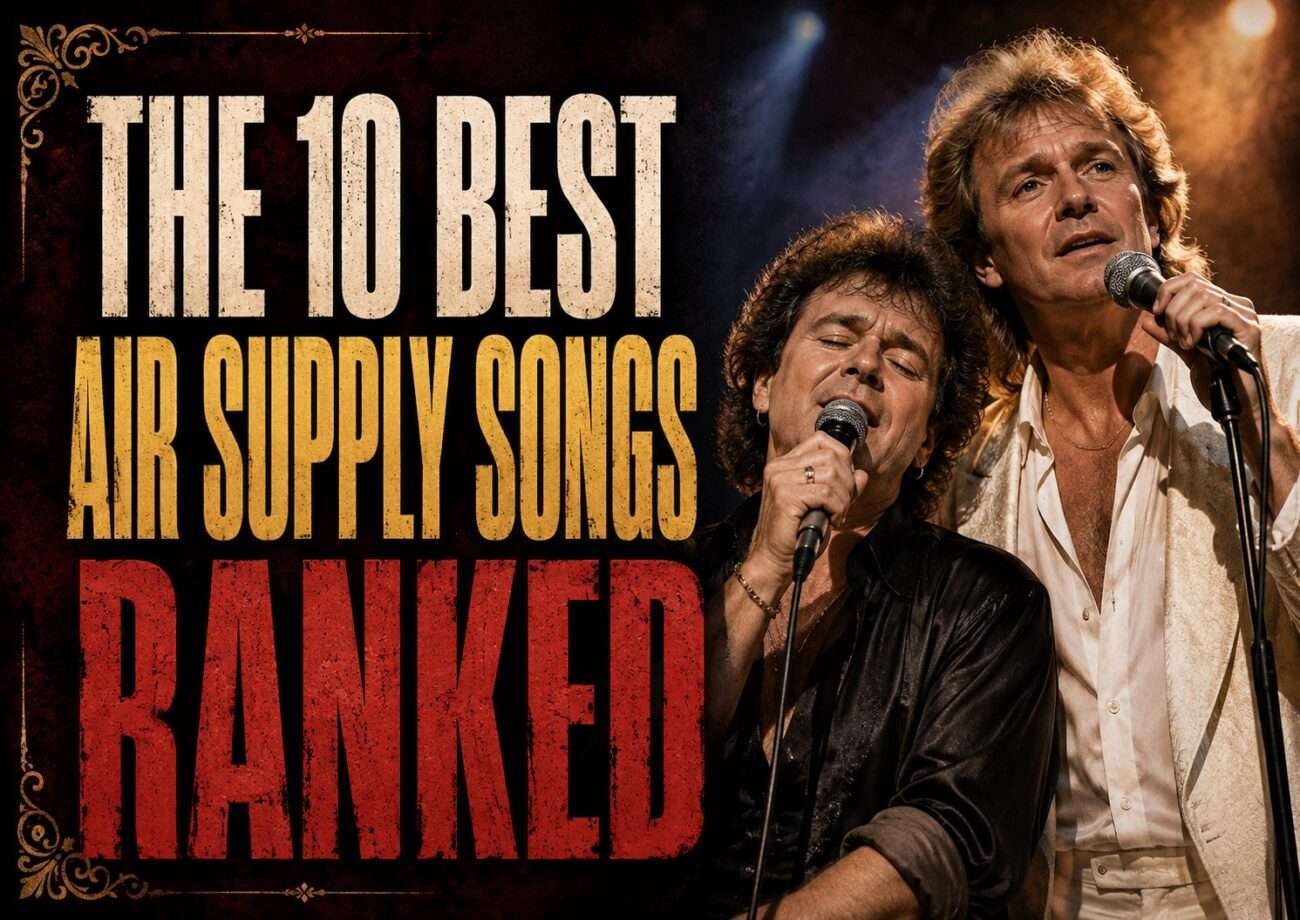
Air Supply has never been shy about emotion. Graham Russell wrote songs that treated love, heartbreak and loneliness as enormous events, while Russell Hitchcock possessed exactly the kind of voice needed to make those feelings sound believable.
The pair met in 1975 while performing in an Australian production of Jesus Christ Superstar. After several years of success in Australia, “Lost in Love” became their international breakthrough and opened the door to one of the most remarkable soft-rock runs of the early 1980s.
For several years, Air Supply seemed almost permanently attached to American radio. The songs were polished, melodic and unapologetically romantic, with Hitchcock’s soaring tenor providing a sound that could be identified almost immediately.
The duo’s reputation sometimes causes people to dismiss the music as lightweight, but the best Air Supply records are exceptionally well constructed. Strong melodies, careful arrangements and Russell’s writing gave Hitchcock exactly the platform he needed.
Here are the 10 best Air Supply songs, ranked.
10. Two Less Lonely People in the World
Album: Now and Forever | Released: 1982
The title practically summarizes the Air Supply worldview. Two people who were once alone find each other, and suddenly the entire world feels different.
What keeps the song from becoming overly sentimental is Hitchcock’s vocal. He sings with enough restraint in the verses that the emotional payoff feels earned when the chorus finally expands.
The melody also has the kind of effortless quality Graham Russell specialized in during this period. Air Supply wasn’t trying to disguise what the song was about, and that sincerity remains part of its appeal.
9. Sweet Dreams
Album: The One That You Love | Released: 1981
“Sweet Dreams” follows the classic Air Supply formula of beginning relatively quietly and then building toward a chorus designed to showcase Russell Hitchcock’s range.
The arrangement gives his voice plenty of space. Keyboards and strings add atmosphere without overwhelming the melody, while the rhythm keeps the song from becoming completely weightless.
By 1981, Air Supply had reached the point where even another romantic ballad could feel distinct because Hitchcock’s voice provided such a recognizable personality. “Sweet Dreams” isn’t the duo’s biggest record, but it captures the sound of their commercial peak beautifully.
8. Here I Am
Album: The One That You Love | Released: 1981
“Here I Am” is built around longing rather than heartbreak. The narrator knows what he wants but doesn’t know whether the feeling will ever be returned, giving Hitchcock plenty of emotional uncertainty to work with.
The song gradually expands instead of beginning at maximum intensity. That structure was one of Air Supply’s strengths because Hitchcock could move from controlled verses into a soaring chorus without making the performance feel disconnected.
During the duo’s early-’80s run, songs like this made Air Supply nearly unavoidable on pop and adult-contemporary radio. The production may belong to its era, but the melody still holds up.
Continue the Countdown
More Top 10 Soft Rock & Mellow Favorites
Explore more rankings from the softer side of 70s and classic pop.
7. Even the Nights Are Better
Album: Now and Forever | Released: 1982
Many Air Supply songs are about losing someone or desperately wanting them back. “Even the Nights Are Better” changes the perspective by describing what happens after love finally arrives.
That optimism gives the record a warmer feel than much of the catalog. Hitchcock still gets the big chorus, but the emotion is gratitude rather than desperation.
The song became another major hit during Air Supply’s extraordinary American run. More importantly, it showed that the duo’s romantic songwriting didn’t always need heartbreak to create tension.
6. Every Woman in the World
Album: Lost in Love | Released: 1980
“Every Woman in the World” has more movement than many of Air Supply’s signature ballads. The rhythm gives the song an almost upbeat quality while Hitchcock sings with obvious enthusiasm rather than emotional exhaustion.
That variety matters because the duo can sometimes be reduced unfairly to slow songs. Air Supply knew how to write a pop record with forward momentum while still keeping melody and romance at the center.
The song helped make Lost in Love a genuine breakthrough album rather than simply the home of one hit. Air Supply suddenly had several songs capable of competing on American radio.
5. Chances
Album: Lost in Love | Released: 1980
“Chances” never became one of Air Supply’s biggest American singles, but longtime fans often regard it as one of the strongest songs on Lost in Love. It has the emotional directness associated with the duo without pushing the arrangement too far.
Graham Russell’s writing leaves enough room for Hitchcock to shape the melody instead of simply overpowering it. The result feels more intimate than many of the massive ballads that came later.
Its inclusion also helps prevent this ranking from becoming nothing more than a list of chart positions. Some of Air Supply’s best recordings were album tracks that reveal more depth than the familiar radio singles alone.
4. The One That You Love
Album: The One That You Love | Released: 1981
“The One That You Love” sits at the absolute center of Air Supply’s commercial peak. The melody is immediately recognizable, and Hitchcock turns a simple romantic question into something much larger.
The arrangement is classic early-’80s soft rock: keyboards, careful dynamics and a chorus that expands dramatically without losing the song underneath it.
The record became Air Supply’s only No. 1 single on the Billboard Hot 100, making it the duo’s biggest American chart achievement. That success matters, but the song still ranks this high because it remains one of the clearest examples of the Graham Russell-Russell Hitchcock partnership working exactly as intended.
3. Lost in Love
Album: Lost in Love | Released: 1980
“Lost in Love” changed everything for Air Supply. The song had already been recorded before Arista Records brought the duo to a much larger American audience, and its success became the doorway to international stardom.
The track is gentler than many of the power ballads Air Supply would become known for. Acoustic guitar anchors the arrangement, while the vocal harmonies and melody create a relaxed quality that makes the song unusually inviting.
That simplicity is part of its strength. Air Supply didn’t need orchestral excess or an enormous climax to establish the emotional tone.
“Lost in Love” feels like the beginning of a journey because, commercially, that’s exactly what it was.
2. Making Love Out of Nothing at All
Released: 1983
Jim Steinman’s songwriting is almost impossible to hide. The man behind some of Meat Loaf’s most theatrical records brought the same instinct for enormous emotional architecture to Air Supply.
“Making Love Out of Nothing at All” begins relatively quietly and keeps adding intensity until the arrangement becomes gigantic. Hitchcock is perfectly equipped for that structure because his voice can continue climbing without sounding overwhelmed by the production. Air Supply still features the song prominently in its official catalog and live repertoire.
The record is excessive, but the excess is the point. Air Supply had always made emotional music, and Steinman essentially removed the ceiling.
Only one song represents the duo more completely.
1. All Out of Love
Album: Lost in Love | Released: 1980
“All Out of Love” is the definitive Air Supply song because everything associated with the duo is present. The narrator is devastated, the melody is immediate and Russell Hitchcock sounds as though heartbreak has become a physical condition.
Graham Russell originally wrote the song, with Arista chief Clive Davis later helping reshape part of the lyric for the American release. The single reached No. 2 on the Billboard Hot 100 and became one of the duo’s signature international hits.
The recording also contains one of Hitchcock’s most memorable vocal moments in the final section, where the song keeps pushing upward instead of simply fading away.
Decades later, Hitchcock has described “All Out of Love” as the group’s anthem and said it remains the most requested song at Air Supply concerts.
That settles it for us.
“All Out of Love” is No. 1.
What Did We Leave Out?
The toughest omission is probably “Now and Forever.” The title track from the duo’s 1982 album has everything Air Supply fans expect: a strong melody, romantic lyric and another emotional Hitchcock performance.
“Young Love” also deserves consideration, while “Just as I Am” and “I Can Wait Forever” represent later stages of the duo’s career. Fans who dig deeper into the albums could make cases for “Having You Near Me,” “Don’t Turn Me Away” and several other tracks.
Air Supply produced so many successful romantic songs during a short period that the lower half of a Top 10 becomes surprisingly difficult. The giant singles dominate popular memory, but the albums contain more depth than that reputation suggests.
Why Air Supply’s Best Songs Still Work
Air Supply never treated romance with irony. Graham Russell wrote as if falling in love or losing someone genuinely mattered, and Russell Hitchcock sang those songs with complete commitment.
That sincerity is probably the biggest reason the music survived. Production styles change, but people still understand loneliness, regret and wanting someone back.
The duo also had a very specific division of strengths. Russell supplied much of the songwriting foundation, while Hitchcock possessed the kind of distinctive tenor that could transform a simple melody into something immediately recognizable.
The combination was unusually effective.
Want to See Air Supply Live?
Air Supply celebrated its 50th anniversary with an extensive touring schedule, and Russell Hitchcock has described the modern show as much more energetic than the “soft rock” label might suggest. The set still revolves around the songs fans expect, including “Lost in Love,” “Making Love Out of Nothing at All” and the show-closing “All Out of Love.”
For anyone who grew up with these records, the concert appeal is straightforward: this is one of those catalogs where the opening lines immediately bring back a particular time and place.
Check Air Supply concert dates and tickets at Concert Ticket Source
70s Music Wisdoms may receive compensation from partners featured on this site.