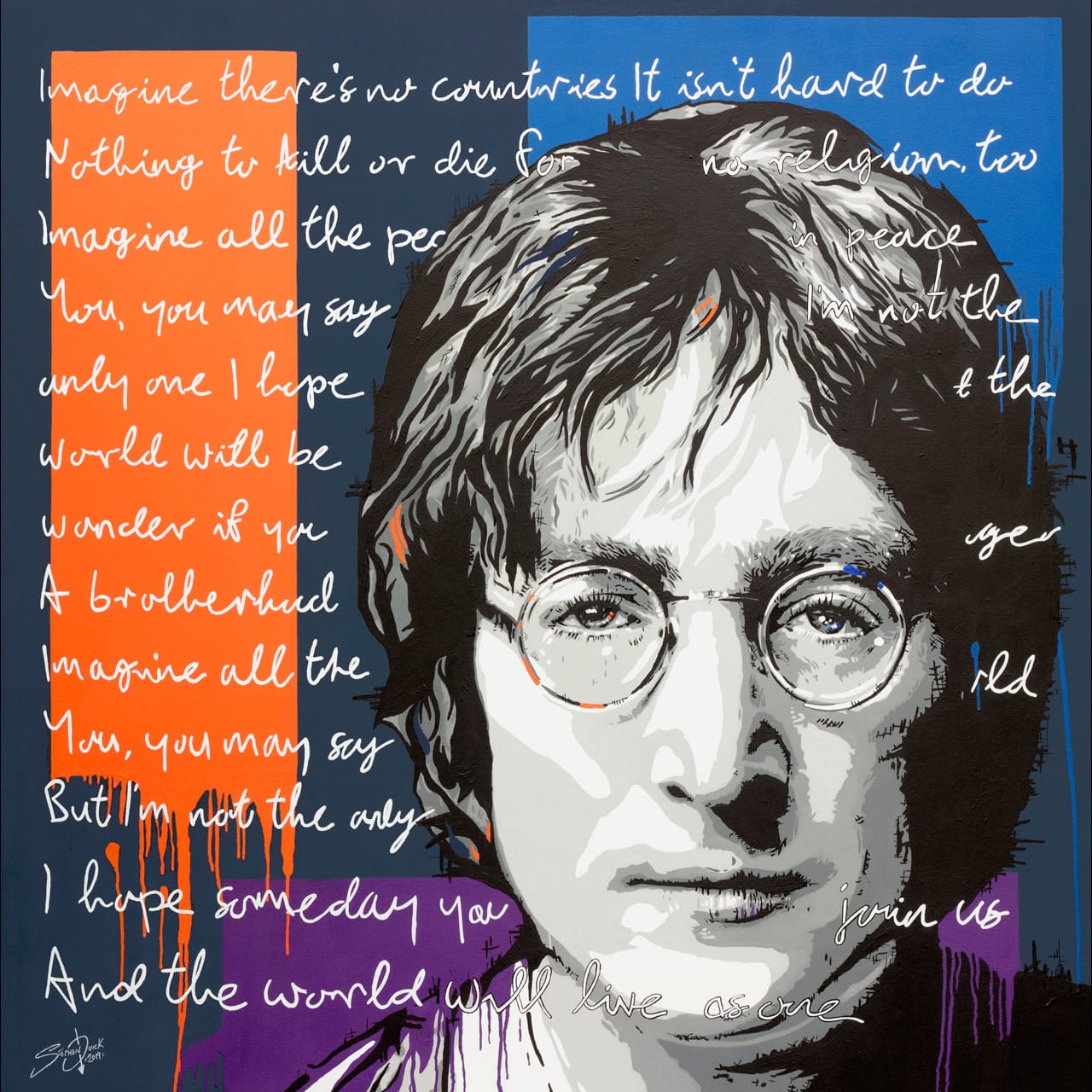
John Lennon’s solo career is often remembered for its ideas, controversies, and cultural weight. But beyond symbolism, Lennon was also a charting artist whose music lived — or didn’t — on American radio. Ranked by Billboard Hot 100 performance, the ten songs below reflect how Lennon’s solo work actually connected with the public, factoring in peak position, total weeks on the chart, timing, and historical context.
This list is not about influence alone. It’s about measurable impact.
Howard Dee’s Take
When people talk about John Lennon’s solo work, they usually start with what he meant. I think it’s just as important to look at how people responded. Billboard doesn’t measure artistic intent — it measures connection. These songs show Lennon navigating the real-world dynamics of radio, sales, and public sentiment, sometimes successfully, sometimes unexpectedly.
1. (Just Like) Starting Over (1980)
Why This Song Ranks Here
Released in October 1980, (Just Like) Starting Over became John Lennon’s most successful solo single on the Billboard Hot 100. The song reached #1, where it remained for five consecutive weeks, and spent 23 total weeks on the Hot 100. Its chart run accelerated dramatically following Lennon’s murder in December 1980, but Billboard counts posthumous performance the same as any other — and numerically, no Lennon solo song performed better.
Beyond circumstance, the song’s design mattered. Lennon intentionally wrote it as a throwback to early rock and pop, prioritizing familiarity over provocation. That accessibility made it a natural fit for Top 40 and adult contemporary radio, giving it sustained chart life rather than a short-term spike.
Howard Dee’s Take on the Song
This song feels light until you realize how intentional it is. Lennon wasn’t chasing relevance — he was reconnecting with simplicity. Knowing what followed adds weight, but even without hindsight, the song works because it sounds open and human.
2. Imagine (1971)
Why This Song Ranks Here
Imagine originally peaked at #3 on the Billboard Hot 100 in 1971 and remained on the chart for 15 weeks, an impressive run for a song that openly challenged religious, political, and national assumptions. Its initial success was driven by consistent airplay rather than novelty, signaling sustained audience engagement.
Following Lennon’s death, Imagine re-entered the charts and reached #1 in 1981, giving it a rare dual-era Billboard history. That combined chart performance, along with its long-term airplay and cultural longevity, firmly places it near the top of Lennon’s solo catalog.
Howard Dee’s Take on the Song
This song invites disagreement, and Lennon knew it would. But it’s melodic enough to keep people listening even when they push back. That tension between comfort and challenge is exactly why it endured.
3. Woman (1981)
Why This Song Ranks Here
Woman climbed to #2 on the Billboard Hot 100 and remained on the chart for 17 weeks. Released shortly after Lennon’s death, it received heavy radio rotation, particularly on adult contemporary stations, which extended its chart presence beyond an initial wave of interest.
Unlike many posthumous releases that fade quickly, Woman showed genuine staying power. Its restrained arrangement and personal lyricism allowed it to stand on its own musically, rather than functioning solely as a memorial piece.
Howard Dee’s Take on the Song
There’s no armor here. No slogans. Just appreciation and vulnerability. It feels less like a performance and more like a private moment that somehow became public.
4. Whatever Gets You Thru the Night (1974)
Why This Song Ranks Here
This was John Lennon’s only #1 Billboard Hot 100 hit during his lifetime, topping the chart for two weeks and spending 13 weeks total on the Hot 100. Featuring Elton John on piano and backing vocals, the song leaned into funk and pop at a time when Lennon was experimenting with different styles.
The collaboration broadened the song’s appeal, and its upbeat rhythm made it one of Lennon’s most radio-friendly releases. In pure Billboard terms, this represents his peak commercial success while alive.
Howard Dee’s Take on the Song
This sounds like Lennon enjoying the moment instead of wrestling with it. It moves, it grooves, and it doesn’t ask much from the listener — which is exactly why it worked.
5. Watching the Wheels (1981)
Why This Song Ranks Here
Watching the Wheels peaked at #10 on the Billboard Hot 100 and spent 18 weeks on the chart. Recorded during Lennon’s comeback sessions for Double Fantasy, it resonated with listeners reassessing his five-year absence from music.
The song’s steady climb — rather than a sudden spike — suggests organic listener connection. It became one of the most replayed tracks from Double Fantasy and remains one of Lennon’s most reflective chart successes.
Howard Dee’s Take on the Song
This feels like Lennon answering critics without defensiveness. There’s assurance here — the calm of someone comfortable stepping away from the noise.
6. Instant Karma! (We All Shine On) (1970)
Why This Song Ranks Here
Released in early 1970, Instant Karma! surged to #3 on the Billboard Hot 100 and remained on the chart for 14 weeks. Written, recorded, and released in a matter of days, it captured Lennon’s urgency as he entered his post-Beatles career.
Heavy radio rotation and public curiosity helped it outperform many later Lennon singles. In terms of speed, impact, and longevity, it remains one of his most efficient chart performers.
Howard Dee’s Take on the Song
This is Lennon announcing himself — decisively. It’s fast, confident, and unmistakably his. There’s no easing into solo life here.
7. Happy Xmas (War Is Over) (1971)
Why This Song Ranks Here
While its original chart run was modest, Happy Xmas (War Is Over) has re-entered the Billboard Hot 100 multiple times due to seasonal airplay, eventually accumulating numerous chart weeks across decades. Modern chart methodology has allowed its enduring popularity to be reflected more accurately.
Very few post-1960s holiday songs achieve recurring chart relevance. Its continued presence places it among Lennon’s most commercially durable works.
Howard Dee’s Take on the Song
It sounds comforting — until you really listen. Lennon knew how to embed a challenge inside something familiar, and that balance is why it keeps returning every December.
8. Mind Games (1973)
Why This Song Ranks Here
Mind Games peaked at #18 on the Billboard Hot 100 and spent 13 weeks on the chart. It marked a shift away from overt activism toward a more philosophical, introspective tone.
Though not a major hit, its sustained airplay and later reassessment place it among Lennon’s more durable mid-tier chart successes.
Howard Dee’s Take on the Song
This is Lennon searching instead of preaching. It’s thoughtful without being confrontational, and that restraint gives it longevity.
9. Give Peace a Chance (1969)
Why This Song Ranks Here
Credited to the Plastic Ono Band, Give Peace a Chance reached #14 on the Billboard Hot 100 and remained on the chart for 11 weeks. Its chart performance was modest, but its cultural reach was enormous.
The song’s adoption by protest movements worldwide extended its relevance far beyond radio metrics, making it one of Lennon’s most influential releases.
Howard Dee’s Take on the Song
This stopped being a song almost immediately. It became a chant, a shared phrase, a movement — and that transformation is why it still matters.
10. #9 Dream (1974)
Why This Song Ranks Here
#9 Dream peaked at #9 on the Billboard Hot 100 and spent 15 weeks on the chart. Its lush production and dreamlike tone fit comfortably into mid-1970s radio formats.
The song showed Lennon could succeed commercially without confrontation or commentary, relying instead on mood and melody.
Howard Dee’s Take on the Song
This is Lennon drifting on purpose. It’s atmospheric rather than argumentative — and sometimes that’s exactly enough.
Final Thoughts from Howard Dee
Looking at John Lennon’s solo career through the lens of Billboard reveals a more nuanced story. His biggest chart successes often came when conviction was paired with accessibility — not when ideas were softened, but when they were delivered with melody and restraint. These songs didn’t just make statements; they stayed on the radio.
This list doesn’t replace personal favorites or deeper emotional connections. It complements them. These are the songs that reached the widest audience — and in doing so, helped define John Lennon’s solo legacy in measurable terms.
John Lennon Songs – Frequently Asked Questions
What was John Lennon’s biggest solo hit on Billboard?
(Just Like) Starting Over was John Lennon’s biggest solo hit, reaching #1 on the Billboard Hot 100 for five weeks and spending 23 weeks on the chart.
How many #1 songs did John Lennon have as a solo artist?
John Lennon had two #1 solo songs on the Billboard Hot 100: Whatever Gets You Thru the Night during his lifetime and Imagine posthumously.
Did “Imagine” reach #1 on the Billboard Hot 100?
Yes. Although it originally peaked at #3 in 1971, Imagine reached #1 in 1981 following Lennon’s death.
What was John Lennon’s last major hit?
(Just Like) Starting Over and Woman were Lennon’s final major hits, both released from Double Fantasy shortly before his death in December 1980.
Which John Lennon songs charted after his death?
(Just Like) Starting Over, Woman, and Watching the Wheels all charted prominently on the Billboard Hot 100 following Lennon’s death.
Explore More John Lennon
More Top 10 Lists You’ll Love
- Top 10 Elton John Songs of the 1970s
- Top 11 Billy Joel Songs
- Top 10 George Harrison Songs
- Top 10 Carole King Songs
Discover More ’70s Music Lists
Explore more rankings, deep dives, and curated lists from the greatest decade in music:
👉 Top 1970s Music Lists: Best Bands, Artists & Songs
External Resources
- Billboard – John Lennon Chart History
- Rock & Roll Hall of Fame – John Lennon Profile
- Official John Lennon Website