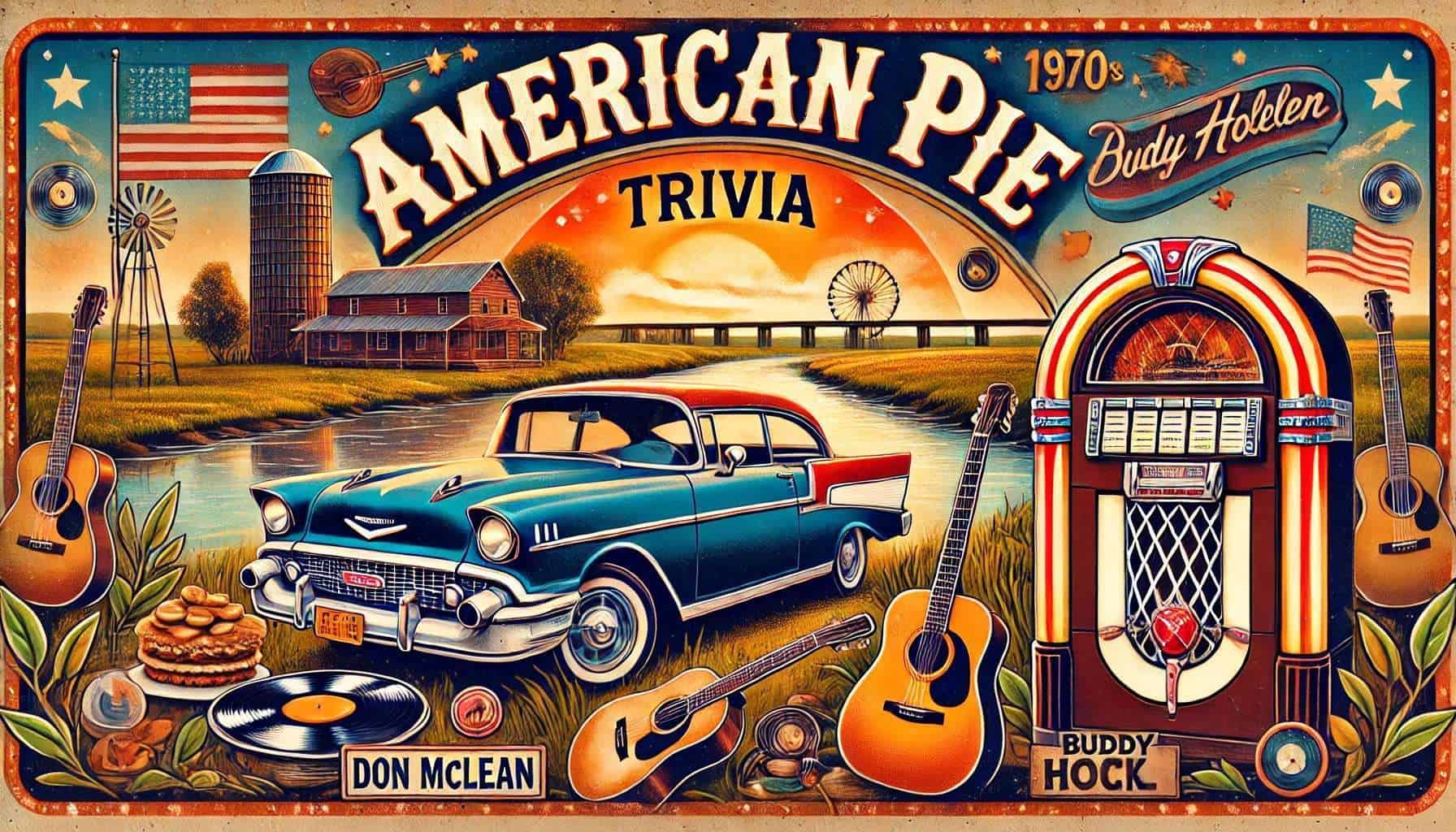
This quiz dives deep into the layers of Don McLean’s iconic 1971 anthem, “American Pie,” a song that masterfully intertwines nostalgia, history, and rock ‘n’ roll lore. With 30 questions, this quiz explores everything from cryptic lyrics and musical allusions to the historical moments that inspired McLean’s poignant verses. Fans of music history and casual listeners alike will gain insight into the song’s references to Buddy Holly, the counterculture shift, and even the mystery behind “The Day the Music Died.” Test your knowledge of this lyrical masterpiece and see how well you understand one of America’s most beloved songs!
#1. Who or what is referenced in the line “while Lennon read a book on Marx”?
John Lennon’s political involvement, including his activism and socially conscious music, is likely referenced here. Lennon became increasingly vocal about issues like peace and equality, leading to speculation about his ideological inspirations, including Karl Marx’s writings.
#2. “Do you have faith in God above, if the Bible tells you so?” This line might reference which 1950s song?
McLean’s mention of “faith” and “the Bible” might refer to The Book of Love by The Monotones. The song was a significant part of early rock, and its title suggests both innocence and a lighthearted belief in love, fitting the song’s nostalgic tone.
#3. Who is McLean likely referring to with the line “fire is the devil’s only friend”?
This line is often linked to Jerry Lee Lewis, known for his song “Great Balls of Fire.” Lewis, with his fiery performances and controversial life, represents the wild, rebellious spirit of early rock that McLean both admires and questions.
#4. The “girl who sang the blues” is widely interpreted to represent which singer?
Many believe this line refers to Janis Joplin, whose raw and soulful singing style epitomized the blues. Joplin’s untimely death in 1970 made her a tragic symbol of the counterculture’s struggles with fame, addiction, and loss.
#5. The line about “broken church bells” might represent what?
Broken church bells suggest a metaphor for the decline of traditional American values. McLean’s song frequently contrasts the innocence of early rock with the darker themes that emerged in the 1960s, portraying a fractured America.
#6. Who or what might be symbolized by “the Holy Ghost has caught the last train for the coast”?
This line is interpreted as the “death” of rock’s early innocence. Buddy Holly’s influence on rock ‘n’ roll was profound, and his untimely death represented the end of rock’s unblemished youth, a theme McLean returns to throughout the song.
#7. The phrase “rolling stone” in “American Pie” could be interpreted as referring to which?
The phrase likely references both the Rolling Stones band and Rolling Stone magazine, both of which were instrumental in shaping rock culture. It might also nod to Bob Dylan’s “Like a Rolling Stone,” symbolizing the interconnectedness of rock’s biggest influencers.
#8. What does the line “in the streets, the children screamed” likely reference?
The “children” screaming in the streets can be seen as a metaphor for the turmoil and protests of the 1960s, including the Civil Rights movement and anti-war demonstrations, reflecting societal upheaval during the era.
#9. What might “the players tried to take the field” represent in McLean’s lyrics?
This line is often seen as a comment on musicians who tried to bring rock back to its roots. However, the “marching band refused to yield,” symbolizing a loss of control and the commercialization of rock that McLean lamented.
#10. What year was “American Pie” released, marking McLean’s reflections on the “day the music died”?
Released in 1971, “American Pie” became a cultural touchstone as it reflected McLean’s views on changes in American music and society. The early 1970s were a turbulent time, and McLean’s nostalgia struck a chord with listeners.
Results


| User | Score | % |
| 6 / 10 | 60% | |
| 7 / 10 | 70% | |
| 7 / 10 | 70% | |
| Debbie Short Siemer | 8 / 10 | 80% |
| Dave pickering | 5 / 10 | 50% |
| Richard | 8 / 10 | 80% |
| Dave | 4 / 10 | 40% |
| Rebecca | 7 / 10 | 70% |
| Bernice | 4 / 10 | 40% |
| Reddd | 7 / 10 | 70% |