🗣️ Howard Dee’s Take on the Song
The first time I heard “Cat’s in the Cradle,” I was 12 years old. I liked the melody, I sang along with the chorus, and I’m sure I thought I understood it — but I didn’t. It was just a catchy song on the radio at that point. The emotional weight hadn’t landed yet.
Fast-forward to when I was 19. I was home from college, chatting with a friend’s mom who had known me and my parents for years. We were talking about how I was spending more time with my friends than at home. She said, “You sound just like Cat’s in the Cradle.” That comment hit me hard. I listened to the song again, really listened, and realized: I was the kid. And in that moment, the song became a roadmap for what I didn’t want to become.
It stuck with me through my 30s and 40s as I raised two kids. And now that they’re grown and out of the house, I see this song as a gift. It taught me how to show up. It taught me what really matters — not status or stuff, but presence. Not just being a parent, but being there.
🎼 Background on the Song
“Cat’s in the Cradle” was released in 1974 on Harry Chapin’s fourth studio album, Verities & Balderdash. Though Chapin was already known for narrative songwriting, this track struck a deeper cultural nerve and became his only No. 1 hit on the Billboard Hot 100, where it topped the chart in December of that year.
The lyrics were originally written as a poem by Sandra Chapin, Harry’s wife. She based them on her first husband’s strained relationship with his father and the emotional distance she noticed between Harry and his son. At first, Harry was hesitant to record it, but once he did, the song became an anthem of intergenerational reflection.
🧠 Dive into the Lyrics — Stanza by Stanza
“My child arrived just the other day
He came to the world in the usual way
But there were planes to catch and bills to pay
He learned to walk while I was away
And he was talking ‘fore I knew it and as he grew
He’d say, ‘I’m gonna be like you, dad
You know, I’m gonna be like you’”
🧢 Howard Dee’s Take
This first verse delivers a quiet gut-punch. It’s so casual, yet so devastating. The father misses the most foundational moments — walking, talking — because he’s “busy.” But the son, full of admiration, still wants to be just like him.
I grew up a huge sports fan, and my dad just wasn’t into it. I always wished we had something we could connect over. So when my kids showed interest in things like Pokémon or Yu-Gi-Oh, I dove in. I didn’t want to miss the moments that mattered to them — not just the ones that mattered to me.
“And the cat’s in the cradle and the silver spoon
Little boy blue and the man in the moon
‘When you coming home, dad?’ ‘I don’t know when
But we’ll get together then
You know we’ll have a good time then’”
🧢 Howard Dee’s Take
This chorus is the emotional thread that holds the song together. It’s built on nursery rhyme imagery, softening the blow of the father’s broken promises. “We’ll get together then” becomes both a deflection and a lie we tell ourselves.
The first time I really understood the lyrics, I saw how many dads — especially in that era — thought providing was the same as parenting. But emotional presence matters just as much. Maybe more.
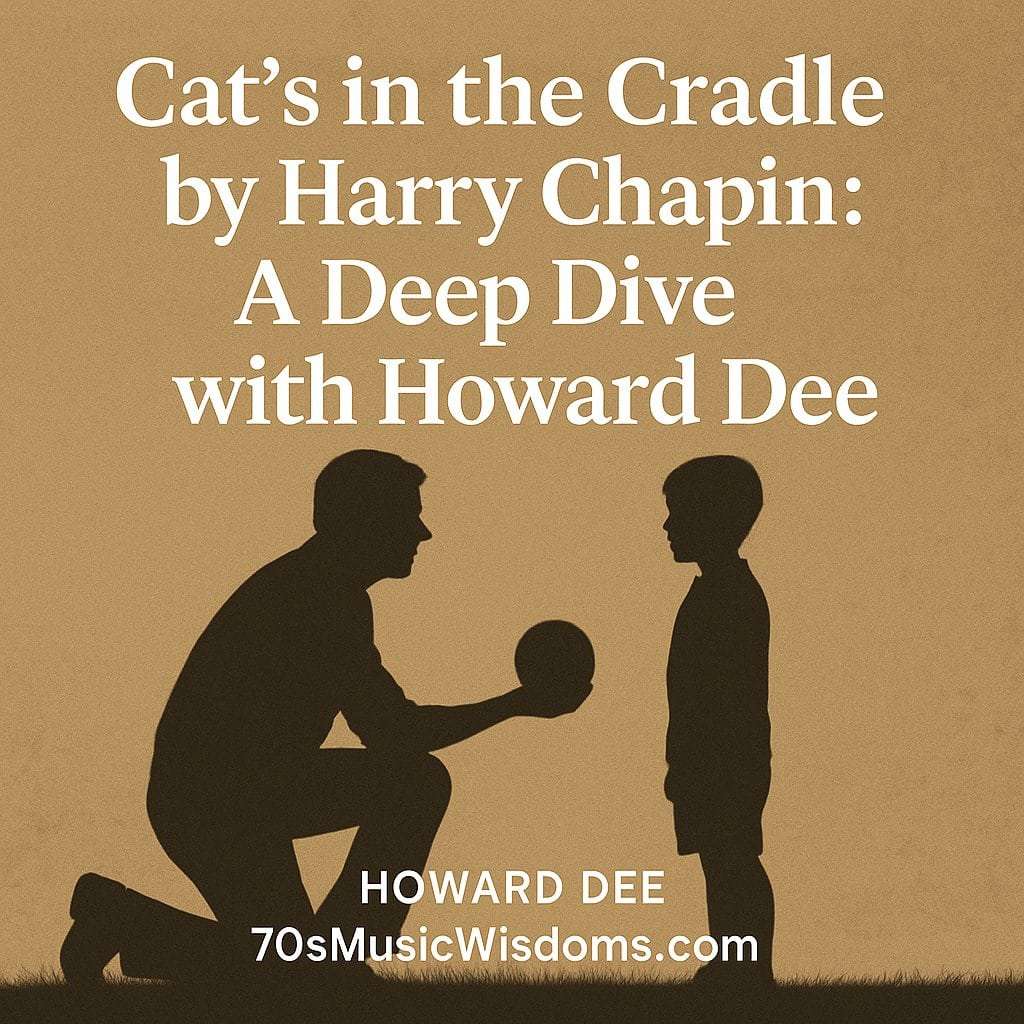
“My son turned ten just the other day
He said, ‘Thanks for the ball, dad, come on, let’s play
Can you teach me to throw?’ I said, ‘Not today
I got a lot to do’ he said, ‘That’s okay’
And he walked away but his smile never dimmed
Said, ‘I’m gonna be like him, yeah
You know, I’m gonna be like him’”
🧢 Howard Dee’s Take
This is the verse that always hits me hardest. It’s heartbreaking how casual the moment is — a kid asking his dad to play ball — and how easily it’s dismissed. The son still smiles, still admires his dad, but you can feel the emotional door quietly start to close.
It brings me right back to my own childhood. I was a huge sports fan, but my dad wasn’t into sports at all. I remember longing for him to be interested — to throw a ball with me, or even just talk about the game. When I had kids of my own, I made a promise to myself: whatever they’re into, I’m going to show up for it. Even if it’s something I don’t understand — whether it’s Pokémon, Yu-Gi-Oh, or Minecraft — I’m going to learn it, ask about it, and be part of their world. Because that’s what creates memories. That’s what builds connection.
“Well, he came from college just the other day
So much like a man I just had to say
‘Son, I’m proud of you, can you sit for a while?’
He shook his head and he said with a smile
‘What I’d really like, dad, is to borrow the car keys
See you later, can I have them please?’”
🧢 Howard Dee’s Take
The irony starts to unfold. The son has become independent, self-driven — and emotionally unavailable. The roles are reversed. The father wants connection, but the son has learned his lesson too well.
This verse reminds me of how quickly time passes. If you’re not present when they’re young, they’ll grow into people who learned how to live without you.
“I’ve long since retired and my son’s moved away
I called him up just the other day
I said, ‘I’d like to see you if you don’t mind’
He said, ‘I’d love to, dad, if I could find the time
You see, my new job’s a hassle and the kids got the flu
But it’s sure nice talking to you, dad
It’s been sure nice talking to you’”
🧢 Howard Dee’s Take
This is where the regret really hits. The father finally has time — but now the son doesn’t. The same excuses come back around. The same words. It’s a full-circle moment, and there’s no undoing it.
Now that my kids are grown, I think about this verse a lot. I’m proud to say I was present in their lives. This song helped me make sure I would never have to deliver that kind of apology in my old age.
“And as I hung up the phone, it occurred to me
He’d grown up just like me
My boy was just like me”
🧢 Howard Dee’s Take
This is one of the most heartbreaking lines in all of 1970s music. It’s realization, resignation, and revelation all at once. You see your child reflect the choices you made — for better or worse.
To me, this moment is what makes the song immortal. It’s not just about regret; it’s about the consequences of absence. You don’t raise your kid with words. You raise them with your habits, your priorities, your time.
🔁 Final Thoughts from Howard Dee
“Cat’s in the Cradle” isn’t just a song — it’s a mirror. When I was young, it helped me recognize what I didn’t want to become. As a parent, it reminded me where my real value lies. And now, as I look toward becoming a grandparent, it’s a reminder of what to pass down.
No matter how much we provide, our kids need something more than financial support — they need us. Our attention, our presence, our guidance. Life moves fast. Don’t blink.
💬 What Does This Song Mean to You?
Have you ever seen yourself in “Cat’s in the Cradle”?
Do the lyrics remind you of your own relationship with a parent — or with your kids?
Share your thoughts in the comments below.
Let’s talk about what this song meant to you, then… and now.
📌 Song Recap
- Released: October 1974
- Album: Verities & Balderdash
- Billboard Hot 100: #1
- Grammy Hall of Fame: Inducted in 2011
- Notable Covers: Ugly Kid Joe (1993), Johnny Cash (live), Cat Stevens (medleys)
- Legacy: Frequently used in media to underscore themes of time, parenting, and regret.
🔗 Explore More on 70sMusicWisdoms.com
- Harry Chapin Artist Profile
- Top 15 Harry Chapin Songs
- 10 Interesting Facts About Harry Chapin
- “Taxi” by Harry Chapin: Meaning, Story, and the Quiet Power of a Passing Moment